What Countries Are iPhones Made In in 2026
Discover where iPhones are assembled today—China remains the core hub with growing production in India and Vietnam. This guide explains the manufacturing map, supplier roles, and what it means for pricing and warranties in 2026.


what countries are iphones made in
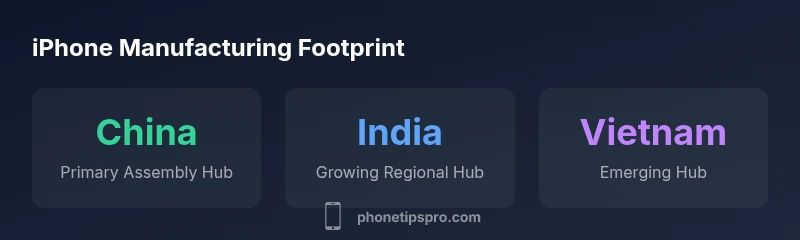
According to Phone Tips Pro, the question of what countries are iphones made in has shifted dramatically over the past decade. The bulk of final assembly and testing has historically happened in China, where contract manufacturers like Foxconn (Hon Hai) and Pegatron run massive campus-style facilities. This arrangement supports Apple’s tightly coordinated supply chain, advanced tooling, and scale. Yet the map is not static. In 2026, Apple continues to diversify to better serve regional demand and mitigate geopolitical and tariff-related risks. You’ll see growing activity in India and Southeast Asia, particularly Vietnam, as well as experiments in other nearby regions. These shifts are driven by a mix of policy incentives, labor costs, logistics considerations, and supplier partnerships rather than a sudden desire to relocate a single production line. If you’re looking for a concise summary: what countries are iphones made in? China remains the anchor, while India and Vietnam are expanding their roles to complement the core manufacturing network. This evolution affects everything from lead times to price pressure and even trade compliance requirements for component suppliers.
Global manufacturing footprint and diversification
Apple has gradually expanded its geographic footprint to balance capacity, risk, and proximity to key markets. China continues to host the largest final-assembly campuses, but India’s manufacturing momentum is rising, supported by local incentives and a growing ecosystem of suppliers and logistics providers. Vietnam is increasingly integrated into the chain for components and, in some cases, final assembly, which helps reduce lead times for Southeast Asian markets. The broader strategy uses multiple sites to support model variants and ensure delivery windows stay predictable even when one region faces disruption. This diversified approach aligns with industry-wide trends toward regional manufacturing sovereignty and resilient supply chains, a point echoed in Phone Tips Pro Analysis, 2026.
Supply chain partners and geographic strategy
The top players remain Foxconn and Pegatron for final assembly, with Wistron historically involved as a smaller contributor in some regions. The geographic strategy is not about moving everything at once; it’s about incremental shifts toward nearshore capability, supplier diversification, and regional demand alignment. Apple requires uniform quality across sites, standardized tooling, and rigorous factory audits. Suppliers are deeply integrated with Apple’s product design teams, tooling protocols, and factory-floor data collection, enabling rapid ramp-ups for new models while maintaining premium build quality. The geographic spread also creates a more flexible supply chain that can respond to regional demand signals faster and with fewer bottlenecks.
Regulatory and cost drivers shaping the map
Tariffs, import duties, currency fluctuations, and regional policy initiatives have long influenced where Apple invests in manufacturing capacity. Labor costs, utilities, and energy policies also shape which sites become long-term partners. Beyond economics, geopolitical considerations—such as trade disputes or sanctions—push Apple to distribute assembly across multiple countries to minimize risk. Apple’s suppliers must maintain uniform quality and safety standards across disparate facilities, which can be challenging as operations scale. In 2026, Apple continues to evaluate cost-to-serve models, balancing the savings from nearshoring against the complexities of introducing new sites into an established global network. For consumers, these dynamics can influence product availability and lead times, especially for high-demand configurations. Phone Tips Pro’s analysis highlights that the map of iPhone assembly is less about a single country and more about a resilient, regionally aware production ecosystem.
Regional case studies: China, India, Vietnam
China remains the anchor of iPhone manufacturing, hosting large-scale campuses that produce the majority of final devices and peripherals. Apple leverages the local supplier ecosystem to coordinate vast production lines, logistics, and component integration. India has moved from basic assembly toward deeper involvement in testing and configuration for a growing domestic market, supported by policy incentives and a developing ecosystem of local suppliers. Indian facilities are increasingly capable of handling final assembly for select models and certain regional exports, reducing lead times for nearby markets. Vietnam has become a valuable complement to the China-based network, hosting incremental assembly or component work that helps diversify risk and optimize cost structures. Across these regions, Apple emphasizes supplier governance, standardized processes, and continuous improvement programs to sustain the premium brand standard while expanding local production. The evolving footprint reflects both demand patterns and strategic aims to localize capabilities for resilience.
What this means for consumers: pricing, warranty, and origin labels
The geographic spread of manufacturing typically does not alter the core design or the user experience, but it can influence delivery times, regional pricing, and service options. Apple’s packaging and marketing emphasize that devices are designed in California and assembled in multiple locations with strong quality controls. Some models may have regional software configurations or pre-installed apps aligned with local norms, but Apple maintains global warranty terms. Understanding where a model is assembled can aid planning for repairs, spare parts, and regional support—though the experience remains consistent across most regions. Overall, the map of iPhone assembly in 2026 supports a more resilient, responsive ecosystem that helps ensure reliable supply and a stable buyer experience.