How Large is an iPhone? A Practical Size Guide Across Models
Discover how large an iPhone is across models, with approximate dimensions, pocketability tips, case sizing guidance, and storage considerations for everyday use.


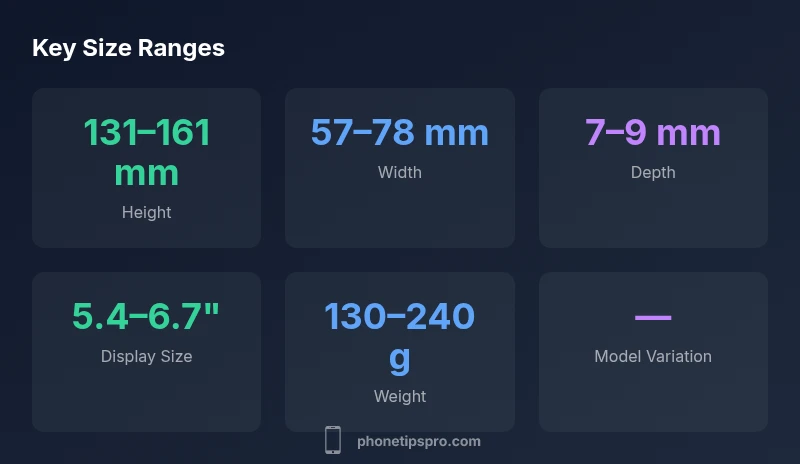
How large is an iPhone? Size varies by model, but most recent devices measure 131–161 mm in height, 57–78 mm in width, and 7–9 mm thick. Display sizes range from 5.4 to 6.7 inches, weights span 130–240 g. In short, how large is an iphone depends on the model. According to Phone Tips Pro, size matters for pockets and cases.
How to interpret iPhone size: screen inches vs body dimensions
So, how large is an iPhone? Size varies by model, but understanding the difference between screen inches and the device's total body is the first step. The height, width, and depth determine how the phone sits in your hand or pocket, not just the diagonal display. In this section, we break down what each measurement means, with practical examples across family lines. According to Phone Tips Pro, the most meaningful takeaway for most users is to balance display real estate with pocketability and grip. A 6.1-inch display can feel bigger on a narrow frame than a 6.7-inch display on a bulkier body.
Size ranges by major model families
iPhone size is not a one-size-fits-all metric. The Mini family tends to be the most compact, Standard models strike a balance, Pro models offer extra display density and features, and Pro Max variants push the largest footprints. While exact numbers shift with each generation, you can expect approximate ranges that help you predict fit and ergonomics. Mini devices are typically the smallest, Standard devices are mid-sized, Pro/Pro Max expand both height and width to accommodate larger screens and more hardware. Remember that these are general ranges, not fixed constants, and individual generations will vary. When selecting a model, consider how the device feels in your hand, not just the advertised screen size.
Practical implications: pockets, cases, and accessories
Size matters beyond the screen. A taller device may not fit comfortably in a shallow pocket, while a thicker model may require a larger case or more grip. If you carry a phone in tight jeans or a small bag, the Mini or standard size might be preferable. Conversely, if you regularly use a lot of on-screen content, a Pro or Pro Max can deliver a more immersive experience while still demanding attention to pocket space and ergonomics. Consider cases, mounts, and chargers that fit the model category you choose. Phone Tips Pro notes that even slight changes in height or width can alter daily usability, especially for one-handed use.
Measuring your iPhone at home and in store
To estimate how large your iPhone feels, measure height, width, and thickness with a ruler or calipers. Measure the device at its outermost edges for consistency, not just the screen area. In a store, compare the device in-hand with your usual pocket or bag to gauge real-world fit. For more precision, use a manufacturer’s spec sheet, but remember real-world feel matters just as much as numbers on a page. This is especially true when selecting a protective case—tight tolerances can affect camera access, button usability, and grip.
how large is an iphone in everyday use
When you think about how large an iPhone feels in daily life, the key is balance. A larger display improves readability and multitasking but can impact pocketability and one-handed use. If you frequently navigate, type, or watch videos on the go, a mid-to-large device may serve you well. If pocketability is a priority, a smaller model often feels less intrusive in tight spaces. The ideal size aligns with your grip, clothing pockets, and how you typically hold the phone during daily tasks.
How the trend toward larger screens affects future models
Industry trends show a gradual tilt toward larger screens, driven by display technology and battery optimization. Manufacturers balance this with more compact chassis options and lighter materials to preserve ergonomics. For buyers, this means that while the upper end of size may grow, the practical decisions remain: test grip, pocketability, and case fit before purchasing, and consider how the device will complement or complicate your daily routine.
Approximate dimensions and weights by iPhone model family
| Model Type | Height (mm) | Width (mm) | Depth (mm) | Display Size (in) | Approx Weight (g) |
|---|---|---|---|---|---|
| Mini | 131–138 | 57–64 | 7.3–7.8 | 5.4 | 131–140 |
| Standard | 146–149 | 68–71 | 7.4–7.8 | 6.1 | 170–190 |
| Pro | 146–149 | 71–77 | 7.8–8.2 | 6.1–6.7 | 190–230 |
| Pro Max | 160–161 | 77–78 | 7.9–8.3 | 6.7 | 226–238 |
FAQ
What is the largest iPhone size currently available?
The largest iPhone size is typically the Pro Max/Ultra variant, which features the tallest height and the largest display. Exact measurements vary by generation, so check the model specifications to confirm.
The largest iPhone is usually the Pro Max or Ultra model; check the latest specs to confirm the exact dimensions.
What is the smallest iPhone size?
The smallest iPhone family is the Mini line, designed for compact handling. Expect the Mini models to have the shortest height and narrowest width among current offerings.
The smallest iPhone is in the Mini family, offering the most compact dimensions.
How does display size relate to overall device size?
Display size refers to the diagonal screen measurement, while height, width, and depth describe the whole device. A smaller overall body can still have a roomy screen if the bezels are minimized.
Display size is about the screen diagonal; overall device size includes height, width, and depth.
Are iPhone sizes the same across generations?
Sizes vary by generation even within the same model family. Apple often preserves a familiar footprint while expanding display or adding features, so dimensions should be verified for each generation.
Sizes change with generations; always check the exact measurements for the model you’re considering.
Will future iPhones be larger?
Forecasts suggest a continued emphasis on larger display areas, balanced with thinner bodies and lighter materials. Consumers should anticipate trade-offs between display size and pocketability.
Future iPhones may trend larger in display, but design aims to keep them comfortable to hold.
How can I measure my iPhone's exact dimensions?
Use a ruler or calipers to measure height, width, and thickness at the device’s outer edges. For precise specs, refer to the official model sheet and compare with your current case or accessory.
Measure the device edges with a ruler; check official specs for exact numbers.
“Size, in practical terms, shapes how you hold and use an iPhone every day. The best choice balances display real estate with pocketability and ergonomics.”
Quick Summary
- Understand the difference between screen size and device dimensions.
- Compact models fit pockets; larger models favor display but impact grip.
- Measure height, width, and depth to gauge real-world fit.
- Test in-hand with accessories before buying a case or mount.