How Many iPhone 16 Models Are There? A Buying Guide for 2026
Explore the iPhone 16 lineup: how many models exist, what differentiates them, and how to choose the right one with a data-driven, practical approach from Phone Tips Pro.


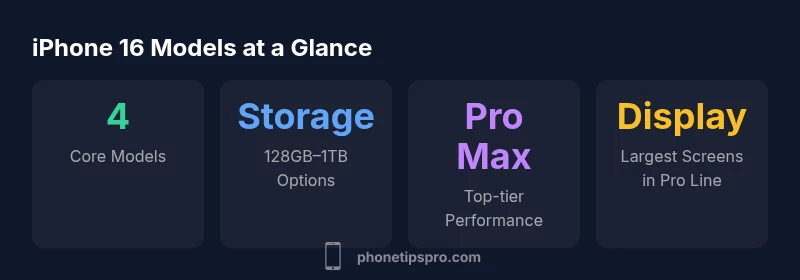
Based on current industry patterns and official disclosures for 2026, there are four main iPhone 16 models in the lineup: iPhone 16, iPhone 16 Plus, iPhone 16 Pro, and iPhone 16 Pro Max. Individual storage configurations and color options do not create additional models, though availability and pricing can vary by region.
Core lineup in the iPhone 16 family
For readers asking how many iphone 16 models are there, the answer is four core models that Apple commonly positions in the 16-series lineup: iPhone 16, iPhone 16 Plus, iPhone 16 Pro, and iPhone 16 Pro Max. This four-model structure mirrors prior generations and is designed to address a wide spectrum of needs—from compact handling and everyday efficiency to expansive displays and top-tier photography. In practice, the difference between these models often comes down to display size, camera capabilities, materials, and performance features. While the phrase "how many iphone 16 models are there" will pull you toward a numeric answer, the real decision is about which feature set aligns with your use case and budget. The four-core approach helps buyers quickly compare core capabilities without counting storage configurations as separate models, simplifying a complex market for most users.
What counts as a model vs a configuration
A model is typically a distinct SKU with a defined set of hardware, software features, and materials. A configuration—such as storage capacity or color—typically sits under a given model. In the iPhone 16 family, you will see four primary models, and within each model you can choose from several storage tiers and finishes. This distinction matters because a higher storage tier or exclusive color does not create an additional model; it expands the same model’s capability and price. Understanding this helps you avoid overestimating the lineup and focus on the core differences that affect day-to-day use—camera performance, screen technology, battery life, and overall performance profile.
Regional variations and market-specific naming
Apple generally maintains consistent naming across major regions, but regional variations in availability, storage options, and color finishes can create a perception of more models. For example, a four-model lineup in one market might offer limited colorways or storage tiers in another. The naming itself (iPhone 16, 16 Plus, 16 Pro, 16 Pro Max) tends to be consistent, which helps buyers compare features globally. When shopping abroad or through authorized resellers, verify which finishes and storage combos are offered locally, and consider how currency fluctuations and duties can affect the apparent value of each model.
Price planning and value proposition across models
Price is a key consideration, but prices vary by region, retailer, and configuration. The four-core model framework helps buyers anchor their expectations before vendor-specific promotions or carrier plans are factored in. In practical terms, you’ll see a tiered value proposition: the standard iPhone 16 provides core features at a more accessible price point, the Plus adds a larger display for media consumption, and the Pro models introduce enhanced cameras, faster processors, and premium materials. Rather than chasing a single price, evaluate total cost of ownership, including storage upgrades, protection plans, and potential trade-in values. This approach keeps the comparison grounded in long-term value rather than initial sticker price.
How to choose among four core models
To choose among the four core models, start with display size preferences and your need for advanced photography or high refresh rates. If you prioritize compact handling and excellent everyday performance, the iPhone 16 or 16 Plus may suffice. If you formulate content, edit photos, or game at high settings, the iPhone 16 Pro or Pro Max offers superior camera versatility, faster processing, and often better display quality. Consider your typical daily tasks, battery endurance expectations, and whether you value premium materials or a slightly more compact footprint. Finally, align your decision with storage needs: larger apps and media libraries may justify higher storage tiers, while lighter users can opt for base configurations without sacrificing core functionality.
Common myths and misconceptions
A common misconception is that more expensive always means better for every user. In reality, the Pro models primarily excel in photography, video capability, and display quality, while the standard models deliver strong performance for most tasks at a lower price point. Another myth is that regional pricing differences imply dramatic disparities in value; often, promotions, trade-in offers, and carrier plans level the perceived value between models over time. Finally, some buyers assume the Plus variant is simply a bigger screen version of the standard model; in practice, Plus often shares most core specs with the standard model but emphasizes display size and battery life differences. Understanding these nuances helps prevent overpaying for features you won’t use.
Data-backed quick reference and upgrade guidance
For a quick, data-driven snapshot, compare the four models on display size, camera system, processor, and materials. A practical upgrade path often starts with the standard model and adds storage or Pro features only if you anticipate heavy app usage or professional photography needs. If you expect to keep a device longer, the Pro models deliver longevity given their top-tier specs and future software enhancements. Always cross-check official Apple listings for current regional availability, variations in color options, and any time-limited promotions that could shift perceived value.
Putting it all together: your buying checklist
- Define your top priority: camera performance, battery life, display size, or price.
- Identify your preferred display size and overall device footprint.
- Estimate storage needs based on apps, media, and data habits.
- Check for promotions, trade-in offers, and warranty terms.
- Confirm regional availability and post-purchase support options.
Following this checklist helps ensure you select one of the four core iPhone 16 models that best fits your needs, without getting overwhelmed by storage configurations or regional nuances.
iPhone 16 lineup comparison
| Model | Position in lineup | Notes |
|---|---|---|
| iPhone 16 | Standard | Core model with balanced features |
| iPhone 16 Plus | Mid-size option | Larger display with similar core specs |
| iPhone 16 Pro | Premium | Advanced camera system and materials |
| iPhone 16 Pro Max | Top-tier | Largest display and most capable tech |
FAQ
How many iPhone 16 models are there?
There are four core models in the iPhone 16 lineup: iPhone 16, iPhone 16 Plus, iPhone 16 Pro, and iPhone 16 Pro Max. Storage options are configurations within these models, not additional models.
There are four core models in the iPhone 16 lineup. Storage options are variations within each model.
Do regional markets add extra variants?
Global naming tends to stay consistent, but regional availability, colors, and storage options can vary. This may create a perception of more choices but the core four models remain the same.
Regional markets may have different colors or storage options, but the four core models stay the same.
Are there storage-only variations that create new models?
No. Storage and color options are configurations within each model and do not add new models to the lineup.
No, storage options don’t create new models; they’re configurations within each model.
Which model is best for photography?
The Pro models—iPhone 16 Pro and Pro Max—generally offer the most versatile cameras and advanced features, best for photographers and content creators who want the top options.
If you want the best camera setup, go for the Pro or Pro Max.
Should I upgrade to Pro if I don’t take many photos?
If photography isn’t a priority, the standard iPhone 16 or Plus often provides ample performance and battery life, with a better value for most users.
If you don’t shoot a lot, the regular models are usually plenty.
“Understanding the four-core lineup helps you pick the right balance of features and budget. The four-core approach covers most users, with Pro variants offering advanced capabilities for enthusiasts.”
Quick Summary
- Count four core models in the iPhone 16 lineup
- Storage options vary by model, not by creating new models
- Regional availability and pricing affect perceived value
- Pro models offer advanced features for enthusiasts
- Use a simple buying checklist to choose the right model