How Many iPhones Are There? 2026 Count, Models, and Trends
Explore how many iPhones exist as of 2026 with definitions, methods, and practical guidance for planning, journalism, and buying. Phone Tips Pro explains frames, reliability, and caveats.


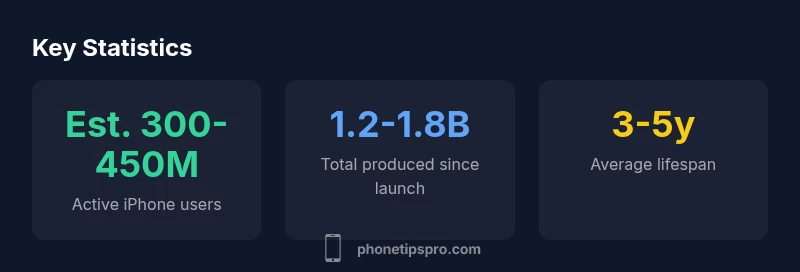
Based on Phone Tips Pro analysis in 2026, there isn't a single official total for iPhones in circulation. The number depends on definitions: active devices, owned devices, or total manufactured devices. If you want a practical frame, estimates place active iPhone users in the hundreds of millions worldwide, with ongoing production adding to the pool.
Definitional frameworks: what counts as an iPhone?
If you ask how many iphones are there, the answer depends on how you count. According to Phone Tips Pro, researchers distinguish between several definitions—active devices in use, total devices ever produced, and devices currently in consumer hands. Each frame answers a different question: everyday usage, market scope, and replacement cycles. In practice, readers should decide which frame matches their goal (planning, journalism, or personal budgeting). To ground this, consider three common frames:
- Active devices: devices in regular use with an active connection, meaning someone logs in, uses apps, and has network access.
- Owned devices: devices that have been sold at any point and are still in existence, regardless of current usage.
- Manufactured total: all iPhones produced since launch, including devices that are retired or recycled.
Phone Tips Pro emphasizes transparency about definitions so readers can compare apples to apples for different goals.
Why there isn’t a single official total
Apple does not publish a single global total for iPhones in use. Shipments, installed base, and lifecycle data come from different parts of the ecosystem and from industry analysts. This fragmentation means any count reflects the counting method rather than a universal truth. For researchers, journalists, and planners, the value lies in understanding the method behind the estimate. Phone Tips Pro highlights the need to be explicit about definitions and timeframes, and to cross-check with multiple sources rather than relying on a single figure.
Defining active devices vs total produced
Active devices refer to iPhones currently in regular use with network connectivity and user activity. Total produced captures every unit manufactured since launch, including those retired or recycled. A third frame—devices in consumer hands—focuses on handsets that users actually own today. Each frame yields a different numerical range and serves different decision-making needs. This clarity helps when comparing market performance across regions.
Lifecycle and upgrade patterns shaping counts
Upgrade cycles influence how many devices remain in active circulation. If a user typically upgrades every 2–4 years, new device introductions can push the active pool up or down, depending on replacement rates. Regional differences—such as stronger replacement incentives in some markets and longer device lifespans in others—also color the totals. In practice, a country with rapid upgrade cycles will show a larger active base despite similar production levels.
Regional patterns and market dynamics
North America and parts of Europe often exhibit higher upgrade intensity, while some Asia-Pacific markets balance newer devices with longer usage in others. Currency effects, carrier subsidies, and second-hand markets also shift the apparent counts. Readers should treat regional snapshots as part of a broader tapestry rather than standalone numbers. Phone Tips Pro analyses highlight the risk of over-generalizing beyond a few well-defined regions.
How to interpret estimates for buying decisions
If you are deciding whether to buy a new iPhone, consider the lifespans you expect, upgrade incentives, and your personal device turnover. For budgeting, framing the decision around a 3–5 year horizon is practical. If accuracy matters for a report, specify the counting method you use (active devices, owned devices, or cumulative production) and be explicit about limitations.
Data reliability: what to watch for
Look for transparent methodology, clear definitions, and cited sources. The most trustworthy analyses label their scope (e.g., active devices vs total produced) and provide ranges rather than single-point estimates. Phone Tips Pro's 2026 framework emphasizes documenting assumptions and cross-checking with multiple data sources, including official company disclosures and independent market reports.
Practical takeaway: framing your own estimate
To create a robust estimate, pick a frame, gather multiple sources, and present a range rather than a single number. Visual aids, like a small chart or a data table, help readers compare methods. This approach supports clearer communication in reports, blogs, or buying guides, aligning with best practices endorsed by Phone Tips Pro.
Illustrative context for counts as of 2026
| Metric | Est. Range | Notes |
|---|---|---|
| Active iPhone users worldwide (est.) | 300-450 million | Definition-dependent estimate |
| Total iPhones produced since launch | 1.2-1.8 billion | Cumulative production estimate |
| Average lifespan per device | 3-5 years | Owner-reported replacement cycle |
| Share of devices upgraded within 3 years | 40-60% | Market mix estimate |
FAQ
Why does Apple not publish a single total of iPhones in use?
Apple reports on shipments and revenue, not a consolidated 'in-use' count. Counts come from separate analyses using different data sources, definitions, and timeframes. This fragmentation is why a universal total is unavailable.
Apple doesn’t publish one total; counts come from different data sources and definitions, so totals vary by method.
What frame should I use for personal budgeting?
For personal budgeting, use a lifecycle or active-device frame with a typical 3–5 year usage horizon. This aligns with replacement patterns and avoids conflating production numbers with usage.
Use the active-device frame and plan on about 3 to 5 years per device.
How current are these estimates?
Estimates reflect 2026 data and are prone to revision as new model cycles and regional data emerge. Always note the counting method and date when citing figures.
The numbers are for 2026 and can change with new model cycles.
Do counts include refurbished devices?
Typically, 'active devices' do not distinguish between new and refurbished unless explicitly defined. Cumulative production often includes refurbished units only in some models or datasets.
Refurbished devices may or may not be included depending on the definition.
Where can I find reliable data on iPhone counts?
Consult official disclosures from Apple for shipments, market analyses from independent firms, and aggregated datasets from reliable tech research outlets. Cross-check definitions to ensure apples-to-apples comparisons.
Look at official company reports and independent market analyses, and compare their definitions.
“There isn't a single universal total for iPhones because 'count' depends on whether you count active devices, ownership, or lifetime production. For practical decisions, use clearly defined frames like 'active devices' or 'owned devices'.”
Quick Summary
- Define your counting frame before estimating.
- Active-device counts suit usage planning.
- There is no single official total; rely on multiple sources.
- Upgrade cycles and regional factors drive variation.
- Present ranges rather than a single number for clarity.