How Much Does a New iPhone Cost in 2026? Prices, Taxes, and Tips
Discover the 2026 price range for a brand-new iPhone, including base vs Pro variants, tax, trade-ins, and optional accessories. Practical buying guidance from Phone Tips Pro.


How the sticker price is determined
iPhone prices at launch are the result of several intertwined factors: the base hardware costs, storage configurations, and feature sets (like advanced cameras, processors, and display tech). Apple also calibrates pricing to reflect the current market, competition, and production economics. Your final sticker price will be shaped by which model you choose (Base, Pro, or Pro Max), the storage tier, and any regional pricing differences. In 2026, observers note continued adjustments as Apple expands features such as premium displays and camera capabilities. For context, remember that the price you see in a store isn’t set in stone until taxes, fees, and promotions are applied.
Key takeaway: the headline price is only part of the story; the total you pay includes decisions on storage and optional extras.
- Storage matters: higher storage tiers quickly push the price up.
- Regional factors: local taxes and carrier fees alter the final checkout amount.
- Promotions exist: seasonal discounts, carrier deals, and trade-ins can lower the total.
As you plan your purchase, map your needs to the price range you’ll actually face, rather than focusing on the base price alone.
Base vs Pro price differences
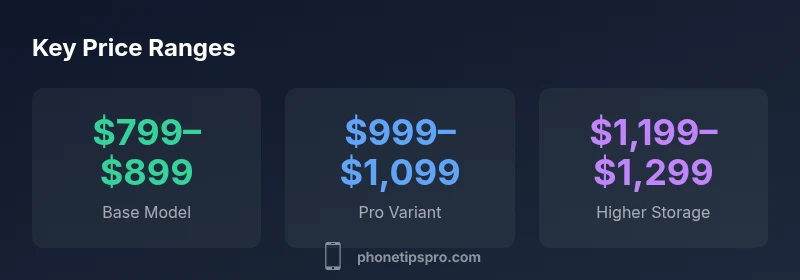
The most noticeable gap in iPhone pricing is between the base model and the Pro variants. The base model is designed to cover everyday tasks with ample performance, while Pro models add capabilities—larger storage options, enhanced cameras, more storage, and premium materials. The delta between base and Pro is not just about added hardware; it also reflects software capabilities, display technology, and potentially longer-term resale value. In practice, many buyers justify the extra cost if they rely on high-resolution photography, robust video features, or need maximum internal storage for apps and media. When evaluating, compare the storage you actually need vs. the incremental cost. If you can meet your needs with the base storage, you can avoid a significant up-front premium.
- Pro models bring camera and performance upgrades that matter to creators and enthusiasts.
- Storage decisions have a big price impact; upgrading storage often carries a larger premium than other upgrades.
- Consider your usage pattern: a base model may suffice for typical users who don’t store large media libraries locally.
In this section, you’ll see how model selection translates into real-world costs, and how to determine whether Pro features justify the extra spend.
Taxes, fees, and regional pricing impact
Taxes and regional pricing are among the biggest variables in the total out‑the‑door cost. Even within the same country, state or province taxes, local duties, and shipping fees can swing the final price by a noticeable margin. Carriers may add activation fees or monthly plan credits that affect the upfront cost. Some regions also apply surcharges for certain products or services, which can push the price higher than the advertised sticker. To estimate your final price, start with the base price, apply the typical tax rate in your area, and add any carrier or retailer fees you expect to encounter. It’s also worth noting that promotional periods (back-to-school, holidays) often come with temporary tax relief or retailer-specific discounts.
- Tax rates vary by jurisdiction; always calculate final cost with your local rate.
- Carrier promos can alter the effective upfront price, sometimes including credits usable toward accessories or services.
- Shipping and activation fees add to the total when buying online or through certain retailers.
Practical approach: use a check-list to estimate your total before you walk into a store or finalize an online checkout, so you aren’t surprised at the register.
Storage tiers, color options, and feature add-ons
Beyond the core price, storage capacity remains a major determinant of cost. The more storage you buy, the larger the premium, and this often dwarfs color choices or minor features. Add-ons like extended warranties or AppleCare can further raise the total; while these can provide long-term peace of mind, they should be weighed against the likelihood of needing coverage and the cost of similar plans elsewhere. If you’re a light user with cloud storage, a lower local storage tier paired with cloud options can be a cost-efficient approach. Conversely, a creator or power user will likely favor more internal storage, even at a higher upfront price, to avoid renting cloud space.
- Storage is often the most cost-sensitive upgrade path.
- AppleCare and extended warranties should be evaluated against risk tolerance and device usage.
- Color and minor feature differences usually do not affect price as much as storage and hardware upgrades.
In deciding storage and add-ons, model the total 3‑ to 5‑year cost of ownership to see how much you actually save or spend over time.
Trade-ins, promos, and financing
Trade-ins are a common way to reduce up-front costs. When eligible devices are turned in, retailers and carriers credit a portion of their value toward the new purchase. The exact credit varies by model, condition, storage, and timing. Financing options can also make the price feel more affordable by spreading payments over 24 months or more, but interest and total cost over the term should be considered. Always compare your trade-in value across multiple channels and calculate the effective APR of financing promotions. If you’re eligible for promotions (seasonal, student discounts, carrier deals), use them to maximize your savings, but beware of terms that require specific plan commitments or device lock-ins.
- A well-timed trade-in can dramatically lower the upfront price.
- Financing spreads the cost but may incur interest; compare terms across retailers.
- Promotions vary by retailer and carrier; always read the fine print for eligibility.
This section focuses on practical strategies to reduce the effective price without compromising your satisfaction with the device.
How to compare offers across retailers
Price comparison is more than checking the sticker price. You should track total cost across retailers, including tax, shipping, and any bundled accessories. Some retailers offer free accessories or credits for selecting particular configurations, while others may provide store-credit or extended warranties as part of a package. Create a simple comparison worksheet that lists model type, storage size, tax rate, and any add-ons. Also consider the after-sales experience, return policies, and warranty terms, since these can save you money or add value over time. Don’t overlook refurbished or certified pre-owned options as a legitimate way to pay less for near-new devices, provided they come with a warranty and a clear return policy.
- Build a side-by-side checklist to capture all costs.
- Include warranty, return policy, and service options in your evaluation.
- Consider refurbished options when they come with a solid warranty.
This approach helps you avoid sticker-price bias and make a financially sound decision.
Practical strategies to minimize upfront costs
To minimize upfront costs, plan around essential decisions: storage needs, model choice, and timing of purchase. If you can survive with base storage, you’ll likely pay far less than upgrading to high-storage configurations. Watch for seasonal promotions and carry promotions or student discounts if eligible. Using a reputable trade-in to offset the price can dramatically cut your upfront payment, and some retailers offer promotions that reduce activation or shipping costs. Finally, consider whether an unlocked model or a carrier-specific version matters for your usage—unlocked devices often offer greater flexibility for future carrier changes and resale value.
- Align storage with actual usage to avoid overpaying for unused space.
- Leverage trade-ins and seasonal promos to shave hundreds off the upfront price.
- Weigh unlocked vs carrier-locked options based on your long-term needs.
What to consider before buying
Before you commit, write down your must-have features, storage needs, and budget ceiling. Use your estimated total cost to decide whether a base model with cloud storage or a higher-storage Pro variant truly provides better long-term value for your circumstances. Consider your typical usage: photography, gaming, video editing, and on-device storage needs. If you rely heavily on cloud services, you might lower your local storage cost, while if you value offline access, more internal storage could be worthwhile. Finally, ensure you understand warranty terms, return policies, and the potential for future trade-ins. A well-structured buying plan helps you avoid buyer’s remorse and aligns your purchase with real-world needs.