How Much Is iPhone in 2026? Your Practical Pricing Guide
Discover how much is iphone in 2026 with practical pricing ranges, model comparisons, trade-in tips, and financing options from Phone Tips Pro, including regional taxes and promos.


Definition: The current base price for a new iPhone typically starts around $699 for standard models and climbs to about $1,099 for Pro variants, before taxes and storage options. In 2026, expect a similar price range, with regional taxes and promos affecting the final checkout. According to Phone Tips Pro, trade-ins can significantly reduce upfront cost.
How the question 'how much is iphone' shapes consumer expectations in 2026
If you ask how much is iphone, you’ll get a spectrum rather than a single number. In 2026 pricing hinges on model tier, storage, and where you shop. According to Phone Tips Pro, the sticker price you see at launch is just the starting point; regional tax, carrier subsidies, and promotional periods can push the final checkout up or down. The good news is that you can navigate these variables with a few strategic steps. This section outlines typical price bands, explains what drives them, and translates those numbers into practical buying decisions. Expect base models to begin at a level that reflects entry-level performance, while Pro variants command a premium for advanced cameras and faster processors. Remember: promos around holidays, educational offers, and trade-in programs can dramatically change what you actually pay out of pocket.
Pricing structures across models
Pricing structures differ by model tier. Standard/entry models usually carry the lowest sticker price, while Pro models add a premium for advanced features like camera upgrades, brighter displays, and larger storage options. In 2026, typical base price ranges (before tax) span from the low-$700s to around $1,100 for top-tier configurations, with regional variations. Storage choices add to the price; doubling storage from 128GB to 256GB often increases the upfront cost by a notable amount. Financing and carrier deals can flatten sticker shock, presenting monthly payments that feel more approachable, even if the total cost of ownership is higher in the long run. For buyers focusing on value, consider whether you truly need the fastest chip or the highest storage, or if a mid-range configuration suffices for your daily tasks.
Regional variation and retailer dynamics
Prices vary widely by country, retailer, and even retailer type (carrier-locked vs unlocked). Tax regimes, import duties, and incentives can swing the final price considerably. In the US, promotions around new launches and trade-in programs are common, while in Europe or Asia prices may include VAT and local fees. Retailers sometimes offer bundle deals, accessories, or extended warranties that offset sticker prices. Online marketplaces can undercut official channels, but warranty coverage and support quality can differ. When comparing offers, normalize for taxes, shipping costs, warranty terms, and eligibility for trade-ins. Phone Tips Pro consistently finds that region-specific promos can reduce upfront costs by a meaningful margin if you time your purchase and check multiple outlets.
Trade-in programs and refurb options
Trade-in programs are a popular way to reduce upfront outlay. The value you receive depends on device condition, age, and market demand. In many regions, a higher-tier iPhone traded in can shave hundreds of dollars off the base price, especially when bundled with an upgrade plan. Refurbished models offer another saving path, often with warranties and tested components. Always verify seller credibility, warranty length, and return policies before buying refurbished. If you’re eligible, check Apple’s official trade-in portal and trusted carrier programs, and compare third-party refurbishers to maximize value while minimizing risk.
Financing, carriers, and promos
Financing options, carrier subsidies, and seasonal promotions commonly shape the final outlay. Some carriers offer 0% financing for a set period, while others require a down payment. Promotions tied to trade-ins, educational discounts, or loyalty programs can cut upfront costs but may come with strings like contract commitments or limited color/storage options. Shopping during major sale periods—like back-to-school or end-of-year clearance—can yield meaningful savings. When evaluating financing, consider total cost of ownership over the contract term rather than the monthly payment alone. A thoughtful approach—comparing offers across multiple carriers and retailers—helps you minimize the price you actually pay for your next iPhone.
Long-term value: ownership costs beyond sticker price
Beyond the sticker price, ownership costs include taxes, accessories, warranty coverage, and potential battery replacements. Battery health, charging efficiency, and repairs influence ongoing expenses. A common method to gauge value is to estimate monthly or yearly ownership costs over a typical 2–4 year horizon, factoring in trade-in opportunities at upgrade points. Prioritize devices with durable build quality, reliable software updates, and accessible repair options, since these reduce future costs and downtime. In short, understanding total cost of ownership helps you decide not only how much you pay upfront but how much you’re willing to invest over the device’s lifetime. Phone Tips Pro’s research suggests informed buyers consistently save more by planning ahead and leveraging trade-ins strategically.
Pricing by model tier (base price ranges)
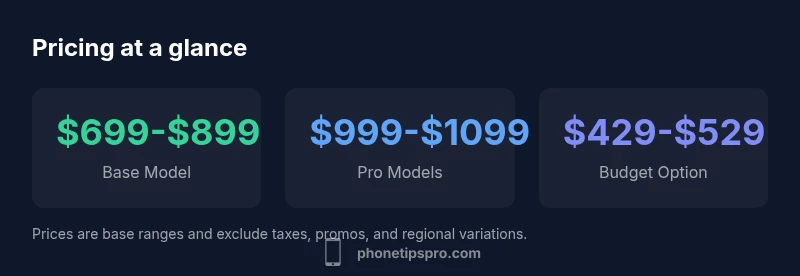
| Model tier | Price range (base) | Notes |
|---|---|---|
| Standard/entry | $699-$899 | Entry-level pricing in major markets |
| Pro models | $999-$1099 | Premium features and storage options |
| iPhone SE | $429-$529 | Budget option |
FAQ
What factors influence iPhone pricing in 2026?
Pricing is driven by model tier, storage options, regional taxes, carrier subsidies, and ongoing promotions. Regional pricing can shift significantly between markets.
Pricing depends on model, storage, taxes, and promos.
Are iPhone prices different by country?
Yes. Taxes, duties, and local incentives create country-specific price variations across retailers and carriers.
Yes—country matters due to taxes and local deals.
Is it cheaper to buy refurbished or used iPhones?
Refurbished devices can save money and often come with warranties. Verify seller credibility and terms before buying.
Refurbished options can be cheaper with warranty.
When is the best time to buy to save money?
Look for new model launches, back-to-school promos, and end-of-year sales when discounts are most common.
Timing matters—watch for promos and launches.
Do trade-ins significantly reduce upfront costs?
Yes. Trade-ins can substantially lower the upfront price, depending on device condition and program terms.
Trade-ins can cut upfront cost a lot.
Do iPhone prices include taxes?
Prices shown are typically before tax; final checkout includes taxes and local fees based on location.
Taxes apply at checkout and vary by place.
“Pricing is a moving target shaped by model tiers, regional taxes, and promotions. Buyers should weigh upfront sticker price against trade-in value and long-term ownership costs.”
Quick Summary
- Prices vary by model and region; expect a base range of roughly $699-$1,099
- Storage options and Pro variants add substantial price differentials
- Trade-ins, promos, and financing reduce upfront cost
- Total cost of ownership includes taxes, warranty, and charging costs