Is iPhone Too Expensive? A Practical Guide for 2026
Explore whether iPhone pricing in 2026 is justified, what drives the cost, and smart buying tips from Phone Tips Pro. Learn about value, ownership costs, and how to save without sacrificing performance.


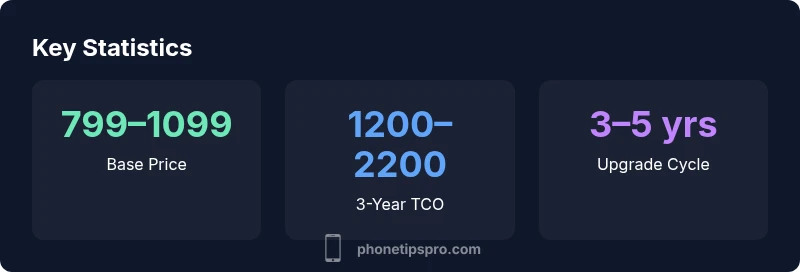
In 2026, iPhones generally cost more upfront than many midrange smartphones, reflecting premium design and ecosystem advantages. Base models typically start around $799, with higher storage tiers reaching $1,099–$1,599. The premium is real for many users, but whether it’s worth it depends on how you use the device and how long you plan to keep it.
Why the price premium exists
For many buyers the question is is iphone too expensive, and the answer depends on how you weigh long-term value against upfront cost. Apple positions iPhones as premium devices, and the price reflects thoughtful hardware, software integration, and a broad ecosystem that blends hardware with services. The premium also sustains brand loyalty and a consistent experience across iPhone, iPad, Mac, and Apple Watch. If you plan to keep the device three to five years, benefit from regular OS updates, and use services like iCloud or Apple Music, the premium often feels more acceptable. If you primarily want a basic smartphone with no interest in the ecosystem, the higher upfront price may seem less justifiable. The important takeaway is that is iphone too expensive is a question of value over time, not just sticker price.
The cost components beyond the hardware
The sticker price is only one part of total cost. Ongoing costs include software updates, security patches, data storage, accessories, and potential repairs. iPhones typically receive multi-year OS support, which can reduce the need for early upgrades. Resale value is another factor; iPhones tend to retain higher resale prices than many Android devices, helping offset costs when you upgrade. Accessories—cases, chargers, screen protectors—add up, especially if you replace them frequently. Subscriptions like iCloud storage, Apple Music, and Find My add to the monthly outlay. For some users, these recurring costs are worth the convenience and cohesion; for others, they’re a hidden premium that should be weighed against alternatives.
Value drivers: longevity, software updates, resale value
iPhones’ value is driven by longevity, consistent software updates, and strong resale value. Apple’s commitment to updates means devices often stay secure and relevant for five to seven years, which amortizes the upfront price over a longer period. When you sell or trade in later, iPhones commonly fetch solid returns, further improving total cost of ownership. Real-world outcomes depend on care, battery health, and usage intensity, but the core advantage remains: long-term software support and high demand in the resale market can make the premium more palatable for those who keep devices longer.
How to compare with alternatives
Comparing iPhones with Android flagships or midrange devices requires a broader lens than upfront price alone. Android models may offer competitive hardware at a lower initial cost, but updates and resale dynamics often diverge. If your priority is rapid hardware turnover or customization flexibility, alternatives may fit you better. If you value a consistent software experience, seamless ecosystem, and longer support, the iPhone can offer better long-term value. A practical framework is to assess upfront price, projected lifespan, update cadence, resale potential, and the total cost of ownership—including accessories and services—over a three- to five-year horizon.
Practical buying strategies to soften the sticker price
Think strategically about when and how you buy. Look for promotions from retailers or carriers, and explore trade-ins to reduce upfront costs. Financing plans can spread payments with manageable monthly costs, but compare APRs to avoid extra interest. Consider certified refurbished devices with warranty as a middle-ground option. If you already subscribe to Apple services, bundling devices with a service plan may add value beyond the price tag. Finally, choose storage based on current needs to avoid paying for unneeded capacity now and upgrading sooner than necessary later.
Real-world scenarios: who benefits most from paying a premium
Power users who rely on a rich app ecosystem, instant updates, and cross-device continuity typically see the premium pay off over time. Students and professionals who value reliability and long-term maintenance may find the higher upfront cost justified. Families seeking uniform devices across devices can benefit from easier management and better compatibility with iCloud. Conversely, casual users or those who prioritize upfront price or non-Apple services may prefer cheaper devices. The goal is alignment: if long device life, strong resale value, and regular updates match your needs, paying the premium makes sense.
Planning for future costs: services, accessories, and trade-ins
Total cost includes services (iCloud, Apple Music), accessories, and potential repairs or battery replacements. Forecasting these costs over years helps you compare options more accurately. Trade-ins can dramatically reduce upfront costs, especially when upgrading from older iPhone models. Protecting the device with a case, keeping battery health good, and storing it properly can maximize resale value when you trade in. This forward-looking approach helps justify the premium and avoids sticker shock at purchase time.
Price/value comparison across ownership horizon
| Aspect | Typical range | Notes |
|---|---|---|
| Base price (iPhone) | $799–$1,099 | Model-dependent |
| 3-year total cost of ownership | $1,200–$2,200 | Includes services, accessories, and battery replacements |
FAQ
Is an iPhone worth the price for casual users?
For casual users, the upfront premium may not be essential. Consider your need for regular updates, ease of use, and the ecosystem benefits. If those factors matter little to you, a cheaper device could be a better fit.
If you use basic features and don’t rely on the ecosystem, a cheaper phone might be better for you.
Does AppleCare affect the cost equation?
AppleCare adds planned maintenance protection and can reduce repair costs, which improves long-term value. Factor it into total cost when planning upgrades.
AppleCare helps with repairs, so include its cost when you estimate long-term value.
Are refurbished iPhones a good value?
Refurbished models from reputable sellers often offer notable savings with warranty. They can deliver near-new performance at a lower upfront price, making them a solid middle-ground option.
Refurbished iPhones can be a smart, cheaper alternative with warranty.
What should I consider before upgrading?
Assess your current device’s performance, updates, battery health, and whether your apps and services need newer hardware. If the improvement aligns with your needs and you’ve planned for additional costs, upgrading can be worthwhile.
Check performance, updates, and battery life before upgrading.
How do financing options affect affordability?
Financing can spread the cost, making monthly payments manageable, but watch for interest and terms. A carefully chosen plan can help you avoid paying more over time while staying within budget.
Finance options can help, but compare total interest and terms.
Can trade-ins significantly reduce upfront cost?
Trade-ins can substantially lower upfront cost, especially when moving from an older iPhone. Verify gloss and condition requirements to maximize credit.
Trade-ins can cut what you pay upfront if your old phone is in good shape.
“Value for money in 2026 hinges on ecosystem depth and updates as much as on the sticker price.”
Quick Summary
- Recognize the premium as a long-term value signal
- Consider total cost of ownership, not just upfront price
- Leverage trade-ins and refurbished options to reduce upfront costs
- Update cadence and ecosystem loyalty influence value
- Plan for services and accessories from day one