iPhone 14 Price in 2026: What You Pay and How to Save
Discover the iPhone 14 price in 2026 across new, refurbished, and used options. Learn how storage, region, and promos affect cost, with practical saving tips and deal comparisons.


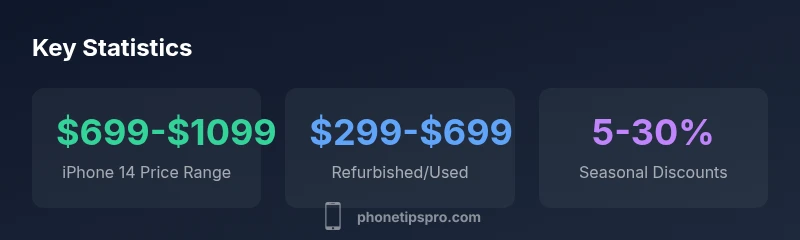
Based on Phone Tips Pro Analysis, 2026, the iPhone 14 price in USD typically ranges from $699 to $1099, depending on storage, model, and where you buy. New units, official promotions, and carrier deals push the price within that band. Refurbished and used units sit lower, offering substantial savings with trade-in options.
i phone 14 price dynamics and context
The landscape around the i phone 14 price in 2026 is shaped by multiple moving parts. First, the base sticker price can vary by storage tier and regional taxes or subsidies. Second, the channel you choose—Apple’s official store, carrier promotions, or trusted retailers—affects the final number you see at checkout. Third, as newer models arrive, the perceived value of the iPhone 14 shifts in the market, with refurbishers and used-device marketplaces filling the gap for budget-conscious buyers. In practice, you will see a wide but predictable band that reflects storage options, condition, and geographic factors. For iPhone shoppers, this means a smart comparison should account for all four variables rather than fixating on a single price point. In our 2026 analysis, the iPhone 14 price is most noticeable in the trade-in value you can claim when upgrading, which can significantly reduce the effective cost over time.
- Primary price drivers include storage size, cosmetic condition, and warranty terms.
- Regional differences (taxes and duties) can push final prices higher in some markets.
- Promotions may shorten the time frame in which the lower price is available.
To put it plainly, the i phone 14 price is not a single number—it's a spectrum shaped by storage, condition, and the buying channel. This nuance matters for budgeting and long-term ownership planning.
Price breakdown by model and storage
Historically, the iPhone 14 lineup included at least a few distinct configurations, and the price you see is typically tied to the storage tier. Commonly, base storage (128GB) positions itself at a lower starting point, with 256GB and 512GB variants commanding higher price bands. The price gap between these storage options is typically the most predictable portion of the figure, often mirroring the added value of more onboard space. When evaluating price, consider how fast you need extra storage for photos, apps, and media; sometimes spending a bit more upfront saves you from paying monthly cloud-storage fees later. The iPhone 14 price in 2026 commonly reflects these tiers across new devices, refurbished stock, and carrier bundles, making it essential to compare the total cost rather than the headline price alone.
- 128GB variants usually carry the lowest price among new options.
- 256GB and 512GB tend to show incremental price steps that align with storage gains.
- Refurbished devices frequently match or beat new-device promos when bundled with warranties.
Estimating current price in 2026
Estimating current price for the iPhone 14 in 2026 requires combining several data points. Start with the official price range for new devices, then adjust for regional taxes and typical promotions. Next, examine refurbished marketplaces and certified-reseller offers, which frequently provide substantial savings while offering limited warranty. Finally, factor in trade-in credits that can drastically reduce upfront costs when upgrading. Our approach at Phone Tips Pro combines these elements into a practical estimate: consider a price band for each condition (new, refurbished, used) and then apply a conservative discount for promotions you’re likely to encounter during seasonal sales. By doing this, you’ll arrive at a reliable price target that aligns with your region and preferred buying channel.
- New devices: base range with storage influence.
- Refurbished: lower cost, warranty considerations.
- Used: market-driven pricing with higher risk and reward.
New vs refurbished vs used: A practical comparison
For cost-conscious buyers, choosing between new, refurbished, and used hinges on your willingness to trade certainty for lower pricing. New devices offer peak reliability, up-to-date warranties, and the least risk, but carry the highest price. Refurbished units, rebuilt to factory standards, can deliver substantial savings with warranty coverage, making them a strong middle option. Used devices present the most affordable path, yet carry the greatest risk of wear, battery degradation, and shorter remaining support. When evaluating the iPhone 14 price, create a simple rubric: set your maximum budget, compare the total cost of ownership (including taxes and extended warranties), and assess how long you expect to keep the device. A well-placed trade-in can tilt the balance toward refurbished or used options if you’re upgrading within a few years.
- New: predictably reliable, higher upfront cost.
- Refurbished: good value with warranty; best balance for many buyers.
- Used: cheapest upfront; verify battery health and lock status.
How promotions and financing affect final cost
Promotions and financing options dramatically alter the effective price you pay for the iPhone 14. Promotions from retailers or carriers can drop the upfront cost by single or multiple discounts, and bundled accessories or extended warranties can change value perception. Financing adds manageable monthly payments but may increase the total outlay over time due to interest. If you plan to finance, compare APRs and total interest across providers, and don’t assume the lowest sticker price automatically equals the best deal. Our data shows that a favorable combination—moderate upfront pay, a solid trade-in, and a short-term promotional rate—often delivers the best overall price. Always quantify the total cost over your planned ownership period before committing.
- Look for carrier or retailer promos around holidays.
- Consider a trade-in to boost upfront savings.
- Compare total-cost-of-ownership across financing options.
Taxes, region, and carrier factors in price
Taxes and duties are a reality that can move the iPhone 14 price up by a meaningful margin, especially in countries with high value-added taxes or import duties. Carrier subsidies can temporarily lower the upfront price in exchange for service commitments, affecting the perceived value depending on your data plan and usage. In some regions, local promotions may create price cliffs where a small difference in tax or subsidy has a large impact on final cost. To navigate these differences, always confirm the exact price with the local retailer, calculate the impact of taxes, and compare these numbers to the prices in other regions when doing cross-border purchasing. The takeaway: price is not just the number on the receipt—it’s the combination of base price, taxes, subsidies, and promotions.
- Taxes and duties can substantially alter the final sticker price.
- Carrier deals may reduce upfront prices but bind you to specific plans.
- Cross-border comparisons can reveal hidden savings or costs.
Practical buying plan: step-by-step
- Define your storage needs and preferred color/variant to narrow the price range. 2) Check official Apple pricing, plus major retailers and carrier promotions for the same configuration. 3) Compare refurbished and used options from reputable sellers with warranty and return policies. 4) If possible, plan a trade-in to maximize upfront savings. 5) Calculate total cost of ownership (including taxes, shipping, and protection plans) over your intended ownership period. 6) Time your purchase with seasonal promotions to lock in the best price. 7) Double-check eligibility for financing with favorable APRs. By following these steps, you’ll maximize your chances of securing a favorable iPhone 14 price in 2026.
- Define needs first to avoid overspending.
- Always compare multiple channels.
- Use trade-ins to boost upfront savings.
- Align purchase with promotions for best value.
Common mistakes to avoid when checking price
Common missteps include focusing only on the headline price, ignoring taxes and shipping, and neglecting total-cost-of-ownership. Another pitfall is failing to verify the warranty and return policy, especially with refurbished units. Always confirm whether the price applies to the exact storage tier you want, and beware of misleading “deal” listings that appear cheaper but exclude essential fees or require long-term commitments. Finally, avoid buying solely on a one-time promo without considering how future price changes could affect resale value. A disciplined approach and cross-channel comparison will yield the true iPhone 14 price you should pay in 2026.
Estimated price ranges by condition and storage
| Variant | Estimated Price (USD) | Condition | Notes |
|---|---|---|---|
| iPhone 14 128GB New | 699-799 | New | Base storage; official channels |
| iPhone 14 256GB New | 799-899 | New | Higher storage; official channels |
| Refurbished iPhone 14 128GB | 299-499 | Refurbished | Certified refurb with warranty |
| Used iPhone 14 128GB | 350-650 | Used | Market pricing |
FAQ
What is the official starting price of iPhone 14?
In 2026, official pricing for new iPhone 14 variants generally falls within the USD 699-1099 range, depending on storage and region. Promotions and carrier bundles can reduce this price further.
In 2026, the iPhone 14 starts around USD 699 to 1099, depending on storage and location.
Does the iPhone 14 price vary by country?
Yes. Taxes, duties, carrier subsidies, and regional promotions cause price differences across countries. Always check local prices and compare with cross-border options if available.
Yes, price varies by country due to taxes and carrier deals.
New vs refurbished: which saves more?
Refurbished devices often offer significant savings with warranty coverage. New devices have the least risk and longest support. Consider your budget and tolerance for risk when choosing.
Refurbished usually saves money with some warranty; new is safest.
How do trade-ins affect the price?
Trade-in credits can substantially reduce upfront costs, sometimes by hundreds of dollars, depending on your old device’s condition and model.
Trade-ins can cut your upfront price a lot, depending on your old device.
Are there financing options that affect cost?
Carriers and Apple offer financing. While monthly payments increase total cost due to interest, they can make the price more affordable upfront. Compare APRs and terms.
Financing can spread out the cost, but check interest and terms first.
“Price is a moving target; the smart approach is to map your storage needs to the total cost, including promos and trade-ins.”
Quick Summary
- Compare total cost, not just sticker price
- Prices vary by storage and region
- Consider refurbished or trade-in to save
- Watch seasonal promotions and financing offers
- Verify warranty and return terms before buying