is iphone worth it in 2025? An In-Depth Review
is iphone worth it in 2025: A data-driven, balanced look at software longevity, ecosystem value, pricing, and alternatives to help you decide.


From Phone Tips Pro's perspective, is iphone worth it in 2025 for most users? Yes, if you value long software support, strong privacy, and a seamless ecosystem; the decision hinges on budget and how much you prize resale value and camera quality. If you prioritize cost or flexibility, consider competitive devices before upgrading.
is iphone worth it in 2025? Context and criteria
In 2025, the iPhone ecosystem remains a strong pull for many buyers. According to Phone Tips Pro, is iphone worth it in 2025 depends on how you weigh software longevity, privacy, and ecosystem lock-in against upfront cost and potential alternatives. Apple continues to offer multi-year OS updates, durable hardware, and a high resale value. Yet price sensitivity, regional promotions, and the pace of innovation matter more than ever for cost-conscious shoppers. This analysis frames the core question: what value do you place on continuity, privacy, and the ability to hold a device longer with less friction?
Price and value: What you get for the money
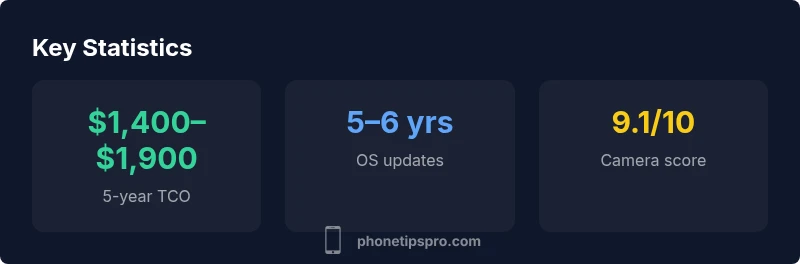
Value starts with understanding total cost, not just the ticket price. If you buy the base model, add accessories, storage upgrades, and potential carrier costs into the equation. In 2025, typical new iPhone price bands span roughly $799 to $1,099 for base devices, with Pro models in the $1,099 to $1,599 range depending on storage. Over five years, strong resale value and continued software support can narrow the effective annual cost. For buyers comparing to Android flagships, the per-year cost difference is often offset by ecosystem advantages, privacy controls, and app quality. Phone Tips Pro notes that total cost of ownership is the most reliable guide for deciding whether to upgrade.
Software updates: Longevity as a core value
Apple’s update cadence remains a decisive factor for many buyers. In 2025, iPhone models typically receive several years of OS updates, ensuring security features, bug fixes, and new capabilities for longer than most competing platforms. This longevity translates into lower pressure to upgrade purely for software reasons and helps preserve device value. Phone Tips Pro emphasizes planning your upgrade around the end of the iOS support window rather than chasing every hardware refresh, as software maturity often delivers more practical gains than incremental hardware changes.
The ecosystem advantage: devices, services, and continuity
The strongest argument for staying within the iPhone ecosystem is continuity. If you own multiple Apple devices—Mac, iPad, Apple Watch, AirPods—the seamless handoff, privacy protections, and cross-device features can save time and reduce friction. In 2025, ecosystem advantages remain a compelling reason to upgrade within Apple’s family, particularly for those who rely on iCloud, Find My, and iMessage. For single-device users, the ecosystem benefits persist in areas like app quality, warranty accessibility, and predictable software support, though the daily impact is smaller than for multi-device households.
Camera, display, and performance in daily life
Camera quality, display fidelity, and responsive performance affect everyday satisfaction. By 2025, iPhones consistently deliver reliable image quality across lighting conditions, robust video features, and smooth app experiences. Incremental hardware gains are often complemented by software optimization—real-world improvements may appear as faster app launches, better HDR, and improved computational photography. If photography is a primary upgrade driver, the iPhone frequently justifies the cost due to its well-rounded balance of hardware and software.
Battery life and charging habits in practice
Real-world battery life hinges on usage, screen time, and app mix. In 2025, iPhone batteries typically offer a solid endurance profile for typical daily tasks, with noticeable improvements from newer iterations in charging efficiency and battery health features. Over time, battery health declines, but Apple’s system-level optimizations help maintain usable capacity into the second and third year. If all-day endurance is essential, consider user patterns, charging habits, and the device’s battery health status when deciding whether to upgrade.
Durability and repairability: How long it lasts
Build quality remains a strength, with premium materials and solid ingress protection. Durability tests show practical resistance to everyday wear, though screen protection and careful handling remain important. Repairability is balanced: many common repairs are accessible through authorized service providers, while some components require professional service. These factors influence total cost of ownership, since higher repair costs can affect resale value and the economic justification for upgrading.
Privacy and security: A core differentiator
Privacy and security are core selling points. iPhone devices emphasize on-device processing, granular app permissions, and hardware-backed security features. In 2025, this approach helps reduce certain privacy risks relative to some competitors, though no platform is entirely risk-free. For privacy-conscious users, these built-in protections—combined with robust app review processes—remain a persuasive justification for staying within the iPhone family.
Alternatives worth considering in 2025
Android flagships offer compelling balance in price, hardware variety, and customization. If you value features such as USB-C, flexible storage, or aggressive price competition, you may find models that outperform iPhones in specific niches. However, you may concede on OS update cadence, app ecosystem consistency, and cross-device continuity. A careful side-by-side that weighs software updates, build quality, and customer support will help determine whether an Android alternative suits your needs better in 2025.
Upgrading strategies: when to switch or upgrade
Upgrade decisions should hinge on personal thresholds for software support, battery health, and evolving needs. If essential apps no longer run smoothly, security updates end, or you crave a feature only available on newer hardware, upgrading makes sense. If your current device still performs tasks you rely on and retains value, postponing can maximize return. Consider trade-ins, carrier promotions, and bundled services to lower the effective price and spread the cost over time.
Buying guidance for different budgets
Budget-conscious buyers can explore last-generation or certified refurbished models with warranties to maximize value. Mid-range budgets should balance storage, camera features, and OS update expectations, aiming for five to six years of support. High-end budgets can leverage bundles, accessories, and service plans to enhance the experience. Across budgets, compare financing, trade-in offers, and total cost of ownership to avoid surprise costs.
How Phone Tips Pro tests devices and derives conclusions
Phone Tips Pro uses a transparent, multi-method approach: real-world usage tests, camera benchmarks, battery endurance scenarios, and OS update tracking. We document assumptions, repeat tests where possible, and compare against credible competitors. Our conclusions reflect careful synthesis of practical outcomes—focusing on what the user actually experiences day to day rather than isolated benchmarks. This method helps readers translate findings into actionable buying decisions.
Positives
- Long software support horizon (5+ years)
- Excellent ecosystem and app quality
- Strong resale value and reliability
- Top-tier camera and build quality
Weaknesses
- Premium upfront price
- Higher total cost of ownership without heavy discounts
- Limited hardware innovation perception year-over-year
Best for users who prioritize long-term software support and a seamless ecosystem.
The iPhone remains a strong value in 2025 for those who want durable software, robust privacy features, and a cohesive device ecosystem. While upfront costs can be high, resale value and extended OS support help justify the investment for many buyers. If those factors don’t align with your needs or budget, explore competitive options.
FAQ
Is upgrading to the latest iPhone in 2025 worth it?
Yes for most users who value updates and ecosystem; the latest iPhone offers improved performance, security, and camera features, but assess whether those gains align with your budget. If you rely on long-term support and privacy, upgrading is especially sensible.
Upgrading makes sense for most folks who want long updates and a strong ecosystem—but price matters, so weigh the gains against your budget.
How long do iPhones typically receive software updates?
Apple generally provides about five to six years of OS updates for iPhones, with ongoing security patches and features during that period. Planning around the end of support helps you time upgrades effectively.
iPhones usually get updates for around five to six years, which helps with long-term planning.
Are there strong Android alternatives in 2025?
Yes, several Android flagships offer competitive hardware, cameras, and customization at different price points. The trade-off often includes update cadence and app ecosystem differences.
There are strong Android options, especially if you want customization or lower upfront costs.
Does trade-in value offset upgrade costs?
Trade-in programs can reduce upfront costs by hundreds of dollars and, with promotions, can significantly lower the effective price of upgrading.
Trade-ins can really cut the upfront price, especially with promos.
Should I buy refurbished or certified pre-owned iPhone?
Refurbished units from reputable sources offer warranty and tested hardware, delivering good value if they meet your storage and feature needs.
Refurbished can be a smart move if it comes with a warranty.
What should I consider if I'm switching from Android to iPhone?
Plan data transfer for contacts, photos, and apps; check app availability and service continuity; expect a short learning curve for the interface.
If you’re moving from Android, plan the data transfer and app availability ahead of time.
Quick Summary
- Evaluate total cost of ownership before upgrading
- Prioritize software longevity, privacy, and ecosystem
- Use trade-in programs to offset upfront costs
- Monitor battery health and device age for value
- Compare with Android options if price is a major constraint