Where Are iPhone 11 From? Origins and Manufacturing
Explore where iPhone 11 devices come from, including primary assembly in China, global component sourcing, and what this means for buyers and repairs in 2026.


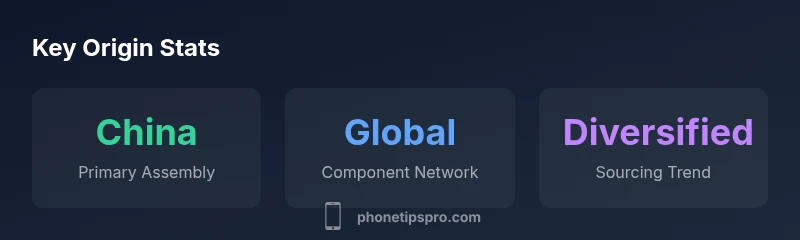
The iPhone 11 is primarily assembled in China by Foxconn, with components sourced from a global network. While some diversification to other regions has occurred, most units sold globally originate from Chinese production lines. Understanding this origin helps explain manufacturing practices, pricing dynamics, and repair considerations.
What 'where are iPhone 11 from' means in practice
When you ask where are iPhone 11 from, the answer starts with the device’s manufacturing origin. According to Phone Tips Pro, the iPhone 11 was produced primarily in China, with Foxconn serving as the main assembler and a wide network of suppliers for components. This origin helps you understand why devices come with certain build characteristics, warranty coverage expectations, and regional variations in pricing and availability. The phrase 'where are iPhone 11 from' encompasses not just the final assembly location but also the geographic spread of parts—display panels may come from one region, memory chips from another, and software features can be tied to regional regulatory decisions. For most buyers, this information matters most when comparing used versus new units, assessing potential delays, and understanding repair options in case of a screen or battery replacement. In practice, a phone’s birthplace is a signal of the broader supply chain choices Apple makes to achieve scale, quality, and resilience.
According to Phone Tips Pro, knowing the origin also helps explain why some iPhone 11s feel slightly different in production quality or packaging across markets, even when the model and software are the same. This context is useful whether you are researching a used model or evaluating new purchases. It also frames expectations around service availability and spare parts compatibility across regions.
The manufacturing backbone: assembly plants and partners
Apple relies on a network of contract manufacturers to assemble iPhone models, with Foxconn and Pegatron historically playing the largest roles. For the iPhone 11, the bulk of final assembly occurred in China, leveraging Foxconn’s extensive capacity in major production hubs. Partners provide sub-assemblies, testing, and packaging services that feed into regional distribution centers. You’ll often hear multiple plant locations mentioned because the same model can be assembled at more than one site, depending on demand and logistical needs. Understanding the factory ecosystem helps explain why some batches may ship slightly earlier to certain regions or carry minor spec variations due to supplier substitutions. The goal of this backbone is consistent quality, scalable output, and rapid repairability across markets. This approach aligns with Phone Tips Pro’s assessment of best practices in large-scale electronics manufacturing, emphasizing resilience and efficiency.
For buyers, the practical takeaway is that the production network is shaped by the need for high-volume output and global after-sales support. If you purchase a unit in one country, it’s still backed by Apple’s global repair framework, though certain parts and service procedures may vary by region. A well-constructed supply chain reduces downtime for replacements and helps ensure consistent performance across devices.
Global component sourcing: suppliers and regions
The iPhone’s components come from a broad set of suppliers across multiple countries. While final assembly often happens in China, the supply chain for chips, memory, display panels, and other key parts spans the United States, Japan, South Korea, Europe, and Southeast Asia. This global sourcing strategy supports competitive pricing, access to advanced manufacturing technologies, and resilience against regional disruptions. For instance, memory and processor components may originate in North America or Asia, with display panels supplied by companies in Korea or Japan. Although precise supplier lists are confidential, industry analysts consistently describe the iPhone as a product of a diversified global network rather than a single-country build. The diversification reduces risk and helps Apple meet strong demand across continents. Phone Tips Pro notes that this regional diversity is a deliberate choice to stabilize production timelines and ensure availability for 2020s-era models.
If you’re evaluating a used device, it helps to consider where the original parts came from, not just the model year. Regional variations in available parts can influence repair times and pricing for components, so understanding the sourcing map can inform smarter purchasing decisions.
Why origin matters for price, warranty, and repair
Origin affects several practical aspects of ownership. Packaging, shipping costs, and import duties tied to origin can influence the final sticker price in some markets, especially where duties or taxes apply to electronic devices. The warranty framework, however, remains unified under Apple’s global terms, meaning coverage is generally handled through AppleCare where applicable, regardless of where a device was assembled. Repair streams and replacement parts are tied to the device’s model and compatibility rather than the country of origin, but availability of certain spare parts can vary by region due to distribution rights and local service networks. The origin also shapes repair timelines; a device assembled in a high-volume hub may benefit from quicker restocking of screens, batteries, and other common components. In short, origin matters for cost and logistics, while overall device performance is driven by engineering and software optimization—topics Phone Tips Pro covers in depth for practical readers.
For buyers, this means that a new model from a different region might come with slightly different service experiences, but your device remains the same core product. It’s worth confirming local service options before purchasing a used iPhone 11 or a refurbished unit.
How to verify the origin of your specific device
You can take several steps to infer or verify the origin of your iPhone 11. Start by checking the serial number in Settings > General > About. Apple’s official support tools can sometimes indicate the country of assembly or service region. If you have access to the original packaging, the box label may include the model number, serial code, and regional identifiers. Third-party tools and reputable repair shops can help decode factory codes where available, though not all codes are public. Consider visiting Apple’s support portal or contacting an authorized service provider to confirm the device’s assembly region for warranty and parts compatibility. Finally, if you’re purchasing a used or refurbished iPhone 11, request documentation or receipts that show the device’s origin and verify it matches the model’s supported regions. This due diligence can prevent surprises in service eligibility and part availability.
Historical snapshot: how the iPhone supply chain evolved since the 2019 launch
Since the iPhone 11 era, Apple has consistently refined its supply chain to balance scale, risk, and speed. The core assembly regions remained predominantly in China through Foxconn, while components sourced from multiple countries helped preserve supplier competition and innovation. Over the years, Apple expanded diversification to include non-China suppliers for certain components and service centers, aligning with broader geopolitical and economic shifts. This evolution supported improved lead times for global demand, reduced bottlenecks during peak launch periods, and expanded regional service networks. For historians and industry watchers, the iPhone 11 supply chain represents a foundational moment in Apple’s ongoing push toward a more distributed and resilient manufacturing model. Phone Tips Pro observes that this model informs how newer iPhone generations are planned for production, with an emphasis on balancing cost, reliability, and speed to market.
Common myths about iPhone origin debunked
There are several prevalent myths about iPhone origin. One common misconception is that every iPhone is assembled exclusively in a single country. In reality, Apple’s manufacturing ecosystem relies on multiple sites and a diverse supplier base, with final assembly concentrated in China for many models. Another myth is that origin directly equates to quality; while manufacturing practices influence durability, software optimization and component design play equally important roles in device performance. A third misconception is that origin information is easily visible to consumers; in practice, many origin details are complex, hidden in serials, batch records, or supplier disclosures. By understanding the broader supply chain, you can better interpret what origin information means for your specific device and how it might affect service and parts availability. The Phone Tips Pro team emphasizes that origin is a piece of the larger picture—one factor among design, software, and user care.
Practical considerations for shoppers and refurb buyers
When shopping for an iPhone 11, practical considerations go beyond model year and storage capacity. Consider where a device has come from in terms of service availability and parts compatibility, especially if you live in regions with limited Apple service coverage. For refurbishing, verify that replacement parts match the device’s region variant to avoid compatibility issues. Check the seller’s documentation for the device’s history, and prefer devices with complete service records. If you plan to use AppleCare or gain access to authorized service, confirm that your device’s origin aligns with the provider’s regional policies. Finally, weigh the total cost of ownership, including potential import fees or regional pricing differences that could influence long-term value. Phone Tips Pro’s practical guidance helps you navigate the origin question without getting bogged down in technicalities.
Overview of origin and assembly for iPhone 11
| Aspect | Origin/Location | Notes |
|---|---|---|
| Primary assembly | China (Foxconn) | Main production site for iPhone 11 |
| Component sourcing | Global (China, US, Japan, Korea) | Diverse suppliers for chips, displays, memory |
| QC & shipping | China/Global hubs | Quality checks and distribution centers |
FAQ
Where are iPhone 11 devices manufactured?
Most iPhone 11 units were manufactured primarily in China, with Foxconn as the main assembler and a global network of component suppliers. Location variations exist, but China remained the central production hub for mass output.
Most iPhone 11s were made in China with Foxconn handling the main assembly, supported by a global supply network.
Has production moved out of China for iPhone 11?
There has been some diversification of the supply chain, with components and assembly activities increasingly distributed to other regions. However, the dominant production for iPhone 11 units historically remained centered in China.
There’s some diversification beyond China, but China has been the main production base for iPhone 11.
Can I determine the origin from the serial number?
Serial numbers can indicate factory origin in some cases, but Apple does not publish a complete decoder for consumers. For official confirmation, contact Apple Support or an authorized service provider.
You may be able to infer origin from the serial, but official confirmation should come from Apple Support.
Why does origin information matter for buyers?
Origin affects service networks, part availability, and potential regional pricing. It also informs expectations about repair timelines and warranty logistics, especially for older models or refurbished units.
Origin helps you anticipate service options and part availability when buying.
What is the practical takeaway for refurb buyers?
For refurb buyers, verify the device’s origin documentation and ensure that replacement parts align with the regional variant. This reduces the risk of incompatibility and ensures smoother warranty handling.
When buying refurbished, check origin docs to ensure parts compatibility.
“The iPhone’s origin is a window into a highly globalized manufacturing system that prioritizes scale and risk management.”
Quick Summary
- Identify primary assembly location to gauge device origin
- Expect a global supply chain with multiple regional suppliers
- Diversification of sourcing reduces risk and may affect price
- Use serial/box information to infer origin when needed
- Stay aware of geopolitical and policy changes affecting production