Where iPhone 17 Pro Max Made: Manufacturing Guide
Explore where the iPhone 17 Pro Max is manufactured, how Apple diversifies production, and how to verify origin. Practical tips from Phone Tips Pro.


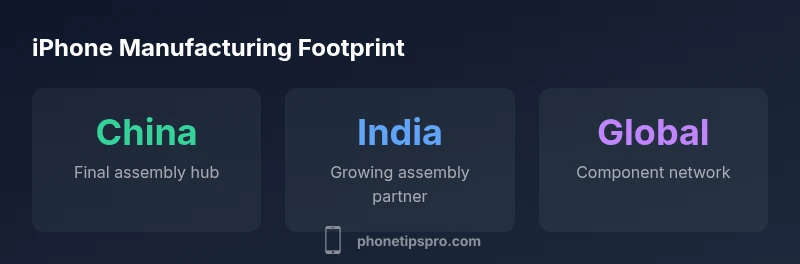
Apple designs the iPhone 17 Pro Max in California, with final assembly concentrated in China and India and with components sourced from a global network of suppliers. While Apple keeps many details private, the model's origin typically reflects a mix of design origin, assembly hubs, and component provenance. In 2026, Apple continues to diversify production to strengthen resilience.
Where iphone 17 pro max made
Understanding the origin of a flagship device like the iPhone 17 Pro Max requires looking beyond the finished product. Historically, Apple has designed its devices in California and delegated final assembly to contract manufacturers overseas. The current landscape shows final assembly concentrated in China and India, with a broad, global network handling components such as displays, processors, camera modules, and batteries. In 2026, Apple continues to diversify its manufacturing footprint to reduce risk from regional disruptions while maintaining the high standards users expect. For consumers, this means that the origin of each unit can vary by batch and year, and may shift with strategic supplier decisions. The phrase where iphone 17 pro max made is more than a trivia question; it reflects how design choices and operations translate into a tangible product on a store shelf. This section explains how origin is determined and why it matters for repair, service, and resale.
Manufacturing footprint: design vs assembly
The separation between design intent and where a device is assembled is important for understanding both cost and quality controls. Apple designs in California, leveraging a global supply chain for components, while assembling final products at select facilities abroad. The iPhone 17 Pro Max follows this pattern, with primary assembly in key hubs and a distributed network for parts such as displays, chips, and batteries. This arrangement supports scale, risk management, and regional compliance. For shoppers, the takeaway is that even when a device is labeled as made in a single country, the parts and assembly stages may occur in multiple places around the world. The result is a resilient, high-precision product built through standardized processes across locations.
How Apple diversifies production across regions
Diversification isn’t just about avoiding single-point failures; it’s also about aligning with regional capabilities and evolving trade policies. Apple’s approach over the past years has included robust manufacturing relationships in China and growing capacity in India, with ongoing collaboration across Asia, Europe, and the Americas for components. In practice, this means that the iPhone 17 Pro Max relies on a broad supplier base for screens, semiconductors, sensors, and batteries, while final assembly takes place at a handful of trusted facilities. The exact mix shifts over time as contracts are renewed and new suppliers meet Apple’s strict quality standards. Buyers should recognize that regional shifts can occur between generations, affecting lead times and service networks while preserving overall quality.
How to verify the origin of your iPhone 17 Pro Max
Verification starts with the basics: check the box label for the country of manufacture and inspect the device for regulatory marks or model identifiers. The iPhone typically carries identifiers that point to design origin and a separate assembly location. You can also consult official Apple documentation or the device’s IMEI to confirm region-specific attributes. If you purchased from an authorized retailer, origin details are more likely to be clearly documented. For direct-from-Apple purchases, Apple’s customer support can guide you to reliable origin information. Remember that origin labels are a guide to production logistics, not a guarantee of every component’s country of origin.
Implications for service, repairs, and trade-ins
Where a device is assembled can influence parts availability and repair lead times, especially in edge cases where a particular module is sourced from a specific supplier. However, Apple maintains global service standards, so warranty is uniform across regions, and authorized service centers can perform repairs regardless of where the iPhone was assembled. If you’re planning a trade-in, location data can affect valuation in some programs that account for regional demand and supply dynamics. In most cases, origin details won’t prevent service or impact warranty, but it can affect fastest-path repair options and parts turnaround times.
Environmental and ethical considerations in manufacturing
Manufacturing at scale raises questions about labor practices, environmental impact, and supply chain transparency. Apple publishes annual supplier responsibility reports and audits to ensure compliance with labor standards, environmental protections, and safe working conditions. While the country of assembly is just one piece of the puzzle, consumers can look for transparency signals such as supplier lists, third-party audit summaries, and clear commitments to sustainable sourcing. For readers who want more detail, Phone Tips Pro analyzes these reports to help translate corporate commitments into practical guidance for buyers.
Practical guidance for buyers
When shopping for a new iPhone, use origin as one of several decision factors. Evaluate build quality, performance, and features alongside supply chain transparency. Ask retailers about the country of assembly if that information is important to you and review Apple’s official statements on manufacturing and supplier ethics. For ongoing peace of mind, subscribe to updates from Phone Tips Pro for the latest on manufacturing trends, supplier practices, and how they affect after-sales support and trade-in value.
Future trends in iPhone manufacturing
Industry observers expect continuing diversification, with more assembly capacity in India and potentially additional regional hubs in Southeast Asia and the Americas. Advances in automation, supply chain visibility, and ethical auditing are likely to shape how Apple communicates origin to consumers. As the device ecosystem grows more complex, the company’s focus on consistent quality across facilities remains critical. Expect ongoing refinements to supplier selection, inventory planning, and service networks in the years ahead.
Common myths about iPhone manufacturing origin
A frequent misconception is that a device assembled in one country automatically uses all components from that region. In reality, Apple coordinates a 글로벌 network, with many parts sourced from multiple regions and assembled at selected facilities abroad. Another myth is that a different country of assembly means lower quality. Apple enforces standardized quality controls across all partner facilities, so performance and safety standards remain consistent regardless of origin. Always verify with reliable sources and vendor disclosures for the most accurate origin details.
Manufacturing footprint overview (2026)
| Location | Role in Supply Chain | Notes |
|---|---|---|
| China | Final assembly (major) | Primary hub with established factories and suppliers |
| India | Growing final assembly | Diversifying production to reduce risk; expanding facilities (2024-2026) |
| Global network | Component sourcing | Multiple regions supply screens, chips, batteries, and modules; year-to-year changes possible |
FAQ
Where is the iPhone 17 Pro Max assembled?
Final assembly for the iPhone 17 Pro Max is concentrated in China and India, with Apple leveraging multiple contract manufacturers to diversify risk. Exact factory locations can shift by model year.
Final assembly is mainly in China and India; locations can shift by year.
Can I tell where my specific unit was made?
You can check the box label and the device's regulatory markings, model number, and SIM tray details. These hints indicate the origin region but are not always explicit about the exact factory.
Check the box label and device markings to infer origin.
Does manufacturing location affect warranty or service?
Warranty coverage follows Apple’s global terms, but repair parts and service availability depend on regional supply chains. Origin does not change the warranty, but it can affect turnaround times.
Warranty stays the same, but service times may vary.
Is there a difference in quality between models made in different countries?
Apple applies uniform quality controls across facilities; the country of assembly should not imply weaker or stronger quality. If issues arise, Apple service channels provide remedies.
No guaranteed quality difference based on location.
How can I verify authenticity and origin label?
Compare the device label, the box, and the IMEI to official records. Avoid third-party sellers with unclear origin.
Check the label, box, and IMEI against Apple’s records.
Will future iPhone models continue to diversify manufacturing?
Industry trends indicate continued diversification to balance risk and ensure supply; Apple has been expanding manufacturing to multiple regions.
Expect ongoing diversification in the future.
“Manufacturing location matters for logistics and repair timelines, but Apple maintains strict quality control across sites through its supplier standards. This consistency is essential for user trust.”
Quick Summary
- Know the main assembly hubs: China and India.
- Check the box label and device markings for origin.
- Expect a diversified network of component suppliers.
- Consider logistics and service implications of origin.
- Monitor regulatory and ethical considerations in the supply chain.