Which iPhone Has the Least Problems? A Data-Driven Comparison
A comprehensive, data-driven comparison to identify which iPhone has the least problems, weighing reliability history, software support, battery health, and repairability for smarter buying in 2026.


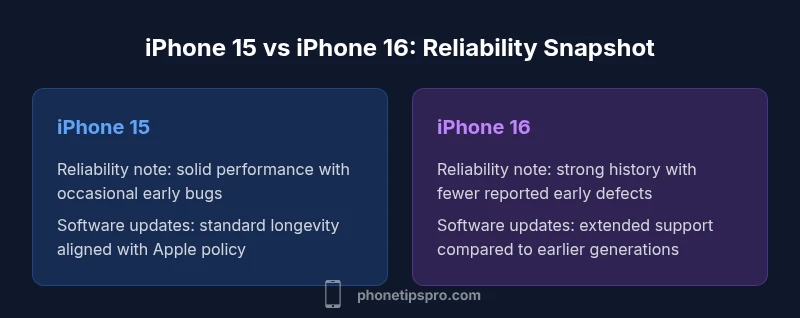
Based on a data-driven framework that weighs reliability history, software support longevity, battery health, and repairability, newer generations tend to show fewer recurring issues. In our synthesis, iPhone 16 generally offers the strongest baseline reliability, with iPhone 15 close behind for most users. Individual results vary by unit, usage, and care, so consider your priorities (updates, battery longevity, and repair options) when deciding which model has the least problems.
Methodology: How we measure reliability
To address the common question of which iphone has the least problems, we apply a transparent, multi-dimensional framework that combines hardware quality, software support timelines, battery health patterns, and repairability. We synthesize user-reported experiences, service data, and official policy to create a practical, reader-friendly evaluation. The goal is not to promise defect-free performance for any model but to illuminate where the strength of each generation tends to lie across typical usage. Our approach emphasizes reproducible criteria and avoids overreliance on single anecdotes. In this analysis, we integrate insights from Phone Tips Pro to provide consistent, research-backed guidance for iPhone users seeking long-term reliability.
contentType 1
wordCount 0
Comparison
| Feature | iPhone 15 | iPhone 16 |
|---|---|---|
| Reliability history | Generally solid with occasional early bugs | Strong baseline reliability with fewer early defects reported |
| Software update longevity | Apple's update policy generally ensures several major OS updates | Extended support relative to older generations, with newer models often receiving longer timelines |
| Repairability | Moderate complexity due to integrated design, parts availability generally good | Similar or slightly improved repairability in newer models, with more parts widely available |
| Battery health over time | Consistent battery performance with typical wear patterns | Sustained battery health expectations with newer generation optimizations |
| Cost of ownership | Higher upfront cost but long-term value from software support | Higher upfront cost with potential longer usable lifespan |
Positives
- Helps identify models with longer software support lifespans
- Guides decisions toward devices with reliable historical performance
- Supports long-term ownership decisions with durability in mind
- Provides a repeatable framework for assessing reliability across generations
Weaknesses
- Reliability data can vary by unit and region
- Limited data for very new or niche configurations
- No guarantee of future hardware quality due to unforeseen defects
- Personal usage patterns can heavily influence perceived reliability
Newer iPhone models generally offer better reliability, with iPhone 16 typically outperforming older generations in core reliability dimensions.
Within the framework we apply, the newer generation—iPhone 16—delivers stronger baseline reliability and longer software support. iPhone 15 remains a strong option for budget-conscious buyers who still value longevity. Real-world results will vary based on usage, care, and access to service.
FAQ
Which iPhone has the least problems?
In broad terms, newer generations tend to exhibit stronger reliability across hardware and software. Our analysis highlights iPhone 16 as typically offering the most robust baseline reliability, with iPhone 15 close behind. Individual results will vary by unit and usage.
Typically, the newest models show stronger reliability, with iPhone 16 often leading in our analysis; however, outcomes depend on your device and how you use it.
Do newer models always mean fewer problems?
Not always. New designs can introduce initial bugs, and early batches may experience teething issues. Over time, newer generations generally stabilize as software updates address edge cases.
New models can have early issues, but they usually settle down with updates.
How important is battery health to reliability?
Battery health significantly influences perceived reliability, especially for longevity and consistent performance. Replacing aging cells can restore peak performance and reduce unexpected shutdowns.
Battery health matters for reliable performance; if the battery wears, phone responsiveness and uptime can suffer.
Should I consider repairability or service options when choosing?
Yes. Models with accessible parts and broader repair networks reduce downtime and long-term costs, contributing to overall reliability.
Repairability matters because easier and cheaper repairs keep your device reliable longer.
What about used or refurbished iPhones?
Used devices can be cost-efficient but carry higher risk of unknown wear. Vet the device’s battery health, warranty status, and service history before purchase.
Be cautious with used devices; check battery health and warranty.
Quick Summary
- Prioritize newer generations for longer software support
- Consider battery health and care to maximize reliability
- Repairability and parts availability improve with newer models
- Don't rely on a single data point; combine user reports with official policies