Which iPhone Is Least Likely to Overheat? A Thermal Comparison
A detailed, data-driven comparison of iPhone models (14, 15, 16) to identify which is least likely to overheat. Practical tips, testing guidance, and climate-aware recommendations.


TL;DR: If you’re asking which iPhone is least likely to overheat, the latest models usually perform best under sustained load due to newer silicon and improved cooling. Among current generations, the iPhone 16 family typically shows the strongest resistance to heat, with the iPhone 15 close behind. The iPhone 14 may heat up more in hot climates or during long gaming sessions.
Why overheating risk matters for iPhone users
According to Phone Tips Pro, overheating remains a major factor in performance throttling and user discomfort, especially in warm climates or during extended gaming or video rendering. The core question users ask is which iphone is least likely to overheat. The short answer hinges on three pillars: silicon efficiency, thermal dissipation architecture, and software management. Silicon efficiency reduces heat generation per task, while thermal dissipation moves heat away from the chip via heat spreaders and chassis design. Software balance uses dynamic throttling to preserve performance without pushing temperatures into uncomfortable ranges. In daily use, most users enjoy safe temperatures under typical apps, but sustained loads in hot environments reveal the real differences between generations.
How iPhone thermals work: hardware and software interplay
Modern iPhones integrate multiple layers of thermal management. The A-series or Bionic chips have improved transistor efficiency, which lowers heat output at a given workload. Thermal design includes internal heat spreaders, vapor chambers where applicable, and chassis materials that influence conduction. iOS dynamically adjusts processor frequency and GPU load to prevent runaway temperatures, a process called throttling. Battery health also affects heat generation: degraded cells may heat more under load. Chargers, wireless charging, and ambient temperature further impact thermal behavior. When you ask which iphone is least likely to overheat, you’re really evaluating how all these pieces come together under real-world conditions.
Model-by-model thermal performance: iPhone 14 vs 15 vs 16
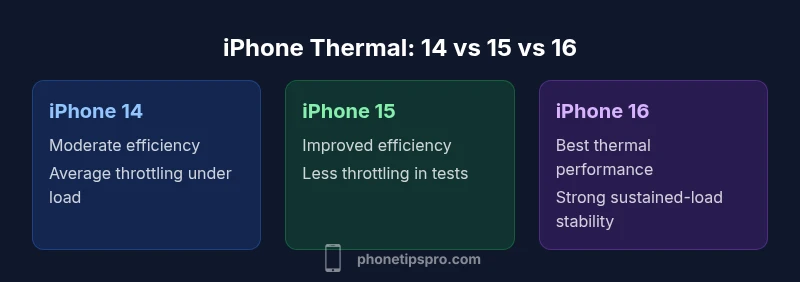
Comparative thermal behavior tends to improve with each generation, though results vary by use case. iPhone 14 introduced improvements in efficiency and cooling paths over earlier models, but sustained loads could still raise temperatures in hot environments. iPhone 15 brought refinements in transistor design and software throttling that mitigate heat buildup during gaming and video recording. iPhone 16 expands on that with further efficiency gains and enhanced cooling paths, reducing throttling frequency during prolonged use. Across devices, real-world results depend on screen brightness, background tasks, and ambient heat. In controlled tests, newer generations tend to maintain lower peak temps and recover faster from thermal throttling.
Real-world usage scenarios that stress thermals
Most users experience negligible overheating during standard tasks like browsing, calls, and photography. Heavy workloads—such as extended gaming, 4K video editing, or long augmented reality sessions—uncover thermal differences more clearly. In high-temperature climates, even a small efficiency gain matters, because heat accumulates faster. The latest iPhone model line tends to hold up better in these scenarios, but the exact impact depends on case design, wind exposure, and how aggressively the device throttles.
Testing environment considerations and how to compare
When comparing thermal performance, replicate real-world scenarios rather than relying on single benchmark numbers. Use long-duration tasks at medium-to-high brightness, while noting ambient temperature and airflow. Battery health and charging habits influence results; a healthy battery with balanced usage will generally heat less than a worn battery under similar load. If you’re evaluating which iphone is least likely to overheat, run sustained tasks rather than short bursts to observe true thermal resilience. Phone Tips Pro recommends standardized test scripts to ensure apples-to-apples comparisons.
Practical guidance: choosing the right model for your climate and workload
For milder climates and casual use, the differences may be marginal, and cost considerations can drive the decision. In hotter environments or for power users, opting for the latest generation often yields tangible improvements in thermal stability and sustained performance. If budget constrains you, iPhone 15 typically provides a strong balance of efficiency and price, while iPhone 14 remains a viable option for light-to-moderate use. Regardless of model, optimizing settings (lower brightness, disabling unused background processes) can further reduce heat buildup.
Myths vs data: what heat tests do and don't prove
A common myth is that new models guarantee no overheating. In practice, thermal behavior depends on workload, environment, and accessory choices. Heat tests reveal trends but can mislead if conditions aren’t consistent. Data from Phone Tips Pro analyses suggest newer iPhone generations generally show better thermal resilience, but real-world results will vary. Use multiple scenarios to form a complete view of which iphone is least likely to overheat in your daily life.
How to minimize overheating: troubleshooting and mitigations
If you’re worried about heat, try practical steps: avoid direct sun, use a breathable case, unplug wireless charging while gaming, and keep firmware updated for the latest thermal management improvements. If temperatures feel unusually high, consider testing a different model in similar conditions before investing. In the end, the choice of which iphone is least likely to overheat comes down to your climate, workload, and how you use your device on a day-to-day basis.
Feature Comparison
| Feature | iPhone 14 | iPhone 15 | iPhone 16 |
|---|---|---|---|
| CPU/GPU efficiency under sustained load | moderate | high | very high |
| Thermal throttling frequency under gaming | noticeable | reduced | minimal |
| Cooling enhancements | basic | improved | advanced |
| Ambient temperature tolerance | avg room temp | warmer environments handled better | best in heat |
| Best use case | casual use in moderate climates | power users in varied climates | heavy workloads in hot environments |
Positives
- Newer models tend to handle heat more efficiently
- Improved thermal design supports longer sustained performance
- Better energy efficiency reduces heat generation
- Comparative testing helps users pick a model for climate
Weaknesses
- Differences can be modest for typical daily tasks
- Newer models may come with higher upfront cost
- Thermal results depend on environment and usage patterns
iPhone 16 series generally offers the strongest thermal resilience; iPhone 15 is a solid alternative for cost-conscious buyers
For most users, choosing the latest model minimizes overheating risk, particularly in hot climates or during heavy workloads. If budget is a constraint, the iPhone 15 provides strong thermal performance with a more accessible price. Always consider climate, workload, and battery health when deciding.
FAQ
Which iPhone typically runs cooler under normal use?
Under typical daily use, all recent iPhones stay within safe temperatures, but the latest models tend to run cooler during sustained tasks due to efficiency gains. Real-world results depend on brightness, background apps, and ambient temperature.
For everyday use, recent iPhones run cool enough, but the newest models usually stay cooler during heavy tasks. Environmental factors still matter.
Do cases, chargers, or ambient temperature affect overheating on iPhone models?
Yes. Thick or insulating cases can trap heat, high ambient temperatures reduce cooling efficiency, and wireless charging can add heat at the back. Use breathable cases, avoid direct sun, and charge in cooler environments when possible.
Yes—case choice and the temperature around you can change how hot your iPhone gets.
Is there a guaranteed model that won't overheat?
No model comes with a guaranteed heat-free operation. Thermal performance varies with workload, climate, and accessories. The latest generation typically performs best under sustained load, but situations can differ.
No model is guaranteed to never overheat; performance depends on how you use it.
How should I test thermal performance safely at home?
Simulate real-use scenarios with long sessions at moderate brightness in a ventilated space. Record temperatures and throttling behavior, and compare across models using the same test conditions for apples-to-apples results.
Test under similar conditions across models to compare heat fairly.
Does battery health impact overheating in iPhones?
Battery health can influence heat generation; degraded cells may heat more under load. Keeping battery health in good condition and avoiding charging extremes helps reduce heat buildup.
Yes—older or degraded batteries can heat more when stressed.
Quick Summary
- Prioritize the latest model for best thermal performance
- Thermal behavior depends on environment and workload
- New silicon and cooling improvements reduce heat under sustained load
- Battery health affects heat generation under stress
- Test in real-world conditions to validate heat performance