Which iPhone Doesn’t Overheat: A Practical Guide
Discover which iphone doesn't overheat, how thermal management works, and practical steps to keep any iPhone cool in hot environments, during gaming, and while charging.


There is no iPhone model that never overheats. All smartphones can warm up under heavy workloads, but newer models manage heat more efficiently thanks to faster chips and smarter thermal design. The key to avoiding overheating is moderating workloads, keeping iOS updated, and avoiding direct sun or high ambient temperatures.
Why overheating happens on iPhones
When you ask which iphone doesn't overheat, the reality is that no model is immune to heat under heavy workloads. All iPhones can get warm when you push the processor, GPU, and wireless radios beyond what the thermal system can comfortably handle. Ambient temperature, screen brightness, and background tasks can all drive temperatures higher. In sunny outdoor conditions, gaming, streaming, or charging while using the device can sustain high load for longer periods. The phone’s chassis and internal heat spreaders are designed to dissipate heat, but there is a limit. Therefore, overheating is a gradient, not a single event. Phone Tips Pro, in our 2026 analysis, notes that which iphone doesn't overheat depends on workload and environment as much as hardware improvements. This means the best approach is to manage how you use the device, not chase a model with a mythical heat-proof reputation.
How iPhone models have evolved to manage heat
Over the years Apple has refined thermal design and silicon efficiency. Newer generations benefit from faster, more efficient cores, better thermals, and smarter power management. This translates to less dramatic temperature spikes under similar workloads. In practice, which iphone doesn't overheat becomes a question of balancing performance with sustained workload. The latest devices do a better job throttling gracefully, maintaining responsiveness while keeping temps within safer ranges. However, even the most advanced iPhone will heat up if you demand sustained heavy processing in a hot environment. The takeaway is progress, not perfection: newer models typically handle heat better, but the user environment remains a major determinant.
Which iPhone Doesn't Overheat in Practice
In practical terms, newer models offer measurable improvements in heat handling during long gaming sessions or high-load tasks. The combination of a more efficient processor, faster storage, and refined thermal pathways helps keep peak temps lower for longer than older devices. Still, if you push a device in direct sunlight or with brightness maxed out while charging, you’ll see temperatures rise across generations. The reliable conclusion is that there isn’t a magic model immune to overheating; rather, you benefit from modern thermal designs and prudent usage.
Real-world scenarios that push temperatures upward
Several everyday scenarios reliably push iPhone temperatures higher. Streaming in bright sunlight with high brightness, graphically intensive games, and concurrent charging while performing CPU-heavy tasks are common culprits. In such cases, you may notice the phone becoming warm to the touch and, eventually, a short response lag as the system throttles performance to protect components. Background tasks like automatic video uploads or app updates can also contribute to sustained heat. Understanding these patterns helps users design better usage habits and avoid common heat traps.
Practical steps to minimize overheating
If you want concrete, actionable steps to prevent overheating, here is a concise checklist:
- Update iOS: Ensure you’re on the latest version, which includes refinements to thermal management and bug fixes that can affect heat generation.
- Moderate workload: Limit long, intensive sessions (high-end gaming, 4K video capture) in hot environments; take breaks to allow cooling.
- Manage auto-brightness and display settings: Use adaptive brightness or lower screen brightness in direct sun to reduce device load.
- Avoid direct sun and high ambient temps: Keep the phone out of direct sunlight, especially while charging.
- Background activity: Turn off unnecessary background app refresh and disable applications that run heavy tasks in the background.
- Charging habits: If possible, avoid using the device while charging in hot environments; consider using a cooler charger or charging in a shaded area.
- Case and ventilation: If your case insulation traps heat, consider removing it during long sessions or using a case designed for heat dissipation.
- Regular maintenance: Reboot occasionally to reset background processes and clear caches that can affect performance.
- Battery health check: Periodically review Battery Health in Settings and replace aging batteries that cause the phone to work harder to maintain temperature.
Tools to monitor and test temperatures safely
There isn’t a built-in, user-facing temperature readout on all iPhone models in the same way as some Android devices. However, you can gauge heat trends by watching the following indicators: screen responsiveness, battery drain rate, and the surface temperature of the device during high-load tasks. You can also use third-party apps with caution to log CPU load and surface temperature, but choose reputable options and avoid apps asking for unnecessary permissions. Always compare temps under controlled conditions (same brightness, same workload, same ambient temperature) to assess improvements after changes.
Buying considerations to minimize overheating risk
When shopping for a new iPhone, consider models with a history of efficient thermal design and strong power management. Favor devices with robust processors and cooling strategies that balance performance with heat control during sustained use. If you frequently game or record high-resolution video, look for models known for steadier throttling rather than sharp, abrupt slowdowns. Environmental factors like climate and usage patterns should influence your choice as much as the device’s specifications. Phone Tips Pro recommends evaluating real-world reviews that mention heat behavior under typical workloads.
Common myths and caveats
- Myth: Newer equals never overheats. Reality: Heat management improves, but no device is completely immune to heat under heavy load.
- Myth: A case prevents overheating entirely. Reality: Some cases can trap heat, but proper ventilation and usage patterns matter more.
- Myth: Turning off features like Wi‑Fi or Bluetooth will prevent heat. Reality: Reducing workload is more effective, though these features can contribute under certain conditions.
dataTableOptsEnabled":true,
Thermal behavior across iPhone generations
| Model/Gen | Typical Thermal Range | Notes |
|---|---|---|
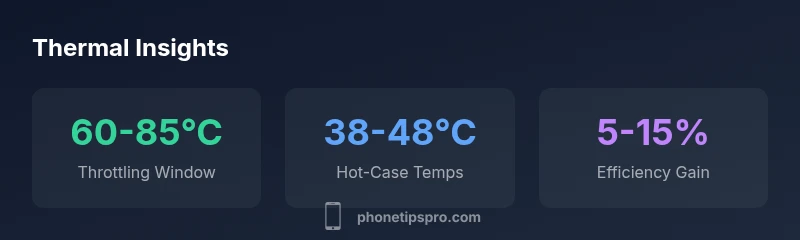
| iPhone 12/13 | 60-85°C | Older generation, improved cooling in newer models |
| iPhone 14/15/16 | 60-80°C | Better efficiency; still heat under load |
| General guidelines | N/A | Use heat-reduction steps to minimize risk |
FAQ
Do newer iPhones run cooler than older models?
Generally yes—newer devices incorporate more efficient silicon and refined thermal paths that help limit peak temperatures under similar workloads. The benefit varies with usage and environment, but you’ll usually see less throttling on current generations.
Newer iPhones tend to handle heat better, but it still depends on how you use them and where you are.
Can charging heat up my iPhone?
Charging can add heat, especially if you’re using the phone at the same time or charging in a warm environment. If you notice rapid warming while charging, pause heavy tasks and move to a cooler area.
Yes, charging can add heat; try not to use the phone heavily while charging in hot settings.
Does disabling background app refresh reduce heat?
Disabling unnecessary background tasks can reduce ongoing CPU activity and help keep temperatures down during long sessions.
Turning off some background tasks can help minimize heat.
Is there an iPhone that never overheats?
No, there isn’t a model that never overheats. All devices can heat up under heavy workloads, especially in hot environments or during long gaming sessions.
There’s no model that never overheats; heat depends on use and environment.
How can I test if my iPhone is overheating safely?
Watch for signs like sustained warmth, reduced responsiveness, and rapid battery drain during heavy tasks. Use controlled tests (same brightness, workload, and ambient temperature) to compare before/after changes.
Look for warmth and throttling during heavy use and test under consistent conditions.
Does Low Power Mode help with overheating?
Low Power Mode reduces some background activity and processor load, which can help limit heat during long sessions, but it isn’t a cure-all solution for high-heat environments.
Low Power Mode can help, but it won’t fix heat in extreme conditions.
“There isn’t a model that never overheats; thermal design and software optimization reduce peak temps, but user behavior and environment determine actual temperatures.”
Quick Summary
- Learn there is no model that never overheats
- Newer iPhones offer improved thermal management
- Control workload and environment to keep temps down
- Use software updates and smart charging to reduce heat
- Monitor battery health and avoid heat traps in summer