How to iphone make: A Practical iPhone Tips Guide
Learn practical steps to accomplish common iPhone tasks with built-in tools. This guide covers setup, step-by-step actions, shortcuts, safety tips, and troubleshooting for a smoother iPhone experience.


In this guide, you’ll learn how to accomplish a practical iPhone task using built-in tools and simple settings. You’ll start by gathering what you need, then follow a clear, stepwise process to complete the task on your iPhone with confidence. This how-to covers safety, tips, and troubleshooting. Whether you're making a shortcut, managing backup, or customizing features, the steps stay consistent.
Why people search for how to iphone make
The phrase 'how to iphone make' often surfaces when users want to turn their iPhone into a more efficient tool—via shortcuts, automations, backups, or personalized settings. According to Phone Tips Pro, starting with a clear goal is essential: define what you want to make, why it matters, and what success looks like. By framing your task, you reduce scope creep and keep you focused. In this section, we’ll explore common things people want to make on iPhone and how to approach them with confidence. Whether you're aiming to automate a routine, save time on repetitive taps, or customize your home screen for faster access, the same core approach applies: identify, configure, test, and refine.
Define your goal: what are you trying to make on iPhone?
Before you start, write a one-sentence goal for your project: e.g., 'Create a home-screen shortcut that launches my daily routine with one tap.' This keeps you from chasing unneeded features. Break the goal into outcomes (what will happen, what will change) and constraints (privacy, battery impact, app compatibility). Phone Tips Pro recommends listing success metrics (time saved, taps reduced, or number of apps involved) but avoid tying every metric to a fixed value; use qualitative measures when appropriate.
Gather your tools and prerequisites
Most iPhone tasks can be completed with built-in tools. At minimum, you’ll need an iPhone with the current iOS version that supports Shortcuts, a stable internet connection for iCloud sync, and an Apple ID. If you plan to share your shortcut, you’ll want access to iCloud Drive and a backup method. Optional but helpful: a secondary device for testing, and a charger for longer sessions that involve backups or data transfers.
The core process: a reusable step pattern
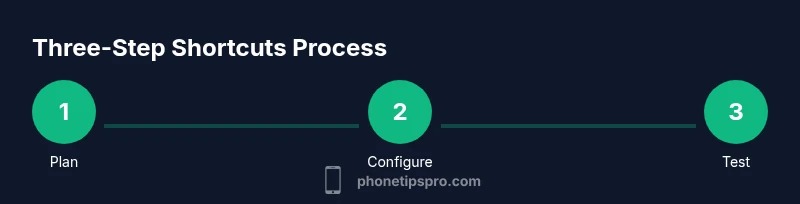
A reliable method to 'make' something on iPhone uses three core actions: plan, configure, test. Start by outlining the sequence of actions you want, then search for Shortcuts actions that fit. Configure inputs and outputs; use variables to reuse results. Finally, test with real data and adjust until the outcome matches your goal. This pattern works across shortcuts, automations, and even backups. I’s a repeatable framework that reduces missteps and helps you scale complex tasks over time.
Using Shortcuts and Automations
The Shortcuts app is your primary toolbox for making iPhone tasks feel automatic. Start by opening Shortcuts and creating a new shortcut or automation. Add actions in a logical order, using the search to find each action you need. For automations, choose triggers (time of day, location, or app event) and decide whether to run automatically or ask before running. Always test with realistic inputs and adjust the flow to minimize friction. This approach works whether you’re launching apps, changing settings, or combining several actions into a single tap.
Troubleshooting common roadblocks
If an action doesn’t appear or a shortcut fails to run, verify permissions for each involved app and ensure iCloud sync is active. Some actions require specific data formats; use variables to normalize inputs. If a shortcut runs while your device is locked, review your automation settings and enable Run on Lock Screen only if appropriate. Finally, keep iOS and apps updated to minimize incompatibilities and newly introduced bugs. Patience and incremental testing usually solve most issues.
Safety and privacy considerations
Always consider privacy when building shortcuts that access sensitive data (photos, messages, contacts). Review which apps gain access and enable prompts like 'Ask Before Running' for automations to avoid unintended data exposure. Regularly audit and delete shortcuts you no longer use, and avoid sharing shortcuts that embed personal information. Use strong device security (passcode or biometrics) to protect your automation and data.
Advanced tips for power users
For experienced users, leverage variables, dictionaries, and conditional logic (If/Then) to create dynamic shortcuts. Use the Repeat action to iterate tasks, and build small modular shortcuts that can be combined into larger automations. Consider exporting your shortcuts to iCloud Drive for backup or sharing, and document each shortcut’s purpose and inputs for easier reuse. This mindset helps you evolve from simple taps to sophisticated automation over time.
Real-world walkthrough: make a simple home-screen shortcut
This walkthrough shows a practical example: creating a home-screen shortcut that opens your daily routine in order of apps and settings. Start by adding a 'Open App' action for your first app, then add subsequent actions with clear naming. Save the shortcut with a recognizable name, add it to your Home Screen, and test with a real day’s data to ensure it launches exactly as intended.
Tools & Materials
- iPhone with latest iOS(Ensure iOS is up to date to access the Shortcuts features.)
- Apple ID with iCloud(Needed for backups and cloud syncing of shortcuts.)
- Shortcuts app(Preinstalled on iOS 13+, ensure it’s enabled.)
- Stable internet connection(Wi-Fi or cellular for iCloud sync and resources.)
- Optional testing device or charger(Helps when testing longer flows or backing up data.)
Steps
Estimated time: 25-40 minutes
- 1
Define your goal
Articulate what you want to achieve with the iPhone task. A clear goal guides every subsequent step, reducing scope creep and wasted time.
Tip: Write a one-sentence outcome before you start. - 2
Open Shortcuts app and create a new shortcut
Launch Shortcuts, tap the + icon, and name your project so you can find it later.
Tip: Use a descriptive name that reflects the outcome. - 3
Add actions in logical order
Search for actions that fit your plan and arrange them from start to finish. Use basic blocks first, then add details as needed.
Tip: If an action isn’t obvious, tap it to view its inputs and outputs. - 4
Configure inputs, outputs, and variables
Assign inputs to actions and store results in variables for reuse later in the flow.
Tip: Variables help you reuse results and keep flows modular. - 5
Test the shortcut with realistic data
Run the shortcut using real-world data to verify it behaves as expected and refine any misbehaving steps.
Tip: Watch for errors in the Run Log and adjust accordingly. - 6
Save, name, and add to Home Screen/Share
Finalize by saving the shortcut, adding it to Home Screen or sharing it for quick access.
Tip: Choose a memorable icon and color for quick recognition.
FAQ
What is the Shortcuts app and why should I use it?
Shortcuts is a built-in automation tool on iPhone that lets you string together actions to perform tasks with a tap or a trigger. It can save time, reduce repetitive taps, and enable more consistent behavior across apps.
Shortcuts is an automation app on iPhone that combines actions to run tasks with one tap. It helps you save time and stay consistent.
Can I use Shortcuts on older iPhone models?
Yes, Shortcuts works on iPhones running iOS 12 or later, though some actions may require newer hardware features. Always check app permissions for compatibility.
Shortcuts works on iPhones with iOS 12 or newer; some features may vary by model.
Do I need a computer to create shortcuts?
No. You can create, edit, and run shortcuts entirely on your iPhone using the Shortcuts app. You can, however, back up or share shortcuts via iCloud or a computer if you prefer.
You don’t need a computer; you can do everything on your iPhone with Shortcuts.
Is there any privacy risk when using shortcuts?
Shortcuts can access data from apps. Review permissions, enable Run prompts where appropriate, and avoid sharing shortcuts that contain sensitive information.
There are privacy considerations—check permissions and avoid sharing sensitive shortcuts.
How long does it take to learn to make shortcuts?
Learning varies by person. Start with a simple task, then gradually add complexity as you gain comfort with actions, variables, and conditional blocks.
It varies, but start small and build up the steps as you learn.
Can I share shortcuts with others?
Yes. Shortcuts can be shared via iCloud or locally. It’s a convenient way to spread useful automations, but ensure no private data is included in shared files.
Yes, you can share shortcuts via iCloud, but be mindful of private data.
Watch Video
Quick Summary
- Plan your goal before building a shortcut
- Test with real inputs to ensure reliability
- Use variables to keep flows modular
- Enable 'Ask Before Running' for automations to protect privacy
- Add shortcuts to Home Screen for quick access