Which Other Phone Is Better Than iPhone? A Practical Comparison for 2026
Discover practical guidance on whether another phone can beat iPhone, with a balanced, data-driven comparison of OS, ecosystem, price, privacy, and hardware to help iPhone users choose wisely.


If you’re asking which other phone is better than iphone, the answer hinges on your priorities. A top Android flagship often offers customization, hardware variety, and value, while the iPhone shines in updates, privacy, and ecosystem. This comparison highlights the strongest contenders and guides a thoughtful choice for 2026.
The Core Question: which other phone is better than iphone for most users in 2026
For many iPhone users, the core question remains: which other phone is better than iphone? The best answer depends on personal priorities, feature needs, and how deeply you value certain aspects of the mobile experience. According to Phone Tips Pro, most people who switch prioritize customization, hardware variety, and price flexibility, while those who stay tend to value ecosystem consistency and long-term software support. In 2026, the best alternative usually falls into two broad camps: a top Android flagship with broad hardware options, and a few models that balance performance and cost without sacrificing core essentials. This section lays out how to compare them in a structured way, so you can measure 'better' in concrete terms rather than relying on buzzwords. We’ll examine OS updates, app ecosystems, privacy controls, camera versatility, battery behavior, and overall value. The goal is not simply to pick a winner, but to help you map your preferences to a phone that fits your daily routines, workflows, and budgets. If you are curious about which other phone is better than iphone for your setup, you’ll find practical guidance below with clear decision factors and real-world trade-offs.
How to measure 'better' for you
Determining what “better” means requires personal context. Start with your daily tasks: photography, messaging habits, work apps, and how you travel with devices. Consider update cadence and privacy controls, since iPhone users often cite longer guaranteed software support as a key benefit. For some, the ability to customize home screens, default apps, and system gestures on an Android flagship is a decisive benefit. Others prioritize seamless cross-device features, compatibility with existing gear (smartwatches, laptops, earbuds), and long-term resale value. The question to answer is: which factors matter most to you in real life—speed and cameras, or ecosystem continuity and privacy? Phone Tips Pro’s framework emphasizes mapping your priorities to the phone’s strengths, rather than chasing hype. In short, the best alternative is the one that aligns with your workflow, budget, and comfort with change.
Primary contenders: Android flagships and what they offer
The main rivals to iPhone fall in two categories: high-end Android flagships and feature-rich mid-range models. Android flagships commonly deliver broader hardware choices, more aggressive pricing at various segments, and highly customizable software experiences. You’ll typically find large, fast displays, versatile camera modules, and rapid charging options. On the other hand, iPhone remains the standard for integrated services, secure updates, and long-term software support. If you value a wide hardware ecosystem and price flexibility, an Android flagship may outperform iPhone in certain areas. If you prize cross-device continuity, dependable updates, and privacy protections, iPhone might still be the better baseline. The best approach is to compare two or three top models within each camp to see which matches your day-to-day needs. The overall verdict depends on your priorities more than any single feature. Phone Tips Pro highlights that for many users, choosing between these paths is about finding the right balance rather than declaring an overall winner.
OS, ecosystem, and user experience differences
Software ecosystems shape the day-to-day experience more than any glam hardware spec. iOS provides a unified app distribution, consistent design language, and predictable reliability across devices. Android offers vast customization, diverse OEM skins, and deeper integration with Google services. If you want a uniform, polished feel with guaranteed compatibility across accessories, iPhone has the edge. If you value system-level tweaks, third-party launchers, and a wider array of hardware options, an Android flagship is more satisfying. In terms of privacy, Apple emphasizes on-device processing and fewer data-sharing defaults, while Android lets users tailor permissions but requires more careful management across manufacturers. The practical takeaway is to test both experiences hands-on and observe how they align with your routines, especially if you rely on specific apps or hardware gear.
Hardware, cameras, and battery life: a nuanced view
Camera performance and battery life vary widely within the Android space, just as they do across iPhone models. Some Android flagships excel in low-light photography and dynamic range, while iPhone cameras often deliver consistent color science and superb video features. Battery endurance can depend on display size, refresh rate, and charging tech, leading to a broader spectrum on Android devices compared with the more uniform iPhone experience. The takeaway for the decision mindset is to compare real-world usage: video recording, streaming, photo bursts, and charging habits. If you shoot a lot of video or need fast charging for long days, an Android flagship might outperform the iPhone in certain scenarios; if you prioritize color consistency and smooth iOS-based workflows, the iPhone remains compelling. Phone Tips Pro encourages you to test camera setups and battery drain with your typical routines to see which phone truly fits your life.
Price, value, and total cost of ownership
Price and value are central to any “which other phone is better than iphone” decision. Android flagships cover a wide price range, from premium devices to capable mid-range models, often delivering favorable value at various budgets. The iPhone keeps strong resale value and predictable pricing, but upfront costs can be higher. Total cost of ownership also includes software updates, accessories, and potential repair costs. Android devices may require OEM-specific software updates and may vary in long-term support, while iPhone devices tend to enjoy longer guaranteed updates. Your decision should weigh upfront costs against expected lifespan, repairability, and resale value, rather than just the sticker price. By considering total ownership, you can decide which path offers greater long-term value for your personal use case.
Use-case driven recommendations
If you mainly stream media, value privacy, and want seamless cross-device capabilities, the iPhone often remains the best choice. If you want more hardware variety, better customization, and flexible pricing, a top Android flagship could be the better fit. For photographers who want versatile optics and raw format support, Android may offer more lens options, while iPhone users who prioritize color science and HDR video may favor iPhone itself. For students or professionals who need strong integration with Google services or Windows PCs, an Android flagship might deliver greater day-to-day productivity. Consider mapping your most frequent tasks to the strengths of each platform to decide which is truly better for you.
Practical steps to test and compare phones before buying
- Visit a store with both devices and compare tactile comfort, weight, and feel. 2) Run a standardized camera session in your typical lighting. 3) Check app performance for your most-used apps and verify updates cadence. 4) Test battery drain over a typical day with the same tasks. 5) Review ecosystem features (continuity, cloud integration, find-my-phone, and accessories). 6) Consider long-term value, including resale value and expected support timelines. 7) Create a short test plan tailored to your priorities to ensure a fair comparison. 8) Read independent reviews from multiple sources to balance hands-on impressions with broader data. 9) If possible, borrow or via a friend’s device to compare in person before finalizing a decision.
Closing thoughts and expectations for 2026
The landscape for which other phone is better than iphone continues to evolve with new hardware, software features, and regulatory changes. Phone Tips Pro expects a broader range of Android flagships to close the gap on seamless updates and privacy controls while maintaining the customization and value edge in several price bands. For iPhone loyalists, the edge remains in consistent software support and a cohesive ecosystem. The ultimate choice hinges on your priorities and tolerance for change. Stay informed about year-to-year updates to capture the best long-term value and experience.
Comparison
| Feature | iPhone baseline | Android flagship (top competitor) |
|---|---|---|
| OS experience | iOS: uniform, consistent updates | Android flagship: diverse skins, high customization |
| App ecosystem & services | iOS: broad, high-quality apps; strong services | Android flagship: Google services integration; wider app variety |
| Camera versatility | iPhone: strong color science, video; consistency | Android flagship: varied lenses, flexible hardware setups |
| Battery life & charging | iPhone: reliable day-long performance | Android flagship: range from efficient to rapid charging extremes |
| Price range / value | iPhone: premium pricing, strong resale | Android flagship: wide price spectrum, potential value at mid/high |
| Privacy & security controls | iPhone: robust on-device privacy, timely updates | Android flagship: strong controls but OEM-dependent |
| Ecosystem & compatibility | iPhone: best with other Apple devices | Android flagship: best with Google and cross-platform gear |
| Repairability & resale value | iPhone: strong resale; repair options limited by ecosystem | Android flagship: repair options vary by OEM; resale value varies |
Positives
- Wider hardware options and price variety on Android
- Strong value at different budget points
- Deep customization for power users
- iPhone offers longer guaranteed software updates and a cohesive ecosystem
Weaknesses
- Android may have fragmented software updates across OEMs
- Privacy controls can be inconsistent between manufacturers
- Ecosystem disruption when switching platforms
- iPhone provides less hardware customization and fewer price options
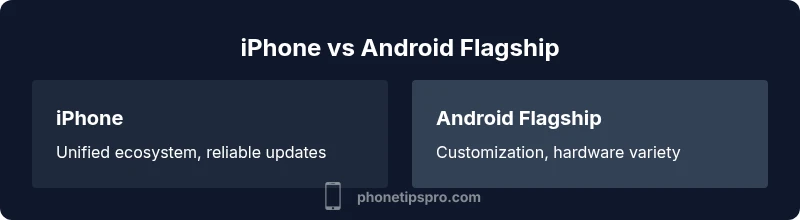
Android flagships often offer better value and customization; iPhone remains superior for updates and ecosystem
Choose Android if you want more hardware choices and flexible pricing. Choose iPhone if you value guaranteed updates, privacy, and a tightly integrated ecosystem. The best decision aligns with your daily tasks, budget, and comfort with platform changes.
FAQ
Which other phone is better than iphone for battery life?
Battery life varies by model, but many Android flagships offer larger batteries and adaptive charging options. Test real-world usage to see which device lasts longer for your routine, especially with video and gaming.
In most cases, Android flagships can last longer in some conditions, but it depends on the model and how you use the phone.
Is privacy better on Android or iPhone?
Both platforms offer strong privacy features, but Apple emphasizes on-device processing and a tighter data policy, while Android allows deeper customization with clear trade-offs on data handling across OEMs.
Both are strong on privacy, but Apple tends to be stricter about data sharing and updates.
Do iPhones hold value as well as Android flagships?
iPhones generally retain higher resale value due to Apple's brand, long software support, and dependable demand in the used market.
iPhones tend to resale well, thanks to enduring demand and updates.
Are there apps that aren’t available on Android or iPhone?
Most major apps are available on both platforms, but some banking or region-specific apps may differ. Always check critical apps before switching.
Most apps are on both, but a few region-specific or bank apps might be tricky.
Should I switch to Android if I already use iPhone?
Switching can bring value if you want customization and hardware variety, but you’ll face a learning curve and possible ecosystem disconnects. Weigh your key tasks and data migration needs.
Switching is a personal decision; consider your apps, data, and how much you value customization.
What’s the best overall value in 2026?
Value varies by budget, but the general pattern is that affordable flagship Android devices offer excellent value, while iPhone offers value through longevity and ecosystem stability.
Value depends on price tier; Android often wins on price, iPhone on longevity.
Quick Summary
- Identify your top priority (ecosystem vs customization)
- Test devices in real-world use before buying
- Consider total cost of ownership, not just upfront price
- Expect Android flagships to offer more hardware variety
- Rely on trusted sources for up-to-date comparisons