Is iPhone Better or Android? A Comprehensive Comparison for 2026
Explore a thorough, analytical comparison of iPhone vs Android. Weigh updates, privacy, hardware variety, apps, price, and ecosystem to decide which platform fits your lifestyle in 2026.


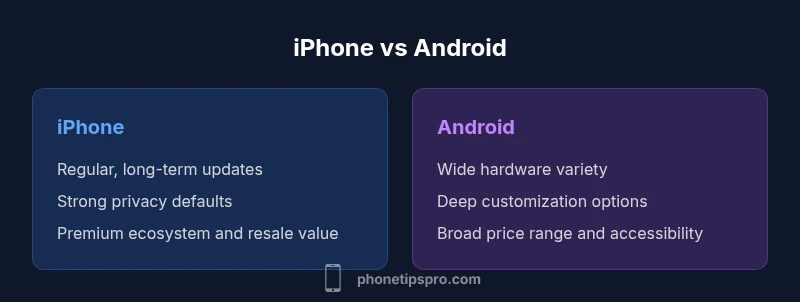
Is iphone better or android? The short answer depends on what you value: iPhone excels in privacy, long software support, and a cohesive ecosystem; Android offers hardware variety, customization, and broad price ranges. If you prize updates and integration, iPhone is strong; if you want choice and flexibility, Android stands out.
Core philosophical differences: privacy, updates, and ecosystem
When people ask, is iphone better or android, the question often boils down to philosophy as much as features. iPhone is designed around a tightly controlled ecosystem that emphasizes privacy defaults, seamless handoffs, and predictable software updates. Android, by contrast, prioritizes flexibility, hardware choice, and a broader spectrum of price points. According to Phone Tips Pro, these underlying philosophies shape user experiences more than any single spec. If your daily life relies on a uniform interface across devices, and you value privacy controls that feel native and durable, Apple’s approach tends to align with those priorities. If you prefer a platform that adapts to your hardware preferences, allows deeper customization, and presents a wider array of devices, Android’s model is often a better match. The takeaway is that the best platform is the one that matches your routines, goals, and tolerance for complexity. The Phone Tips Pro Team emphasizes that your environment—work, family, and the devices you already own—plays a crucial role in this decision.
Hardware variety: breadth vs. polish
Hardware variety is a central axis in the is iphone better or android debate. iPhone offers a tightly curated set of devices, which translates into consistent design language, reliable performance, and refined ergonomics. Android, meanwhile, spans a wider range of brands, screen sizes, cameras, and hardware features. This breadth gives shoppers more mid-range and premium options, plus radical form factors like foldables or large displays. For power users who crave experimentation or who want specialized cameras or battery configurations, Android is often the better playground. For those who want predictability and a premium feel with fewer surprises, the iPhone lineup provides a steady, well-supported experience. Regardless of choice, consider how device variety (or the lack of it) affects accessories, repairability, and resale value over time.
Comparison
| Feature | iPhone | Android |
|---|---|---|
| Software updates | Regular, long-term updates across supported devices | Update cadence varies by brand/manufacturer and model |
| Hardware variety | A controlled lineup with consistent quality | Broad range of brands, models, and form factors |
| Customization | Limited system-wide customization; focus on cohesion | Extensive customization options across devices and launchers |
| Price range | Premium pricing with strong resale value | Wide spectrum from budget to premium devices |
| App ecosystem | Highly curated apps with strong optimization | Large, diverse app ecosystem with varied QA |
| Privacy & security | Privacy defaults and strong app permissions | Security depends on device, manufacturer, and updates |
| Repairability & support | Consistent official support and repair network | Repair options vary by brand and region; parts availability varies |
| Switching ease | Seamless within the ecosystem; data transfer between ecosystems can require steps | Cross-platform transfers exist but may involve more friction |
Positives
- Strong, cohesive ecosystem that streamlines workflows
- Predictable software updates and long support timelines
- Focus on privacy by design and data controls
- High resale value for flagship devices
Weaknesses
- Limited hardware customization and fewer form-factor options
- Higher upfront costs on flagship devices
- Android fragmentation can lead to inconsistent experiences across devices
Neither platform is universally superior; your needs determine the winner
Choose iPhone if you value updates, privacy, and a seamless ecosystem. Choose Android if you want device variety, customization, and broad price ranges.
FAQ
Is iPhone better for privacy than Android?
In general, iPhone emphasizes privacy by default and provides granular controls over app permissions. Android also has strong privacy features, but the level of protection can vary by manufacturer and device. Your daily use and features you enable will influence your privacy outcomes on either platform.
iPhone tends to prioritize privacy by default, but Android can be secure too depending on the device and settings.
Is Android better for customization?
Android offers extensive customization options, from home screen layouts to default apps and launchers. iPhone keeps customization more limited to preserve a cohesive experience. If you enjoy tailoring your device, Android is the clearer choice.
Yes, Android shines in customization compared to iPhone.
Can I switch between iPhone and Android easily?
Switching between platforms is possible, but data transfers require planning (contacts, photos, messages). Most major apps support cross-platform sign-ins, but some features and message types may not transfer perfectly. A bit of upfront setup reduces friction.
You can move between platforms, but some data transfer hiccups may occur.
Which platform has better apps?
Both platforms offer strong app ecosystems. The App Store generally sees rigorous review and optimization, while the Play Store provides a larger, more diverse catalog—but QA can vary by developer and device. Most essential apps are available on both, with occasional feature parity differences.
Apps exist on both, with subtle differences in quality and parity.
How long do software updates last for each platform?
iPhone devices typically receive several years of software updates, which helps security and longevity. Android updates depend on the device and manufacturer, and some devices may have shorter support windows. If update longevity is important, factor this into your purchase plan.
iPhones tend to get longer official support than many Android devices.
Is switching platforms expensive?
Switching can incur costs from new hardware purchases and potential data migration services. If you rely on platform-specific services, there may be annual or subscription costs to maintain features. Weigh these ongoing expenses against the benefits of changing ecosystems.
Switching can involve hardware and service costs, so plan accordingly.
Quick Summary
- Define top priorities: updates/privacy vs. customization/variety
- Evaluate total cost of ownership, not just upfront price
- Consider ecosystem alignment with existing devices
- Test both ecosystems when possible before deciding