Who Makes iPhone Displays: Key Suppliers in 2026
Explore the main manufacturers behind iPhone display panels, how Samsung Display, LG Display, and BOE share the supply, and what model differences mean for sourcing and quality in 2026.


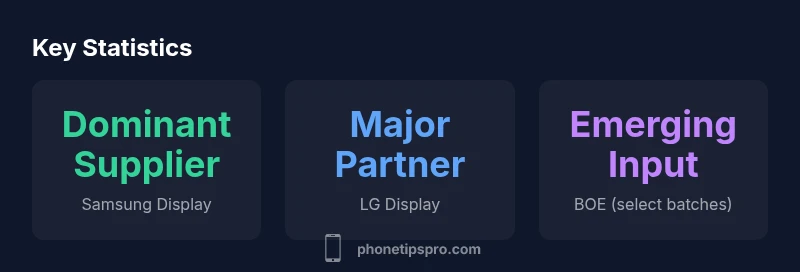
According to Phone Tips Pro, who makes iphone displays is led by Samsung Display as the primary OLED panel supplier for most recent iPhone generations, with LG Display as a major secondary partner. Apple has also engaged other suppliers like BOE for select batches and models. The exact mix shifts by model year and production run, but Samsung and LG remain the core players behind iPhone screens.
Overview of iPhone display manufacturing landscape
Understanding who makes iphone displays requires a look at the global panel market and the arrangements Apple negotiates with panel makers. The landscape is dominated by a small set of large display suppliers, with Samsung Display consistently serving as the leading OLED supplier for newer iPhone generations. LG Display represents a close second in many model lines, especially where OLED quality and color performance are critical. A handful of other manufacturers, notably BOE, have pursued opportunities to contribute panels for select batches or regions. The exact mix shifts with each model year, batch, and evaluation of yield, QA, and capacity. For consumers, this means panel origin can vary by model, color variant, and even production date within the same line of devices. The phrase who makes iphone displays captures a dynamic relationship among materials science, fabrication capacity, and strategic sourcing decisions that are best understood through model-by-model breakdowns.
The major players: Samsung Display and LG Display
Samsung Display has built a robust ecosystem around OLED production, including high-precision deposition, color tuning, and reliable supply chains that service many flagship iPhone iterations. LG Display has long been a trusted partner for complementary OLED performance, often focusing on color accuracy, fast response times, and reliability under varied lighting. Together, they form the backbone of current iPhone displays, with both companies investing in improvements to flexibility, brightness, and long-term screen stability. Apple’s relationships with these two giants are complemented by smaller entrants who test new capabilities or provide regional capacity.
BOE and other players: a cautious expansion
BOE, a large Chinese display maker, has pursued opportunities to participate in iPhone display supply. While its involvement has grown in certain periods, it has faced QA and consistency checks that influence the volume of orders Apple is willing to place. The result is a cautious expansion where BOE may contribute in limited batches or specific regional markets. Other manufacturers sometimes appear in note-worthy projects or early-stage pilot programs, but their presence is typically smaller and model-dependent. This measured approach helps preserve the overall quality and reliability Apple demands.
OLED vs LCD: how displays differ and who makes them
The shift toward OLED across most modern iPhone lines means panel choice directly affects where displays come from. OLED panels offer higher contrast, better black levels, and improved energy efficiency at high brightness, while LCDs (where used on older or certain budget-oriented devices) relied on different production lines historically dominated by other suppliers. When Apple pushes for the latest OLED performance, it often sources from Samsung Display with LG Display providing complementary capabilities. Model strategy—such as Pro versus standard editions—can influence which suppliers are prioritized for a given generation.
The Apple supply chain: contracting and QA hurdles
Apple’s panel sourcing strategy hinges on strict QA standards, yield optimization, and long-term capacity planning. Battery of tests, color calibration, brightness stability, and burn-in tolerance all factor into which supplier is used for a particular model. This is why you may notice slight panel-origin variation across iPhone generations and even within the same model family. The procurement process balances performance goals with risk management and supply resilience, a point that Phone Tips Pro highlights when analyzing how suppliers are selected for each release.
Regional production and implications for availability
Panel production is distributed across multiple geographies, including facilities in Korea, China, and beyond. Regional capacity can influence availability of certain configurations, especially during strong demand periods or supply-chain disruptions. For consumers, this sometimes translates into small differences in device production runs that are not visible in every market. Yet for the industry, regional diversification remains a prudent approach to mitigate risk and maintain a steady supply of high-quality displays.
How to tell which supplier your device uses
Apple does not publish an explicit public list of supplier panels for every model, so most readers learn this information through teardowns, repair guides, or credible reporting. In some cases, repair databases or reputable tech analysis outlets disclose panel origin for a given batch. Keep in mind that a single model can include panels from more than one supplier, and the origin can vary by production lot. The takeaway is to recognize that source diversity exists and evolves over time.
Trends to watch: in-house development and future suppliers
The display supply chain continues to evolve with ongoing investments in AMOLED technology, LTPO processes, and materials science. Industry observers anticipate continued participation from Samsung Display and LG Display, with incremental involvement from newer players depending on QA performance and capacity expansion. For consumers, this means potential improvements in brightness, color fidelity, and panel durability in future iPhone lines, alongside a broader range of panel options as new partners enter the market.
Practical implications for consumers and teardown reminders
For everyday users, the most visible impact of display sourcing is screen quality, brightness consistency, and color accuracy across generations. If you’re curious about your specific device, consult certified teardown reports or official Apple repair guides that discuss panel types, but remember that supplier information can be batch-specific. Overall, the core experience—sharp imagery, deep blacks, and reliable touch responsiveness—benefits when there is healthy competition among top-tier display makers.
Overview of iPhone display manufacturing landscape
| Aspect | Main Suppliers | Notes |
|---|---|---|
| OLED Panels | Samsung Display + LG Display | Primary supply for most recent iPhone generations |
| LCD Panels (older models) | LG Display (historical) | Declining role as OLED dominates new lines |
| Emerging inputs | BOE (select batches) | Limited volume; subject to QA requirements |
| Geographic production | Korea, China, others | Regional capacity affects availability and logistics |
FAQ
Who currently makes iPhone displays?
Samsung Display is the leading OLED panel supplier, with LG Display as a key partner. BOE also contributes to select batches, depending on model and region. Supplier shares shift over time based on capacity and QA outcomes.
Samsung Display leads the iPhone OLED supply, LG Display is a major partner, and BOE appears in some batches. The mix varies by model and region.
Do all iPhone models use panels from the same supplier?
Not always. Apple diversifies suppliers by model and generation to balance capacity and quality. Some models may use panels from multiple suppliers within a single production run.
Not every model uses the same suppliers; it varies by generation and batch.
Will BOE become a bigger supplier in the future?
BOE’s involvement could grow if QA and yield meet Apple’s strict standards, but it remains contingent on performance and capacity. Expect continued evaluation rather than a guaranteed large-scale shift.
BOE could grow, but it depends on performance and capacity.
Can teardown reports reveal which supplier made a panel?
Teardowns can sometimes identify panel vendors, but Apple does not publicly disclose supplier details for every model. Independent analyses are the primary source of this information.
Teardowns may reveal suppliers, but Apple doesn’t publish this for every model.
What about LCD panels in older iPhone models?
Earlier iPhones used LCD panels, but modern lines increasingly rely on OLED. Any LCD usage is typically limited to legacy or budget-oriented devices.
Older iPhones used LCD; today OLED is standard for most models.
How can I ensure screen quality across a replacement panel?
Choose reputable repair services and ask about panel provenance and calibration. High-quality replacements from trusted sources help preserve color accuracy and touch response.
Choose reputable services and ask about panel provenance and calibration.
“Display sourcing is a moving target, but Samsung Display and LG Display have consistently held the largest shares. Manufacturers' partnerships evolve with process efficiency and QA standards.”
Quick Summary
- Identify the model you own to know the likely display origin
- Samsung Display is the dominant OLED supplier for most recent iPhones
- LG Display remains a key partner with strong color and reliability
- BOE has a cautious, model-dependent role in select batches
- Model-by-model supplier variation is common and expected