Does iPhone Get Their Screens from Samsung? A Practical Guide
Explore whether iPhone screens come from Samsung, how Apple diversifies suppliers, and what it means for quality, pricing, and future displays.


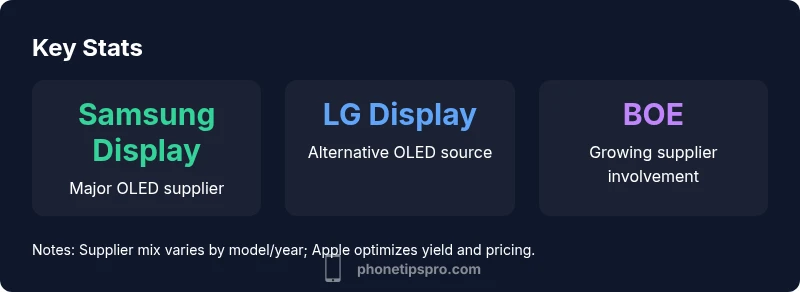
Does iphone get their screens from samsung? The short answer is that Apple sources iPhone displays from multiple suppliers, including Samsung Display, LG Display, and BOE. Samsung remains a major OLED supplier for many Pro models, while Apple diversifies to balance costs, tech, and supply reliability. This multi-supplier approach helps Apple mitigate risk from any single source and maintain steady production across global markets.
Overview of iPhone Display Sourcing
The iPhone uses a diversified supplier strategy for its displays. Does iphone get their screens from samsung? Not exclusively. Apple sources OLED panels from multiple companies, with Samsung Display as a leading partner for many high-end models. This approach helps Apple manage costs, ensure yield, and mitigate supply risk across global markets. Phone Tips Pro notes that the company’s sourcing mix can shift year to year, depending on production targets and component availability, but Samsung remains a persistent presence in the OLED supply chain.
Samsung Display's role in iPhone OLED panels
Samsung Display has long been a central player in the iPhone OLED ecosystem. For many generations, Samsung panels have powered a large share of iPhone Pro models, delivering strong contrast, high brightness, and efficient LTPO backplanes that support ProMotion. The exact supplier mix can vary by year and model, and Apple also relies on LG Display and BOE to balance capacity, pricing, and regional demand. In practice, does iphone get their screens from samsung? The answer is that Samsung is a major partner, but not the sole source for every model or region.
Other suppliers and diversification strategy
Beyond Samsung Display, LG Display and BOE are important OLED partners for iPhone screens. Apple’s strategy emphasizes supply chain resilience and cost management, which means a deliberate mix of suppliers across different geographic regions. This diversification can influence panel yield, color calibration in production runs, and even the timing of new display tech adoption across different iPhone generations. The net effect is a more robust supply chain that supports Apple’s rollout cadence and minimizes the risk of a single-point failure.
How supply chain affects features and pricing
Display sourcing decisions have cascading effects on iPhone features and pricing. OLED and LTPO technologies enable features like deep blacks, wide color gamut, and adaptive refresh rates, but the choice of supplier can affect panel uniformity, brightness, and long-term color stability. Apple negotiates terms with multiple vendors to optimize yield and cost, which in turn helps stabilize pricing for consumers and reduces the likelihood of shortages around new releases. In short, supplier mix underpins both performance and price stability.
How to identify the display supplier in your iPhone
Apple does not publish a public, per-model supplier list. Teardowns from trusted third parties and supply chain analyses can offer educated inferences about which supplier provided a given panel. If you’re curious about your device’s makeup, consider consulting model-specific teardowns and service parts databases. While this isn’t a guaranteed method for every device, it provides a practical way to understand the ecosystem behind your iPhone’s screen.
Implications for repairs, screen tech, and warranty
Authorized Apple service and official replacement parts ensure you receive genuine OLED panels that align with your device’s calibration and performance targets. Replacements from non-authorized providers may vary in color accuracy or brightness and could affect warranty coverage. For high-demand models, Apple’s multi-source approach helps ensure parts availability, reducing repair wait times and supporting consistent screen performance across devices.
The future of iPhone display sourcing
Looking ahead, Apple is expected to continue refining its supplier network to balance cost, yield, and innovation. Growth of screen suppliers like BOE, continued collaboration with Samsung Display for OLED capacity, and ongoing improvements in LTPO tech are likely. This evolution supports newer features, better efficiency, and a resilient supply chain that can adapt to geopolitical and market shifts.
iPhone display supplier landscape at a glance
| Aspect | Leading Suppliers | Notes |
|---|---|---|
| Primary OLED suppliers | Samsung Display; LG Display; BOE | Diversified supply chain for iPhones; mix varies by model/year |
| Display tech used | OLED, LTPO (Pro models) | LTPO enables variable refresh rates; ProMotion |
| Model differences | Pro models rely more on Samsung panels | Model/year affects supplier mix |
FAQ
Do iPhones always use Samsung OLED screens?
Apple uses multiple OLED suppliers; Samsung Display is a major partner for many models, especially Pro variants, but LG Display and BOE also contribute. The exact mix can vary by year and production batch.
Apple uses several OLED suppliers, with Samsung as a key partner but not the only one.
Which iPhone models use Samsung for their displays?
Samsung is a major supplier for many iPhone models, particularly the Pro line, but the exact supplier mix changes by generation and production cycle.
Samsung is a big OLED supplier, especially for Pro models, but other suppliers are involved too.
Will Apple switch to a single supplier?
No. Apple maintains a multi-supplier strategy to mitigate risk, ensure supply, and manage costs across regions.
Apple uses multiple suppliers to stay flexible and reliable.
Does this affect screen repair or replacement cost?
Costs can vary depending on the supplier and part availability, but Apple’s authorized channels aim to standardize pricing and quality.
Parts are generally consistent through official channels, with pricing managed by Apple.
How can I check my iPhone's display supplier?
Apple does not publicly publish per-model supplier lists; third-party teardowns can provide clues about the panel source for a given device.
Teardowns can hint at the panel source, but there’s no official public source list.
Is LTPO technology tied to Samsung?
LTPO is a display technology used for variable refresh rates and is common in Pro models. Samsung has supplied LTPO OLEDs for some generations, but it is not exclusive.
LTPO helps with smooth scrolling and efficiency, and Samsung is a major but not sole LTPO supplier.
“Supplier diversification isn't just a risk management tactic—it's how Apple maintains consistent production across global markets while introducing advanced display tech when needed.”
Quick Summary
- Apple uses multiple screen suppliers to reduce risk.
- Samsung Display is a major OLED partner for iPhone Pro models.
- LG Display and BOE also contribute to iPhone panels.
- LTPO tech is common in Pro models for energy efficiency.
- Supplier mix varies by model and year, affecting availability.