Is iPhone Block Blast Harder Than Android? A Comparison
Explore whether is iphone block blast harder than android, comparing blocking mechanisms, privacy controls, and update practices to help you choose the platform that best fits your security needs.


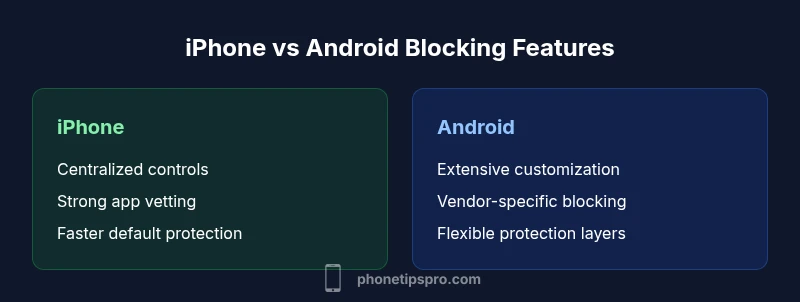
TL;DR: Both platforms block threats effectively, but they approach it differently. iPhone emphasizes privacy-by-default and centralized controls, while Android offers broader customization and platform-agnostic blocking options. For most users, iPhone's built-in protections provide a strong baseline, with Android giving extra power to customize blocking rules.
is iphone block blast harder than android
In practical terms, is iphone block blast harder than android? This section clarifies what we mean by 'block blast' and why this question matters for everyday smartphone security and usability. Both platforms offer blocking tools to reduce interruptions, protect privacy, and stop spam, but their design philosophies drive different outcomes. The iPhone approach emphasizes a curated experience with centralized controls, while Android emphasizes customization and vendor-specific implementations. For readers of Phone Tips Pro, understanding these differences helps you align your device choices with your tolerance for change, risk, and hands-on setup. The term itself encapsulates how aggressively a platform blocks unwanted content, how transparent those blocks are to the user, and how quickly blocks adapt to new threats. This foundation will guide the deeper comparisons that follow.
OS-level blocking: architecture and philosophy
iOS operates within a tightly controlled ecosystem designed to minimize risk by default. Code-signing, strict app review, and sandboxing mean that apps run in isolation and have limited access to system resources. Apple pushes updates through a centralized channel, aiming for a consistent security baseline across devices. Android, by contrast, presents a more open canvas. While Google enforces Play Protect and safety recommendations, device makers and carriers have leeway to customize experiences. This variability can yield more flexible blocking options but also introduces fragmentation. The trade-off is clear: iPhone tends toward predictability and fewer surprises, whereas Android offers breadth at the cost of additional management. Phone Tips Pro’s analysis emphasizes how each model shapes user outcomes when threats evolve.
Notification and call blocking features: iPhone vs Android
Blocking effectiveness often shows up in notifications and calls. iPhone provides features like Silence Unknown Callers, Focus modes, and robust message filtering that apply system-wide, with consistent behavior across first-party apps. Android offers Do Not Disturb controls plus vendor-specific call and SMS blockers, which can be deeply customizable but may rely on manufacturer updates and app permissions. In practice, iPhone users experience fewer unexpected interruptions out of the box, while Android users can tailor blocking rules to individual contexts, at the cost of more setup and occasional inconsistency between apps. This section helps you gauge which workflow aligns with your daily routine.
Privacy controls and data access: what gets blocked by default
Privacy controls determine what data a platform can access and how that access is regulated. iPhone tends to restrict background data usage and requires explicit permissions, often presenting users with clear explanations and prompts. Android offers granular control over permissions, background activity, and data sharing, but users may need to dive into multiple settings menus to achieve equivalent protection. The end result is a spectrum: iPhone’s defaults favor privacy with fewer decisions upfront, while Android rewards informed users who want to tune privacy details according to their needs. This section clarifies where default blocking is strongest and where user action matters most.
App vetting and malware protection: how each platform screens content
App vetting is a cornerstone of blocking effectiveness. Apple’s App Store review process is designed to curb malware before it reaches devices, and iOS apps operate in strict sandboxes that limit cross-app interference. Android allows a wider range of app sources and developer tools, which can increase risk if users sidestep official stores. Google’s Play Protect and vendor-layer protections help, but fragmentation means threat surfaces can differ by device. The resulting landscape favors iPhone for lower baseline risk, while Android requires ongoing user diligence and trusted security apps for robust protection. This section compares threat-reduction mechanisms across ecosystems and how they translate to real-world blocking performance.
Updates and patch cadence: how blockers stay current
Timely updates are essential for maintaining blocking effectiveness. Apple typically delivers security patches through regular iOS updates with broad device coverage, simplifying the user experience. Android variability is higher: patch speed depends on the device manufacturer, carrier, and Google’s monthly security releases, which can create gaps in protection on some models. While iPhone users often enjoy faster, more uniform remediation, Android users can benefit from quicker access to newer features via customizable channels—if they stay engaged with updates. This section explains how update cadence directly affects blocking durability against evolving threats.
User control and customization: trade-offs
The core tension between iPhone and Android blocking is control versus simplicity. iPhone favors a streamlined, consistent blocking experience with fewer knobs to tune, reducing the risk of misconfiguration. Android invites deeper customization—from default apps to permission granularity—giving power users the ability to tailor blocking rules. The trade-off is that more choices can lead to misconfigurations or conflicting rules across apps. For households with diverse tech comfort levels, Android’s flexibility can be a strength; for those who prioritize a clean, reliable experience, iPhone is often attractive. This section helps map the trade-offs to user needs.
Real-world testing: quick guide to compare block effectiveness
To judge blocking in practice, run a few controlled checks. Test push notifications from different apps, unsolicited calls, and simulated phishing emails. Compare how quickly each platform identifies and blocks these events, how often legitimate communications get blocked by mistake, and how easy it is to undo a block if needed. Use built-in dashboards to review blocked events over a 1- to 2-week window, and supplement with third-party security apps only if you understand the permissions involved. This hands-on approach yields practical insights that complement theory.
Security incidents and response: what to expect
No system is immune to exploits, and blockers respond by updating rules, releasing patches, and adjusting user prompts. Expect Apple to push rapid, universal fixes for critical threats and to provide clear guidance through its support channels. Android responses vary by device and vendor but often include rapid security patches through Google Play Services and optional security apps. The key takeaway is that ongoing vigilance—combining platform defaults with informed user actions—remains essential on both sides. This block emphasizes the practical reality of responding to threats as they evolve.
Practical recommendations by scenario: family, business, power user
If you care for simplicity and predictability, prioritize iPhone in family settings where you want consistent blocking and fewer misconfigurations. If you need customization and granular control for a multi-device environment or a business context, Android can be tuned to meet specific risk profiles. Consider a blended approach: use one platform with strong defaults for high-risk use cases, and a second for flexibility where needed. The recommendations here translate into concrete setup steps you can implement today.
The bottom line: interpreting block effectiveness across platforms
When assessing blocking, look beyond raw claims and focus on practical outcomes: how well the system protects you by default, how easy it is to customize safely, and how quickly threats are remediated through updates. Both platforms offer meaningful protections; the best choice depends on whether your priority is robust defaults or flexible control. This final block ties together the analysis and sets expectations for real-world use.
Comparison
| Feature | iPhone Block Blast (iOS) | Android Block Blast (Android) |
|---|---|---|
| Blocking robustness | High baseline protections with centralized controls | Moderate to high, depending on OEM/Google Play protections |
| Privacy controls | Strong, privacy-first defaults | Granular controls; varies by vendor |
| App vetting | Strict App Store vetting and sandboxing | Open ecosystem; vetting varies by store and device |
| Update cadence | Consistent iOS updates for all supported devices | Patch speed varies by manufacturer and carrier |
| Customization | Limited customization; streamlined experience | Extensive customization options across devices |
| Transparency | Clear privacy dashboards and prompts | Variable transparency across OEMs and apps |
| Threat response | Centralized, rapid protection updates | Vendor-driven responses with fragmentation |
Positives
- Strong default blocking reduces user error
- Centralized updates simplify maintenance
- Greater consistency across devices
Weaknesses
- Less flexibility for advanced users
- Slower adaptation to niche threats in some cases
- Higher device cost for premium security
iPhone generally wins on out-of-the-box blocking strength; Android wins on customization and control
Choose iPhone if you want strong defaults with minimal setup. Pick Android if you need granular control and device-specific blocking rules.
FAQ
What does blocking effectiveness mean in practice for iPhone vs Android?
Blocking effectiveness refers to how well a platform prevents unwanted content, calls, and apps from impacting you. It encompasses default protections, the ability to customize, and the speed of security updates. In practice, iPhone tends to offer stronger defaults, while Android enables customization that can match or exceed defaults with proper configuration.
Blocking effectiveness measures how well the system stops spam, calls, and risky apps. iPhone usually has stronger defaults, Android offers more customization with proper setup.
Can users customize blocking on iPhone and Android?
Yes, both platforms offer blocking controls, but the depth differs. iPhone emphasizes a streamlined, consistent blocking experience with fewer knobs. Android provides extensive customization through permission controls, third-party apps, and vendor features. Expect more steps to configure on Android.
Both let you customize blocks, but Android gives more knobs to turn, while iPhone keeps it simple and consistent.
How do updates affect blocking capabilities?
Regular updates improve blocking by patching vulnerabilities and refining protections. iPhone tends to push uniform updates quickly to most devices. Android updates vary by device and carrier, which can create protection gaps on some models unless users stay vigilant.
Updates improve blocking; iPhone patches are typically fast and universal, Android can vary by device.
Is there a risk of legitimate notifications being blocked?
There is always a small risk of over-blocking, especially with aggressive filters. Both platforms provide ways to whitelist contacts, apps, and messages. Regular review of blocked items helps minimize false positives.
Sometimes legitimate alerts get blocked; you can whitelist important contacts and apps to fix that.
Which platform is better for families concerned about safety?
For families, iPhone’s consistent defaults reduce the chance of misconfiguration across devices. Android can be tailored for children with specific controls, but requires more setup. The best choice depends on the family’s tech comfort level and supervision needs.
For families, iPhone offers simplicity and consistency; Android can be tuned for kids with more setup.
Quick Summary
- Prioritize built-in protections and updates on iPhone
- Leverage Android customization for specialized needs
- Review permissions and blocking settings regularly
- Use privacy dashboards to monitor blocking activity
- Factor ecosystem maturity when assessing risk