Restarting an iPhone: Who Do You Restart and How Safely
Learn when and how to restart your iPhone. This guide explains soft vs. force restarts, safety tips, and model-specific steps to fix unresponsive apps without losing data.


You will learn how to restart an iPhone and when to use soft versus force restarts. A simple restart can fix unresponsive apps, stuck screens, and minor glitches without erasing data. This guide covers model-specific nuances, safety tips, and what to do if the device won’t restart. Whether you own an iPhone SE, iPhone 14, or newer, these steps apply. We explain soft restart, force restart, and common pitfalls to avoid.
Why restarting helps on iPhone
Restarting your iPhone is a practical first step when you notice sluggish performance, apps behaving oddly, or the device feeling temporarily unresponsive. If you're wondering who do you restart an iphone, the answer is simple: a normal reboot clears temporary memory and refreshes background processes, which can restore snappy performance and stable connectivity. This operation does not delete personal data or settings, though some apps may close and you may need to re-enter passwords for certain services. By powering down briefly and then powering back up, iOS gets a fresh start, reinitializes system services, reestablishes network connections, and reclaims memory that may have become fragmented over time. For many users, a quick restart resolves common annoyances without more invasive troubleshooting. Phone Tips Pro emphasizes that restarting should be your first troubleshooting step for many minor issues, because it is low risk and high reward.
Soft restart vs. hard restart: definitions and when to use
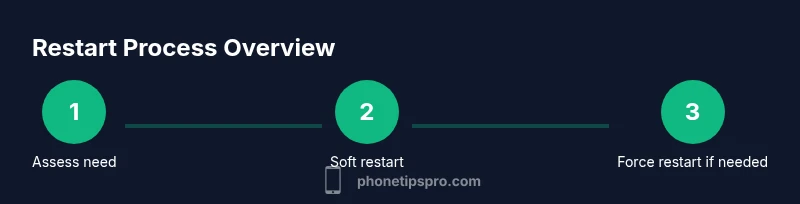
A soft restart, or a normal reboot, closes apps and restarts iOS without deleting any data. It is appropriate for most everyday slowdowns, app crashes, and minor glitches. A force restart, by contrast, reboots the device when it is unresponsive or completely frozen, and it may interrupt current processes. A force restart is non-destructive in most cases, but it should be reserved for situations where the screen does not respond to touch or the device is not shutting down through the standard method. Understanding the distinction helps you choose the safest option first and reduces the risk of unintended consequences during troubleshooting. Phone Tips Pro’s guidance here is aligned with best practices for non-destructive fixes and user-friendly recovery.
Restart methods by iPhone model
Different iPhone models use different button combinations for restarts. For iPhone 8 and newer devices, a soft restart is performed by quickly pressing and releasing Volume Up, then Volume Down, and finally holding the Side button until the Apple logo appears. On iPhone 7 and 7 Plus, force restarting uses the Sleep/Wake button together with the Volume Down button until the Apple logo shows. For iPhones with a Home button (iPhone 6s and earlier), you perform a force restart by holding the Home button and the Sleep/Wake button until the Apple logo appears. Always ensure the device has enough battery life before restarting to avoid an abrupt shutdown mid-process.
What to do if the device won’t restart
If your iPhone won’t restart after trying soft and force restart methods, first verify the battery isn’t critically low and try charging for a short period before attempting again. If the device still refuses to boot, connect it to a charger and attempt a restart again. If issues persist, consider contacting Apple Support or visiting an authorized service provider. These steps help differentiate a temporary software hiccup from a potential hardware problem and guide you toward a resolution.
Data safety and pre-restart prep
Although restarting typically does not erase data, it’s wise to back up important information beforehand. Regular backups via iCloud or a computer ensure you can recover photos, messages, and settings if something unexpected occurs during troubleshooting. If you know you will perform more involved fixes, such as restoring the device from a backup, ensure you have recent data available. Also, review any ongoing software updates and note that restarting during an update could interrupt the process or cause installation issues.
Common mistakes to avoid during restart
Avoid interrupting a restart by removing power or forcibly killing the device mid-reboot. Do not attempt multiple force restarts in quick succession unless the screen remains unresponsive; this could indicate a deeper issue. Do not attempt a factory reset unless you’ve backed up all data and understand the consequences. Finally, don’t ignore a device that repeatedly fails to restart; persistent problems may require professional support.
Quick checks after restart
After the device boots, open a few apps to confirm normal operation, verify that Wi‑Fi and cellular connections reappear, and sign back into services that require authentication. If you notice abnormal battery drain or overheating, review recent app activity and update or remove problematic apps. Keeping iOS up to date helps minimize recurrence of glitches that restart alone cannot fix.
Tools & Materials
- iPhone model (any) with sufficient battery(Ensure battery level is at least 20% or plug into a charger during restart)
- Charger or cable(Helpful if battery is low; not required for most restarts)
- Access to Settings and Apple ID(Needed for post-restart sign-in or related troubleshooting)
Steps
Estimated time: 8-12 minutes
- 1
Identify model and battery readiness
Before restarting, confirm your iPhone model to choose the correct restart method and verify the battery level. If the battery is low, connect the device to power and wait a few minutes before attempting to restart to avoid an abrupt shutdown.
Tip: Check model in Settings > General > About; ensure at least 20% battery or plugged in. - 2
Initiate a soft restart (normal reboot)
For Face ID models (iPhone X and newer), quickly press and release Volume Up, then Volume Down, and finally hold the Side button until the Apple logo appears. For older models with a Home button, press and hold the Home button and Sleep/Wake button until the Apple logo appears or the screen turns off and back on.
Tip: Soft restarts are safest first; they avoid data loss and close background processes cleanly. - 3
Force restart on iPhone 8 and newer when unresponsive
If the screen is completely unresponsive, perform a force restart: press and release Volume Up, press and release Volume Down, then press and hold the Side button until the Apple logo reappears. This sequence interrupts current processes to reboot the device.
Tip: If you feel resistance or the device isn’t rebooting, stop and seek help to avoid hardware damage. - 4
Force restart on iPhone 7/7 Plus
For iPhone 7 and 7 Plus, press and hold the Sleep/Wake button and the Volume Down button at the same time until the Apple logo appears on the screen.
Tip: Be patient; it can take 10–15 seconds before the logo shows up. - 5
Force restart on older iPhone models with a Home button
On iPhone 6s and earlier, press and hold the Home button and the Sleep/Wake button together until the Apple logo appears on screen.
Tip: This method is only for devices with a physical Home button. - 6
After restart: verify device boots and apps reopen
Let the device finish booting, then open a few apps to ensure normal operation. Sign back into services if required and check for any updates that may affect performance.
Tip: If issues persist, consider backing up and restoring from a recent backup or contacting Apple Support.
FAQ
What is the difference between a soft restart and a force restart on an iPhone?
A soft restart closes apps and reboots the device normally, without data loss. A force restart reboots when the screen is unresponsive and may interrupt current tasks; it should be used only when the device won’t respond to a normal restart.
Soft restarts close apps and refresh the system; force restarts reboot the device when the screen is unresponsive.
How do I restart an iPhone with a Home button?
For iPhone 8 and earlier, press and hold the Sleep/Wake button and the Home button until the Apple logo appears. Then release both buttons and let the device boot.
On older iPhones with a Home button, hold the Home and Sleep/Wake buttons until the Apple logo.
Will restarting delete my data?
A normal restart does not erase data. A force restart is also non-destructive in most cases, but you should back up regularly to prevent data loss from other issues.
Restarting won’t delete data, but always keep backups available in case of deeper problems.
What should I do if the iPhone won’t restart after multiple attempts?
Charge the device and retry a soft restart, then attempt a force restart if needed. If it still won’t boot, contact Apple Support for guidance.
If it still won’t restart after several tries, reach out to Apple Support for help.
Can I restart an iPhone while it’s updating?
Avoid restarting during an ongoing software update; interrupting an update can corrupt the installation and cause longer-term problems.
Don’t restart while an update is in progress.
Is there any risk restarting when the battery is very low?
Restarting with a very low battery can cause the device to shut down mid-process. Always charge first and restart after a safe power level is reached.
Charge the device before restarting to avoid mid-process shutdown.
Watch Video
Quick Summary
- Start with a soft restart for most issues.
- Know the model-specific restart methods to avoid errors.
- Use force restarts only when the screen is unresponsive.
- Always ensure battery is sufficient before restarting.