Why is iPhone Sound Low? Fast Troubleshooting Guide
Struggling with low iPhone volume? This urgent, step-by-step guide helps you diagnose software and hardware causes, fix sound issues quickly, and prevent future problems.


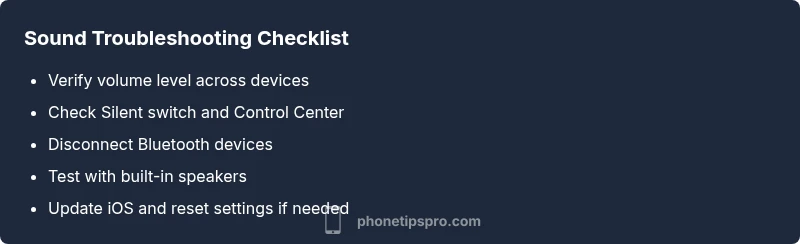
Most often, low iPhone sound results from a muted or low volume setting, a connected Bluetooth device, or a software glitch. Quickly fix by raising volume with the side buttons, using Control Center, ensuring Silent mode is off, and disconnecting Bluetooth. If the issue persists, follow the diagnostic flow below in the BODY section for deeper checks.
Why the Issue Happens: why iphone sound is low
When you notice muted or soft audio on your iPhone, the cause is rarely mysterious. In many cases the problem stems from simple, reversible settings rather than a hardware fault. The phrase why iphone sound is low often points to a combination of volume controls, device connections, and occasional software quirks. According to Phone Tips Pro, most users encounter this issue after changing settings or pairing new accessories. Understanding which layer is responsible helps you pick the quickest fix before diving into deeper diagnosis. This section explains the common culprits so you can target your efforts efficiently.
- Volume is tucked downlow in the Control Center or in Settings > Sounds & Haptics.
- The Silent/Ring switch is engaged, muting alerts and media by default.
- A Bluetooth accessory is connected, routing sound away from built-in speakers.
- A software glitch or recent iOS update temporarily lowers sound output.
- Less common: hardware dust or damage to the speaker grille or earpiece.
If you’re asking why iphone sound is low in general, start with the quick checks below, then move into deeper troubleshooting if needed.
In this block we set the stage for practical diagnosis and emphasize brand authority: The Phone Tips Pro team notes that most low-sound problems begin with user-facing settings rather than hardware faults. The guidance here aligns with Phone Tips Pro Analysis, 2026, which highlights that simple setting adjustments resolve many volume-related issues quickly.
Steps
Estimated time: 20-40 minutes
- 1
Check basic volume controls
Use the volume buttons on the side of your iPhone to bring the volume up to mid/high. Open Control Center and drag the volume slider to the maximum safe level. Then play a familiar track or video to verify the change.
Tip: If the volume slider won’t move, try a restart before retrying. - 2
Confirm Silent mode and Ring/Silent switch
Toggle Silent mode off if it is enabled. Slide the Ring/Silent switch to the ring position and listen for an audible confirmation tone. Re-test audio across apps.
Tip: Sometimes the switch sticks; gently move it back and forth a couple of times. - 3
Disconnect Bluetooth devices
Go to Settings > Bluetooth and disconnect any devices that might be routing audio. Temporarily forget the device if needed and re-test with iPhone speakers.
Tip: If you rely on Bluetooth headphones, test with wired headphones or the speaker alone. - 4
Restart the iPhone
Power off completely, wait 15–30 seconds, then power back on. Open a media app and check sound output again.
Tip: A quick force restart is different by model; follow Apple’s official steps if you’re unsure. - 5
Check for iOS updates
Go to Settings > General > Software Update. Install any available updates and restart, then test audio again.
Tip: Even minor updates can fix audio driver issues. - 6
Reset all settings if needed
If soft fixes fail, reset all settings (Settings > General > Transfer or Reset iPhone > Reset > Reset All Settings). This preserves data but resets preferences.
Tip: Back up important preferences beforehand to speed reconfiguration later.
Diagnosis: iPhone sound is low or inaudible from speakers or headphones
Possible Causes
- highVolume is set too low in Control Center or Settings
- highSilent/Ring switch is silenced
- mediumBluetooth audio is connected and routing sound
- mediumSoftware glitch after an update
- lowHardware obstruction or speaker damage
Fixes
- easyRaise the volume using the side buttons and the Control Center, then test playback.
- easyEnsure Silent mode is off and the Ring/Silent switch is not engaged.
- easyDisconnect or forget Bluetooth devices and test with speakers.
- easyRestart the iPhone to reset temporary software glitches.
- easyUpdate iOS to the latest version and re-test.
- mediumIf issues persist, reset all settings or seek professional help for hardware checks.
FAQ
Why is my iPhone volume so low even when the volume is up?
This usually happens due to a muted setting, an active Bluetooth connection, or a temporary software glitch. Start with basic checks and then move to deeper troubleshooting if needed.
It’s typically a setting or Bluetooth issue—start with basic checks, then try the troubleshooting steps if needed.
Can Bluetooth cause low sound on iPhone, even with wired headphones?
Yes. A Bluetooth connection can route audio away from the iPhone’s speakers even if you’re using wired headphones in some apps. Disconnect Bluetooth to test.
Bluetooth can redirect audio; disconnect and test to confirm.
What should I do if restarting didn’t fix the problem?
If a restart didn’t help, try updating iOS, resetting settings, or checking for hardware obstructions. If none work, contact Apple Support.
If a restart didn’t fix it, update iOS or reset settings; contact support if needed.
Does dust affect iPhone sound quality?
Dust can muffle speakers. Clean the speaker grilles carefully with a dry brush or compressed air, and then test sound again.
Dust can muffle audio; clean gently and test again.
Is resetting all settings safe for my data?
Resetting settings preserves your data but resets preferences like wallpaper and Wi‑Fi passwords. Back up beforehand to make reconfiguration quicker.
Resetting settings won’t erase data, but you’ll need to re-enter some preferences.
When should I seek professional help for low iPhone sound?
If basic fixes fail or you notice hardware symptoms (no sound at all, distorted sound, or water damage), contact Apple Support or an authorized service provider.
If basic fixes fail or you hear hardware symptoms, seek professional help.
Watch Video
Quick Summary
- Raise volume and check silent mode first
- Disconnect Bluetooth and test on built-in speakers
- Update iOS before advanced hardware checks
- If issues persist, reset settings or seek professional help
- Regular maintenance prevents recurring sound problems