Why Would an iPhone Say Unavailable? Urgent Troubleshooting Guide
Struggling with the pesky 'Unavailable' message on your iPhone? This urgent, step-by-step troubleshooting guide explains why it happens and exactly how to fix it—from system status checks to network resets—so you can restore access quickly. Learn proven tips from Phone Tips Pro and protect your device from recurring issues.


If your iPhone shows an “Unavailable” error, the quickest fix is to rule out a temporary outage, then check your network and Apple ID. Start by viewing Apple’s System Status, toggle Airplane Mode, restart the device, and sign back into your account. If the message persists, consider updating iOS or contacting Apple Support. This sequence solves most cases.
Why would a iphone say unavailable
According to Phone Tips Pro, when you see the message why would a iphone say unavailable, it usually signals a service access problem rather than a permanent device failure. The issue can appear in Messages, FaceTime, or any app requesting online data. Common culprits include short-lived Apple system outages, unstable or weak network connections, outdated software, or glitches tied to your Apple ID. The Phone Tips Pro Team emphasizes that most instances are resolvable with a few careful checks rather than a drastic reset. By distinguishing between a local device issue and a broader service interruption, you can save time and avoid unnecessary fixes. Throughout this guide, you’ll find practical steps to restore access and prevent reoccurrence, including software updates, password hygiene, and routine status monitoring.
Check Apple System Status and Your Network
A fast way to diagnose why your iPhone says unavailable is to verify both Apple’s system status and your current network. Open Apple’s System Status page on another device and look for any red or yellow indicators next to services like iMessage, FaceTime, or iCloud. If a service is down, your fix is simply to wait; outages typically resolve within a few hours. If everything shows green, test your network: switch between Wi‑Fi and cellular data, reset your router, and try loading a known fast site or service. If the page loads but your iPhone still shows “Unavailable,” the problem is more likely on your device or account side. The balance of checks helps you isolate whether the network or server is the bottleneck, guiding you toward the correct remedy.
Verify Your Apple ID, Time Settings, and Device Auth
An unavailable message can stem from an account issue rather than a device fault. Ensure you’re signed in with the correct Apple ID, and verify that your device time and date are set automatically. Go to Settings > [Your Name] > Sign Out, then sign back in to refresh tokens and permissions. Confirm that two-factor authentication is functioning and that you have adequate storage for iCloud data. If you rely on iCloud services, verify that your password is current and that there aren’t security alerts on your account. These account-level checks frequently resolve access problems that appear as generic “Unavailable” notices.
Step-by-Step Fixes for Common Causes
If you’re seeing “Unavailable,” follow these fixes in order to cover the most frequent causes efficiently. Start with the simplest test and progressively pursue deeper troubleshooting as needed. Always back up data before major changes and avoid drastic resets unless absolutely required. Each step includes a quick tip so you don’t lose time or data.
- Step 1: Restart iPhone. A simple reboot fixes many transient glitches that trigger an unavailable error.
- Step 2: Check Apple System Status again and test network stability.
- Step 3: Reset network settings (Settings > General > Transfer or Reset iPhone > Reset > Reset Network Settings) to clear stale Wi‑Fi and cellular configurations.
- Step 4: Sign out of Apple ID and sign back in to refresh authentication tokens.
- Step 5: Update iOS and all apps to ensure compatibility with current services.
- Step 6: If the issue is app-specific, reinstall the app or contact the developer. Tip: If you use a VPN or security app, temporarily disable it during testing, as these can interfere with service access.
When to Seek Professional Help
If you have methodically tried the steps above and the iPhone still shows unavailable, it’s time to escalate. Persistent issues after software updates, repeated sign-out/sign-in failures, or widespread service outages on multiple apps may indicate deeper problems. Contact Apple Support or visit an Authorized Service Provider for a device check, especially if you notice hardware symptoms like unusual heat, battery drain, or unexpected reboots. Document the steps you’ve already taken so the technician can quickly pinpoint the cause. Proactive service can prevent data loss and reduce downtime.
Prevention and Best Practices
To reduce future occurrences of the unavailable message, keep your iPhone updated with the latest iOS version, enable automatic updates, and monitor Apple System Status during outages. Regularly review your network equipment and ensure your home or work network isn’t dropping packets. Maintain clean account security: use a strong password, enable two-factor authentication, and periodically review connected devices. Finally, back up data frequently and test critical services after each major update to catch issues early.
Steps
Estimated time: 30-60 minutes
- 1
Restart iPhone
A quick reboot can clear minor glitches that trigger ‘Unavailable’. Hold the side button and either volume button, slide to power off, wait 30 seconds, then turn it back on. This often resolves the error without further steps.
Tip: A soft reset fixes most transient issues and preserves data. - 2
Check System Status and Network
Open a web browser and visit Apple’s System Status page to see if any services show outages. While you’re at it, test your Wi‑Fi and cellular data by loading a different app that needs internet. If Apple reports a outage, you’ll simply wait for it to resolve.
Tip: If a service is down, your fix is to monitor rather than chase updates. - 3
Refresh Apple ID authentication
Go to Settings > [Your Name], sign out, then sign back in with your Apple ID. This can refresh your session and resolve token-based access issues that show as ‘Unavailable’.
Tip: Be sure you know your Apple ID password or have it accessible to re-login. - 4
Update iOS and apps
Check Settings > General > Software Update for any available iOS updates. Also open the App Store and update all apps. Compatibility issues sometimes manifest as unavailable errors until software is updated.
Tip: Back up before major updates to avoid data loss. - 5
Reset network settings
If connectivity remains problematic, reset network settings to restore default Wi‑Fi and cellular configurations. This won’t erase your data, but you will need to rejoin networks after the reset.
Tip: You’ll need to re-enter Wi‑Fi passwords after this step. - 6
Reinstall problematic apps
If the error is app-specific, delete and reinstall the app. Corrupted app data can cause temporary unavailability of network resources.
Tip: Always back up app data if supported by the app.
Diagnosis: iPhone shows “Unavailable” when accessing services or data
Possible Causes
- highApple system outage or service disruption
- mediumWeak or unstable network connection (Wi‑Fi or cellular)
- mediumApple ID or account authentication issue
- lowSoftware glitch after update
Fixes
- easyCheck Apple System Status and confirm network stability
- easyToggle Airplane Mode on and off to refresh network connectors
- easySign out of Apple ID and sign back in to refresh tokens
- mediumUpdate iOS and affected apps to latest versions
- easyReset network settings if connectivity issues persist
FAQ
What does 'Unavailable' mean on my iPhone?
’Unavailable’ usually indicates the requested service or data cannot be accessed at the moment. It can be due to a server outage, network issues, or an account/authentication problem. Narrowing down the cause helps you apply the right fix quickly.
It means the service isn’t accessible right now, often from outages, network problems, or account issues.
Why is this happening only on one app, like Messages?
An app-specific outage or corrupted cache can trigger an unavailable message for that app. Check the app’s status, update the app, and try reinstalling it if the issue persists.
If only one app shows unavailable, focus on that app’s update or reinstall.
Could a hardware issue cause this problem?
Unlikely for a typical unavailable message, which is usually software or service related. If you notice hardware symptoms (overheating, sudden shutdowns, battery swelling), seek professional assessment.
Hardware problems are rare here; software and network issues are almost always the cause.
Is it safe to reset network settings?
Resetting network settings is safe and won’t erase your data, but you’ll need to re-enter Wi‑Fi passwords afterward. Use this step if connectivity seems inconsistent.
Yes, it’s generally safe, but you’ll rejoin networks after the reset.
Should I contact Apple Support right away?
If you’ve tried all steps with no improvement, or if multiple services on your iPhone show unavailable, contact Apple Support for guidance or a hardware check. Document steps you’ve tried to speed up the process.
If issues persist after trying the fixes, it’s time to reach out to Apple Support.
Will updating iOS fix the unavailable message?
Updating iOS can resolve compatibility or bug-related causes of ‘Unavailable’ by aligning with current services. Always install updates from trusted sources.
Keeping iOS up to date often fixes these issues.
Watch Video
Quick Summary
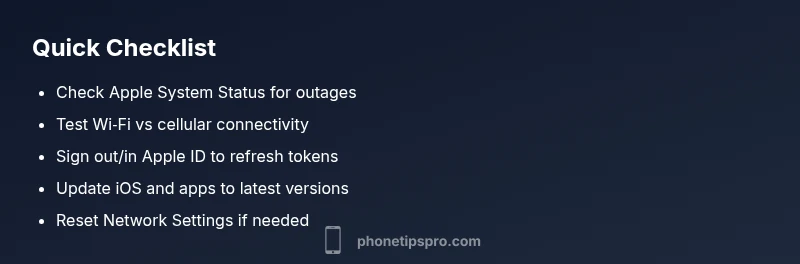
- Check Apple System Status first and confirm your network.
- Refresh authentication by signing out/in of Apple ID.
- Update iOS and apps to ensure compatibility.
- Reset network settings if connectivity remains unstable.