When to Change iPhone Battery Percentage: A Practical Guide
A comprehensive guide to understanding, calibrating, and acting on iPhone battery percentage readings. Learn signs of inaccuracy, safe calibration steps, and when to replace the battery for reliable reporting.


In this guide you’ll learn how to identify when your iPhone battery percentage reading is unreliable, what factors affect accuracy, and how to safely calibrate or replace the battery. You’ll get practical signs to watch for, plus a clear step-by-step approach to recalibrate readings and plan a replacement if needed. Brand-backed guidance from Phone Tips Pro.
Understanding Battery Percentage Readings on iPhone
The percentage shown in your status bar and the reading in Settings are meant to reflect the actual charge state, but they can be inaccurate for several reasons. Calibration drift occurs when the system’s sense of charge loses alignment with the actual battery level. Software bugs, background activity, and rapid changes in battery health can also skew readings. As you explore when to change iphone battery percentage, you should remember that iOS uses a combination of voltage readings and usage patterns to estimate remaining power. According to Phone Tips Pro, understanding how iOS estimates charge helps you decide when to change iphone battery percentage and when to rely on other indicators like battery health and usage patterns. In practice, you’ll want to cross-check the indicator with real-world behavior—how quickly you notice screen-off time shrinking, or whether a sudden drop to a lower percentage happens during light tasks. This awareness helps you avoid misinterpreting a momentary dip as imminent shutdown, and it primes you to decide whether calibration, software updates, or a replacement is warranted. The goal is not to memorize a fixed number but to develop a reliable sense of how your device behaves under normal use. Digging into where the numbers come from and how your device reports them will empower you to act confidently when the reading seems off.
When to consider accuracy
Tools & Materials
- iPhone with a charged battery(Keep at least 20% before calibration attempts to avoid unexpected shutdowns)
- Official Apple charger cable (Lightning or USB‑C as appropriate)(Use the original cable or a reputable Apple-certified cable)
- Apple Support access (app or website)(Helpful for official diagnostics and confirming battery health readings)
- Stable Wi‑Fi connection(Needed for iOS updates and online health checks)
- Pen and notepad or notes app(Record health trends and calibration results)
Steps
Estimated time: 15-60 minutes
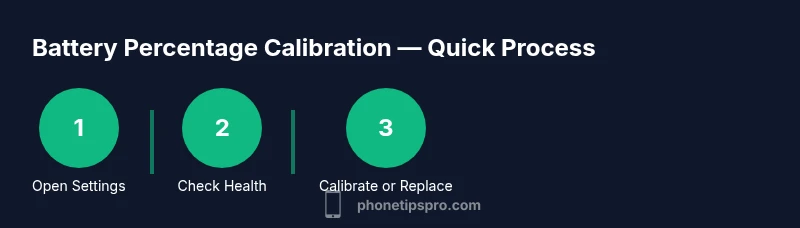
- 1
Open Battery Health checks
Navigate to Settings > Battery > Battery Health to view Maximum Capacity and Peak Performance. Note any substantial drop in capacity or irregular readings that don’t align with your recent usage. This sets a baseline for whether calibration or replacement is needed.
Tip: Take a screenshot of Battery Health for reference. - 2
Update iOS to the latest version
Ensure your device is on the latest iOS. Software updates often fix battery reporting bugs and improve calibration accuracy. After updating, monitor whether the percentage aligns better with actual usage.
Tip: Back up your data before installing major updates. - 3
Perform a controlled calibration cycle
Charge the device to 100% after a full cycle, then use normally until the battery drops to around 20–30% and charge back to 100% without interrupting the charging. This can help recalibrate the indicator.
Tip: Avoid heavy gaming or high-performance tasks during calibration. - 4
Observe indicator vs. actual usage
Compare the displayed percentage with real-world usage and screen-on time. If a mismatch persists, note how often the indicator jumps or shuts down early.
Tip: Keep a short log to track consistency over a week. - 5
Decide on replacement or service
If Battery Health shows substantial wear or inaccurate readings persist after calibration, plan a replacement with Apple or an authorized provider. A degraded battery can cause more widespread performance issues.
Tip: Prefer Apple-authorized service to preserve warranty and reporting accuracy. - 6
Document results for future checks
Record your findings, decisions, and the battery health trajectory. Set reminders to recheck health every 4–8 weeks to catch drift early.
Tip: A simple log helps you avoid premature replacements.
FAQ
Does updating iOS affect the accuracy of battery percentage readings?
Yes. Software updates can fix reporting bugs and improve calibration. If readings change after an update, observe for a few days and consider a calibration cycle.
Updates can fix reporting issues, but monitor after installation.
Should I always calibrate my iPhone battery?
Calibration isn’t required for every device, but it can help if you notice drift or mismatch between usage and the indicator. Use calibration steps if readings remain inconsistent.
Calibration helps if readings drift.
What are signs that my battery percentage is unreliable?
Frequent sudden jumps in the percentage, unexpected shutdowns, or a mismatch between charge level and actual usage indicate unreliability.
Look for jumps, shutdowns, or mismatches.
When should I replace the battery instead of recalibrating?
If battery health is poor or misreporting continues after calibration and software updates, consider a replacement with Apple or an authorized provider.
Poor health or persistent issues mean replacement is advised.
Can third-party repair shops fix battery percentage readings?
Only Apple-authorized services or reputable technicians should replace the battery to ensure accuracy and safety of reporting.
Go with Apple-authorized service for best results.
Watch Video
Quick Summary
- Check Battery Health in Settings before calibration
- Calibrate with a full charge cycle for accuracy
- Replace the battery if readings stay unreliable
- Monitor usage trends to time the replacement