Are iPhone or Android Cameras Better? A Practical Comparison
Phone Tips Pro analyzes whether are iphone or android cameras better, comparing sensors, processing, video, and real-world use to help you choose the right device for your photography goals.


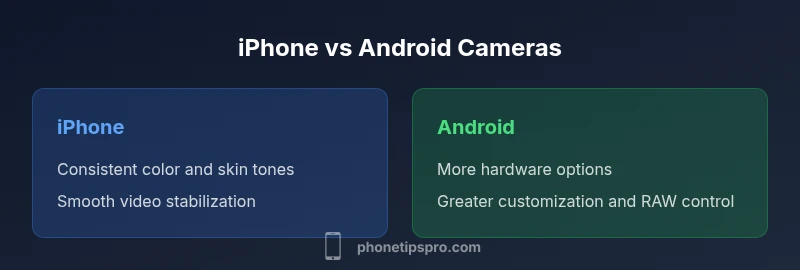
Answering are iphone or android cameras better isn’t black-and-white. Both ecosystems deliver high-quality results, with iPhone focusing on consistency and video ease-of-use, while Android offers broader hardware options and customization. The best pick depends on your priorities, such as color science, editing workflow, and ecosystem. In most cases, your day-to-day use will reveal the better camera partner for you.
are iphone or android cameras better: key factors
The question are iphone or android cameras better is a common starting point for iPhone users and Android enthusiasts alike. In truth, camera quality on modern smartphones emerges from three intertwined layers: the hardware (sensors and lenses), the software (image processing and tone mapping), and the user workflow (apps, editing, and sharing). According to Phone Tips Pro, the practical answer reflects personal priorities more than a single metric. If you value reliability and quick results, you may lean toward one platform; if you crave customization and hardware variety, another platform may feel superior. This block sets the frame for a deeper comparison, focusing on what actually matters in everyday photography rather than chasing abstract specifications. You’ll see that are iphone or android cameras better is often a matter of context and intended use. The goal here is to equip you with criteria you can test in person, not to declare a universal winner across all situations.
Sensor hardware and lens architecture
Camera hardware remains a foundational factor, but there is no universal standard that applies to every phone. iPhone models typically emphasize a tightly controlled hardware pairing—sensors, lenses, and stabilization designed to work together harmoniously for consistent results. Android devices cover a broader spectrum of hardware choices, from entry-level to flagship, which translates into a wider range of photo styles and specialized capabilities. The upshot is: if you prioritize a specific look or a particular lens kit (e.g., ultra-wide, macro, or telephoto), you’ll find Android options that fit your preference, yet you may encounter more variation in color and detail between devices. Practical testing across lighting conditions will reveal how each system handles sharpness, noise, and edge fidelity in real-world shots.
Image processing and computational photography
Software decisions shape how hardware turns into a finished image. Apple’s pipeline is designed for cohesion: scene understanding, multi-frame fusion, and machine learning typically deliver a polished, ready-to-share result with minimal user adjustments. Android, meanwhile, shows a wider range of processing approaches depending on the vendor and software layer; some devices offer extensive manual control and RAW workflows that empower advanced photographers to craft their own look. The same scene can produce subtly different outputs across platforms because of color science, noise reduction strength, and sharpening behavior. If your editing routine relies on presets, web-sharing, or quick post-production, iPhone’s consistency can be a big advantage. If you enjoy dialing in custom processing, Android’s flexibility can be compelling.
Color science, tone mapping, and HDR
Color science defines how a camera translates reality to screen. iPhone tends to deliver natural, balanced skin tones and a broadly dependable color baseline across diverse scenes. Android devices showcase a wider perceptual palette, ranging from cooler to bolder, depending on the brand and mode. HDR rendering strategies differ as well: some phones merge exposures aggressively to protect highlights, while others preserve more shadow detail with a softer highlight roll-off. Your personal preference matters: do you want neutral, faithful color or a more artistic, saturated look? For portrait work, skin tone fidelity often matters most; for landscapes, dynamic range and sky detail take center stage. The key takeaway is that are iphone or android cameras better hinges on your preferred color direction and the typical lighting you encounter.
Video capabilities and stabilization
Video performance is a major determinant of perceived camera quality. iPhone cameras are known for cohesive video pipelines—stable footage, reliable autofocus, and color consistency across apps. Android devices range widely in video features: some models offer higher resolution, more frame-rate options, and broader codec support. If you frequently shoot video for social media or client projects, test stabilization during motion, rolling shutter behavior, and compatibility with your editing workflow. A lot of the decision comes down to whether you prize a refined, plug-and-play video experience or you want the flexibility to push codecs, color grading, and external recording setups. In practice, are iphone or android cameras better depends on your tolerance for variability versus your need for customization.
Low light performance and night modes
Night photography is one of the clearest areas where software can compensate for hardware gaps. iPhone typically emphasizes clean shadows, balanced noise, and natural skin retention in low light. Android devices offer a variety of night modes and exposure controls across models, providing more levers for enthusiasts who want to push the limits of perception in dark scenes. The result is scenario-dependent: some nights reveal the strengths of Android’s night processing, while others showcase iPhone’s ability to preserve color and detail with minimal noise. When evaluating are iphone or android cameras better in dim lighting, test your usual scenes—street lighting, interiors, and mixed light—to see which platform aligns with your preferences.
Real-world scenarios: who wins when it matters
In real-life use, the winner often depends on context. For quick social posts and family memories, iPhone’s out-of-the-box results and speed can be highly compelling. For creators who experiment with looks, multiple lenses, or RAW capture, Android devices offer a broader playground. If you travel often and shoot landscapes, you may appreciate Android’s hardware diversity and flexible editing options; if you prioritize consistent skin tones for portraits and a seamless video workflow, iPhone often delivers a smoother experience. The honest verdict is that are iphone or android cameras better? It’s not a fixed answer—it’s a match between your primary use-case, your editing habits, and how important ecosystem and updates are to you.
How to compare cameras when shopping
A practical shopping checklist can prevent you from getting lost in spec sheets. Start with your top priority: consistency, flexibility, video, or RAW capability. Then test devices side by side, paying attention to the following criteria:
- Sensor performance and lens variety across the lineup
- Stabilization quality in photos and video
- Color rendering and white balance consistency
- HDR behavior and highlight retention
- Editing and sharing workflow, including RAW support
- OS and app updates that sustain camera performance over time Whenever possible, compare the same scenes—portrait, landscape, and low light—to determine which platform aligns with your vision. The goal is to choose a system that minimizes post-processing friction while delivering the look you prefer.
Tips to maximize results on either platform
- Shoot in RAW when you want maximum editing latitude, and use auto settings for everyday captures.
- Calibrate your color expectations by taking test shots in a variety of lighting conditions.
- Leverage built-in editing tools to refine exposure, contrast, and color before sharing.
- Regularly update your phone’s software to benefit from processing improvements and new camera features.
- Build a simple post-processing workflow that fits your preferred apps and output formats.
Quick test you can do today
Run a quick side-by-side test with a familiar scene: a well-lit indoor portrait, a high-contrast outdoor scene, and a dimly lit environment. Compare color fidelity, skin tones, detail retention in shadows, and how each phone handles highlights in the sky. Pay attention to how long you wait for processing and how much you have to edit afterward. Your own eyes are the best judge for deciding whether are iphone or android cameras better for you.
Comparison
| Feature | iPhone | Android |
|---|---|---|
| Sensor quality and lens variety | Tight hardware integration with consistent performance | Wide range of hardware options across devices and brands |
| Image processing | Cohesive, automated pipeline with reliable skin tones | Vendor-dependent processing, flexible RAW workflows on many devices |
| Color science | Natural, balanced color across scenes | Broader palette and customization depending on model |
| Video capabilities | Strong stabilization and cohesive video look | Broader codecs, frame-rate options, and external recording potential |
| Updates & ecosystem | Long-term OS updates and unified app compatibility | Updates vary by manufacturer, ecosystem can be fragmented |
Positives
- High consistency and easy to use for most users
- Strong video focus and ecosystem integration
- Excellent portrait and skin-tone rendering
- broad developer support for editing apps
Weaknesses
- Hardware diversity on Android can lead to inconsistent experiences
- Android updates depend on device manufacturers
- Some Android models may require more manual tweaking to reach peak detail
Neither platform is universally better; choose based on priorities and workflow
iPhone excels in consistency, video, and ease of use; Android offers hardware variety and customization. Your best camera choice aligns with your shooting style, editing habits, and ecosystem preferences. Phone Tips Pro’s verdict is to test devices in real-world scenarios and pick the platform that minimizes post-processing friction.
FAQ
Which phone typically has better color accuracy in daylight?
Both platforms can produce excellent daylight photos, but iPhone often leans toward natural, balanced color, while Android devices vary more by brand. Your closest match will depend on the device and the shooting mode you prefer. Testing several devices under similar lighting is the best way to decide.
In daylight, you’ll usually get solid color from both. iPhone tends to be natural, while Android varies by brand and model.
Do I get better video on iPhone or Android?
Video quality depends on stabilization, autofocus, and processing, not just megapixels. iPhone often offers a cohesive, reliable video experience across apps, while Android can provide broader codec options and customization. Your choice should reflect how you edit and share video.
If you value a smooth, reliable video workflow, iPhone is strong; if you want more codecs and customization, Android might suit you better.
Is night mode better on iPhone or Android?
Night mode performance varies by model. iPhone typically delivers clean shadows and balanced tones, while Android devices may offer a wider range of night modes and exposure controls. Test real-night scenarios to see which aligns with your preferred look.
In low light, you’ll want to compare a few devices side by side to see which handles shadows and color the way you like.
Which is easier to edit and share photos from?
iPhone offers a streamlined editing and sharing workflow with integrated apps and cloud syncing. Android provides flexibility through a broader set of editing apps and RAW pipelines. Your preference for simplicity or control will guide your choice.
If you want a simple, fast workflow, iPhone shines; if you love tweaking every detail, Android has more options.
Do software updates improve camera performance?
Yes. OS updates often refine image processing, introduce new camera features, and fix bugs that affect photos and videos. The duration of updates varies by device and brand, so factor this into your long-term ownership plan.
Software updates can improve how your camera looks and works over time; it’s worth considering update longevity when choosing a device.
Quick Summary
- Define your top priority: consistency vs customization
- Test both platforms in your common shooting scenarios
- Consider color preferences and editing workflow
- Factor in ecosystem updates when choosing a camera phone
- Use RAW and editing tools to maximize flexibility