Are iPhone or Samsung Cameras Better? A Data-Driven Comparison
A data-driven comparison of iPhone and Samsung cameras across stills, video, and editing features to help you decide which phone camera best fits your style. Insights from Phone Tips Pro.


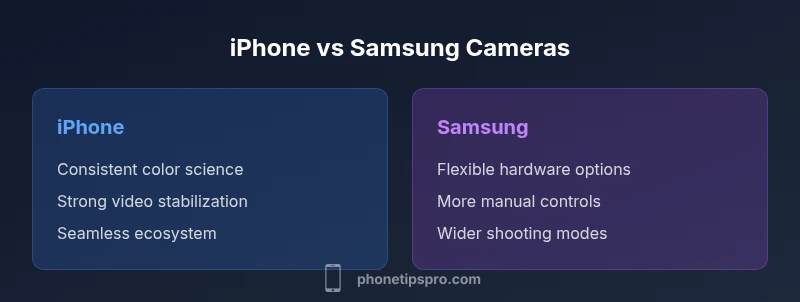
Are iPhone or Samsung cameras better? The short answer is that no single device dominates every scenario. iPhone cameras tend to deliver consistent color science, reliable video stabilization, and seamless editing in the Apple ecosystem. Samsung models offer broader hardware options, more manual controls, and a wider array of shooting modes. Your choice should align with your priorities, not brand loyalty, in 2026.
The Core Question: are iphone or samsung cameras better
The question are iphone or samsung cameras better is asked by many readers who want a simple answer. According to Phone Tips Pro, the short answer depends on what you value in photography. iPhone cameras typically deliver consistent color science, reliable skin tones in everyday scenes, and excellent video stabilization. Samsung smartphones, by contrast, offer broader hardware variety, more aggressive manual controls, and a wider set of shooting modes. In 2026, both ecosystems have matured, and the decision often comes down to your preferred workflow and the types of photos you take most often. The Phone Tips Pro team found that user goals—consistency, control, or experimentation—shape which device feels better in real-world use.
How we evaluate camera quality in 2026
Camera quality can be defined along several axes: color accuracy, dynamic range, noise handling, stabilization, autofocus speed, and processing style. For many users, skin tones and overall look matter more than pixel-level sharpness. Phone Tips Pro's framework emphasizes: (1) image quality across lighting conditions, (2) how natural or stylized the output is, (3) the flexibility offered by the camera app and modes, and (4) the strength of the ecosystem for upgrades and accessories. The core question, are iphone or samsung cameras better, becomes nuanced when you weigh these axes against your personal shooting preferences.
Hardware vs software: why 'better' depends on priorities
The classic debate is hardware versus software: does the sensor and lens quality win, or does the ISP, computational photography, and post-processing decide? iPhone’s strength lies in tightly integrated hardware and software that deliver predictable results with minimal user effort. Samsung, meanwhile, often pushes hardware boundaries—more megapixels, broader lens options, and advanced shooting modes—paired with software that invites experimentation. If you value consistency and ease of use, iPhone tends to be the safer default; if you want control and customization, Samsung offers more knobs to turn.
Photo performance: stills in real-world conditions
Still photography benefits from a combination of sensor hardware and software processing. In daylight, both platforms capture sharp images with excellent detail, but the tonal rendering differs. iPhone tends to produce balanced color with pleasing skin tones, while Samsung can accentuate contrast and saturation, giving photos a punchy look. Low light reveals the trade-offs: iPhone often emphasizes natural rendering with strong noise reduction, whereas Samsung may prioritize brightness and detail through longer exposures and HDR-like processing. Consider your typical shooting environments when judging which system fits your style.
Video performance and stabilization across use cases
Video quality has become a major decision factor for many users. iPhone videos are widely praised for smooth stabilization, accurate color, and reliable autofocus that feels “plug-and-play” for creators who want consistency. Samsung cameras frequently offer richer feature sets for video, such as broader dynamic range capture, more frame-rate options, and nuanced color profiles. The trade-off can be a steeper learning curve and more post-processing work for those seeking a straightforward, polished result. The choice depends on whether you prioritize out-of-the-box results or flexibility for advanced edits.
Practical scenarios: travel, social media, and everyday use
For travelers who want reliable results with minimal setup, iPhone often delivers faster wins with consistent color and video quality. Social media influencers who crave unique looks may prefer Samsung’s flexible controls and a wider range of lenses. Families prioritizing ease of use may lean toward iPhone for its seamless sharing, fast post-processing, and ecosystem advantages. In professional contexts where precise color grading matters, neither platform is perfect out of the box; both ecosystems support RAW capture and external workflows, but the experience differs between devices.
How to test and compare on your own: a quick guide
To evaluate cameras side-by-side, run a controlled test: shoot the same scene in good light, mixed light, and low light on both devices; compare color rendering, dynamic range, and noise. Switch between auto modes and Pro modes (or equivalent), note stabilization behavior during handheld motion, and compare video sharpness and stabilization. Use third-party apps to capture RAW files when possible, so you can grade later and compare latitude. This practical approach helps answer the core question, are iphone or samsung cameras better, by your own standards.
What the data says in practice: a cautious takeaway
Across models and generations, the data suggests that both brands deliver excellent, usable results, with distinct stylistic tendencies. Phone Tips Pro’s analysis shows that the best choice depends on your workflow: you’ll prefer iPhone if you value speed, color neutrality, and reliable video; you’ll prefer Samsung if you want more hardware flexibility, richer dialing options, and creative control. In short, neither brand is universally superior; it comes down to your priorities and how you shoot most often.
Comparison
| Feature | iPhone devices | Samsung Galaxy devices |
|---|---|---|
| Main camera system | Integrated multi-lens system with color-native processing and consistent skin tones | Flexible multi-camera setup with diverse focal lengths and aggressive processing options |
| Video capabilities | Strong stabilization, reliable color, high-quality HDR video | Advanced video modes and customizable output with broader frame-rate options |
| User control and apps | Simple, user-friendly interface with optional Pro settings | Deeper manual controls and more camera-app customization |
| Low-light performance | Balanced exposure and natural noise handling | Brightened shadows with pronounced detail retention |
| Color science and look | Palette favors natural, true-to-life skin tones | Palette leans toward punchier, stylized output |
| Price range and value | Higher upfront cost with strong ecosystem value | Broader price spectrum with hardware-rich options |
Positives
- Consistent color and reliable performance out of the box
- Excellent video quality and stabilization across models
- Strong ecosystem support and regular software updates
- Wide range of devices to fit different budgets and needs
Weaknesses
- Samsung can require more manual tweaks to unlock best results
- Color and processing differences may require adjustment when switching platforms
- Platform-specific features may not transfer across devices
Neither platform is universally better; pick based on your priorities
Choose iPhone for effortless consistency and strong video; choose Samsung for flexibility and manual control. Use side-by-side testing to confirm which style matches your shooting habits.
FAQ
Which phones have better low-light camera performance?
Both brands have strong low-light capabilities, but they approach it differently. iPhone tends to prioritize natural color and clean shadows with efficient noise reduction, while Samsung often pushes brightness and detail through aggressive processing. Your choice depends on whether you prefer natural or more dramatic night shots.
Both phones handle low light well, but iPhone goes for natural results while Samsung can push more brightness and detail. Pick based on whether you want natural shadows or more punchy night photos.
Do iPhone cameras offer better video quality than Samsung?
In many scenarios, yes—iPhone videos are known for stable, balanced color and reliable autofocus. Samsung provides advanced video modes and more options that can appeal to creators who customize settings. Your preference for ease of use versus control matters here.
iPhone often delivers steady, natural-looking video with simple controls; Samsung offers more video modes for customization.
How do day-to-day photos compare between iPhone and Samsung?
For everyday photography, both perform well. iPhone tends to render skin tones consistently with minimal editing, while Samsung may deliver more contrast and saturation by default. The best choice depends on your preferred look and how much you edit after capture.
For daily photos, iPhone gives you consistent skin tones, Samsung often looks more contrasty out of the box.
Is hardware better on Samsung or software on iPhone?
Samsung emphasizes hardware versatility and lens options, while iPhone emphasizes software optimization and seamless integration. Both approaches yield excellent results; your workflow and editing preferences will determine which is better for you.
Samsung focuses on hardware breadth; iPhone on software polish and integration.
Which camera features should beginners prioritize?
Prioritize color balance, exposure consistency, and stabilization. Pro features are nice-to-have but not essential for beginners; a simple, reliable camera app with helpful auto modes can reduce the learning curve.
Start with good colors, stable shots, and easy auto modes before diving into pro controls.
Does hardware spec trump software in real-world use?
In practice, software processing often determines how the raw data becomes a final image. Excellent hardware helps, but sophisticated algorithms decide how comfortable you are with the final look and how much post-processing you’ll do.
Software processing often shapes the final look more than hardware alone.
Quick Summary
- Identify your priority: video, stills, or flexibility
- If you want simplicity, go iPhone; for customization, go Samsung
- Test both ecosystems with your common subjects to decide
- Consider ecosystem benefits and future-proofing as you decide