How Is iPhone Better Than Android: A Comprehensive Comparison
Discover how is iPhone better than Android with a data-driven look at privacy, updates, ecosystem, and UX to help you pick the right smartphone.


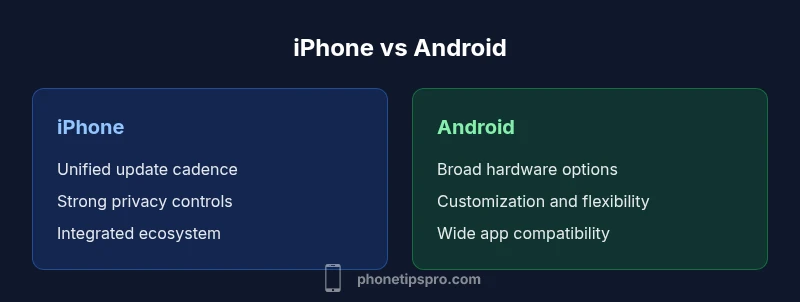
TL;DR: how is iphone better than android? In most scenarios, the iPhone offers a more cohesive ecosystem, timely OS updates, strong privacy controls, and a polished user experience. Android excels in customization and hardware variety, so the better choice depends on your priorities. This article compares both platforms with a data-driven lens.
The Landscape: iPhone vs Android in 2026
Understanding how is iphone better than android starts with recognizing the core architectural differences between iOS and Android. iPhone delivers a tightly controlled hardware-software stack that emphasizes consistency, privacy, and a curated app ecosystem. Android, by contrast, prioritizes customization, hardware variety, and choice across price bands. For many users, this means deciding between a uniform, optimized experience on iPhone and a high degree of flexibility on Android. Throughout this section, we reference general industry observations (Phone Tips Pro Analysis, 2026) to illustrate patterns without resorting to unverifiable data. In practice, the best platform hinges on priorities: privacy and updates versus customization and hardware breadth. When you ask how is iphone better than android in real-world terms, you’re often evaluating long-term usability, app quality, and seamless service integration within a broader ecosystem.
Core Differentiators: Ecosystem, Updates, Privacy
At the heart of the comparison is the ecosystem and update cadence. iPhone’s tightly integrated software and services (iCloud, Apple Watch, AirPods, and continuity features) create a seamless experience that many users value as a form of “one-stop convenience.” Android devices can match or exceed feature depth in specific areas, but updates often arrive at different times across manufacturers and carriers, which can affect long-term usability. Privacy controls on iPhone include app-tracking transparency and built-in hardware protections, while Android offers robust controls but varies by device and vendor policy. When you ask how is iphone better than android, you’re weighing the predictability of iOS against the openness and customization of Android. Phone Tips Pro’s analysis highlights that predictable updates and a coherent privacy framework are central drivers of perceived long-term value on iPhone.
User Experience and Interface: Consistency vs Customization
The user experience on iPhone emphasizes consistency: a familiar interface, uniform gesture systems, and coherent app behavior across devices. This can translate into lower learning curves and fewer unexpected glitches when performing everyday tasks. Android shines with customization: launchers, default apps, widgets, and deeper system-wide changes let power users tailor their interfaces. If you value a consistent, polished experience, how is iphone better than android in terms of UX? In practice, iPhone users often report fewer fragmentation issues, while Android users frequently leverage device-specific features (like hardware buttons or camera modes) that aren’t present on every iPhone. The takeaway is that UX value depends on whether you prize predictability or personalization.
Privacy and Security: Why It Matters
Privacy sits at the core of the iPhone value proposition. iOS includes privacy labels, transparent data handling practices, and strong app sandboxing, which collectively reduce exposure to data misuse. Android offers strong security capabilities as well but must balance openness with vendor-specific implementations. For many users, how is iphone better than android on privacy comes down to uniform security defaults and controlled app behavior versus a wider diversity of device policies. Phone Tips Pro notes that privacy considerations are increasingly influential in device selection, and iPhone’s approach often translates to clearer expectations for data handling across apps and services.
Hardware and Software Integration: Seamless vs Flexible
Apple designs both hardware and software, enabling a synchronized experience from chip to app. This integration supports features like performance management, battery optimization, and feature parity across generations. Android hardware diversity means a wider range of price points and hardware capabilities, but it can also lead to uneven performance and update timing. In the context of how is iphone better than android, the integrated stack often yields smoother day-to-day operation and longer device longevity for iPhone, while Android appeals to users who want flexibility and the latest hardware innovations from multiple brands. Phone Tips Pro emphasizes that users should consider how important a unified experience is for their workflow and leisure activities.
Cost of Ownership and Longevity: Total Cost of Ownership
Upfront cost is only part of the story. iPhone devices tend to retain value longer and receive OS updates for many years, contributing to favorable long-term ownership considerations. Android devices span a broad price spectrum, which can lower initial spend but may incur higher maintenance or quicker resale depreciation depending on the model and after-sales support. When evaluating how is iphone better than android in a cost sense, buyers should project total cost of ownership, including resale value, potential trade-in, and anticipated software support timelines. Phone Tips Pro’s perspective is that longevity and update cadence strongly influence long-term value.
Real-World Scenarios: When iPhone Shines and When Android Shines
If your daily routine relies on a seamless cross-device workflow, iPhone often delivers a smooth, integrated experience. In creative workflows or hardware-centric tasks, Android devices can excel due to specialized features on specific phones (such as camera hardware or custom ROM options). The question of how is iphone better than android then becomes: is ecosystem cohesion more valuable than hardware customization for your life? In practice, many users benefit from testing both platforms where possible and focusing on core needs like privacy, updates, or flexibility.
How to Decide: A Pragmatic Checklist
- List your top priorities: privacy, updates, customization, and ecosystem depth.
- Check app compatibility and service integration across platforms.
- Consider long-term support and resale expectations.
- Try hands-on with devices if you can, focusing on the experiences that matter most to you.
- Use this as a guiding framework rather than a rigid rule: how is iphone better than android can vary by use case and personal preference.
Authority Sources
For further reading on platform governance and security practices, see Apple’s official privacy resources, Android’s official platform information, and independent research from reputable outlets. This section provides pointers rather than endorsements of any single view.
Comparison
| Feature | iPhone | Android |
|---|---|---|
| User Experience & Interface Quality | Cohesive, polished UI and predictable behavior across devices | Highly customizable UI with variability across OEMs |
| Update Cadence & Longevity | Timely, uniform updates and long OS support implied by Apple strategy | Update timing and longevity vary by manufacturer and carrier |
| Privacy Controls | Strong, centralized privacy features and transparent data handling | Privacy controls exist but implementation varies by device and vendor |
| Ecosystem & Services | Deep, interconnected services (iCloud, Watch, AirPods) and seamless handoff | Large ecosystem with broader hardware options and Google services |
| App Quality & Availability | Curated App Store with consistent app quality | Extensive app catalog with broad device compatibility |
| Hardware Integration | Tightly integrated hardware-software stack | Varied hardware choices, some devices optimize hardware differently |
| Total Cost of Ownership | Higher upfront cost but longer support and resale value | Lower upfront options; total cost varies with device and usage |
| Resale Value | Typically higher resale value and slower depreciation | Depreciation varies by model and market |
| Customization & Flexibility | Limited customization compared to Android | High customization potential across devices |
| Support & Repair Experience | Strong, centralized support through AppleCare network | Variable support quality across brands and regions |
Positives
- Stronger privacy controls and data protection
- Timely OS updates and longer device support
- Seamless hardware-software integration across devices
- Consistent app quality and ecosystem polish
- Higher resale value in many markets
Weaknesses
- Higher upfront cost and total cost of ownership
- Limited customization relative to Android
- Fewer hardware choices and flexibility in buying decisions
iPhone generally offers better privacy, updates, and ecosystem cohesion; Android triumphs in customization and hardware variety
Choose iPhone if you value a unified, privacy-forward experience and long-term support. Choose Android if you prefer customization, a wider hardware range, and flexible pricing.
FAQ
What makes iPhone better for privacy?
iPhone emphasizes uniform privacy defaults, transparent data practices, and robust app sandboxing. These controls help reduce data exposure across apps and services. Android offers privacy features too, but results can vary by device and vendor. In practice, many users view iPhone as a more privacy-forward platform overall.
iPhone’s privacy defaults and app controls make data exposure less likely, though Android provides strong privacy options too depending on the device.
Do iPhones receive OS updates as quickly as Android devices?
Apple deploys uniform updates to all supported iPhone models, which often results in quicker, more consistent OS updates. Android updates can be delayed by OEMs and carriers. This affects long-term usability and security exposure if updates are not timely.
iPhone updates are typically faster and more uniform, while Android updates depend on device makers and carriers.
Is Android more customizable than iPhone?
Yes, Android generally allows more customization at the system level, from default apps to widgets and launchers. iPhone emphasizes a constrained, uniform experience. If customization is your priority, Android is typically the better fit.
Android offers more customization options; iPhone sticks to a consistent, controlled experience.
Which platform retains better resale value?
iPhones historically retain higher resale value due to brand perception, demand, and longer software support. Android resale values vary by model and market. For long-term value, iPhone generally has an edge.
iPhones tend to resale better due to demand and longer support.
How does app quality differ between platforms?
App quality and consistency are often higher on iPhone due to a centralized App Store review process. Android apps vary by device and OS version. If you rely on uniform app behavior, iPhone may offer a smoother experience.
Apps usually feel more uniform on iPhone; Android apps can vary by device.
Which is cheaper in the long run?
The total cost of ownership depends on device price, maintenance, and updates. iPhone commonly offers longer support cycles, which can reduce upgrade cycles. Android devices can be cheaper upfront, but long-term costs vary with updates and hardware choices.
Long-run costs vary; iPhone often lasts longer with supported updates, Android can be cheaper upfront.
Quick Summary
- Prioritize privacy, updates, and ecosystem when choosing
- Assess total cost of ownership, not just upfront price
- Consider how important customization is to you
- Evaluate app compatibility and service integration
- Test devices if possible and apply a practical checklist