Difference Between an iPhone and a Smartphone: A Comprehensive Comparison
Understand the difference between an iPhone and a smartphone, focusing on OS, ecosystems, updates, pricing, and use cases. A practical guide from Phone Tips Pro to help you choose the right device class.


In everyday terms, the difference between an iphone and a smartphone is that the iPhone is a specific brand of smartphone running iOS with a tightly integrated ecosystem, while “smartphone” is a broad category that covers any mobile device with a capable OS and app ecosystem. iPhones emphasize uniform software updates, strong privacy controls, and seamless cross-device integration, whereas smartphones from other brands (e.g., Android devices) offer broader hardware variety and a more open app ecosystem. According to Phone Tips Pro, this framing helps buyers weigh ecosystem lock-in against device flexibility in a single decision.
Defining the terms: difference between an iphone and a smartphone
The difference between an iphone and a smartphone is a foundational distinction in how people describe mobile devices. An iPhone is a single product line from Apple that runs iOS and participates in a carefully designed, exclusive ecosystem of services, hardware, and software. A smartphone, by contrast, refers to any mobile device capable of running apps and connecting to data networks on a modern operating system. The Phone Tips Pro team notes that the term “smartphone” captures a capability set rather than a single platform, while “iPhone” signals a branded, cohesive experience across devices. This distinction matters when evaluating software updates, privacy defaults, and cross-device productivity.
The practical consequence is that buyers should ask: do I want the consistency and security of a closed ecosystem (iPhone), or the flexibility and breadth of choice offered by multiple brands (generic smartphones)? Phone Tips Pro Analysis, 2026 suggests that many users value long-term software support and device-to-device continuity when choosing an iPhone, while others prioritize customization and hardware variety found across Android-based smartphones.
Historical context and brand ecosystems
Brand ecosystems shape user expectations. Apple’s ecosystem binds devices through features like Continuity, Handoff, iCloud, and Find My iPhone, creating a seamless cross-device workflow. In contrast, the broader smartphone market encompasses a wide range of brands, including Samsung, Google, OnePlus, and Sony, each with its own mix of services and partnerships. The Phone Tips Pro team observes that ecosystem depth can translate into quicker feature parity across devices, but it can also constrain third-party accessory compatibility and vendor lock-in. For many users, the emotional aspect of brand loyalty matters as much as technical specs. When evaluating the difference between an iphone and a smartphone, consider how important synchronized features, cloud storage, and app discovery are to your daily routine.
Operating systems and app ecosystems
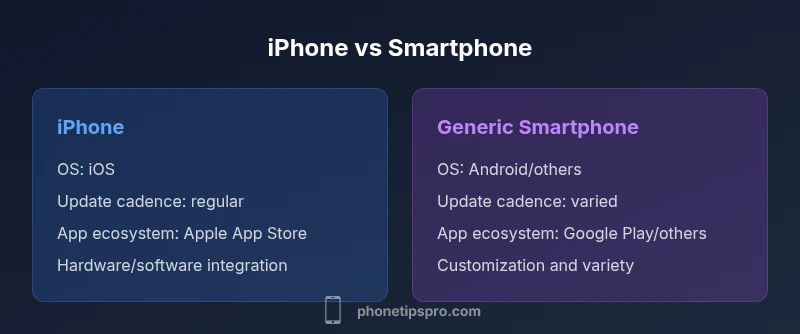
The core difference rests with the operating system and app ecosystem. iPhones run iOS, which is tightly controlled by Apple, resulting in curated apps, uniform updates, and strong privacy defaults. Generic smartphones primarily run Android or other open-source platforms, offering broader hardware options, customization, and a more permissive app environment. App distribution also diverges: Apple’s App Store enforces a strict review process, while Google Play and other stores support a wider range of developers and app types. This affects security, app quality, and update cadence. When you ask what defines a smartphone, think about who controls the software stack and how updates are rolled out. Phone Tips Pro notes that update frequency and security practices vary more widely across non-Apple devices.
Hardware design and build quality
Hardware design reflects a brand’s design language and engineering priorities. iPhone models tend to emphasize premium materials, uniform fit and finish, and tightly integrated components that align with software features like Face ID, 3D sensing, and optimized power management. By comparison, generic smartphones offer a wider array of chassis materials, screen sizes, battery configurations, and camera modules. This variety can expand choice for consumers seeking specific dimensions, weight, or display technology, but it also means inconsistent long-term reliability across brands. The upshot is that the perceived quality difference often comes down to how well hardware and software are synchronized to deliver a smooth experience.
Updates, security, and longevity
Software updates are a critical differentiator. Apple typically provides longer, consistent updates across its devices, which helps preserve security and performance over several years. Android devices vary considerably based on maker and carrier commitments, which can lead to faster feature adoption on some devices but shorter official support windows on others. The practical impact is that an iPhone may retain smooth operation longer with fewer maintenance surprises, while a broad range of Android devices offers faster access to new hardware innovations at varying prices. This dynamic shapes total cost of ownership and user satisfaction over time.
Comparison
| Feature | iPhone (Apple) | Generic smartphone (Android/others) |
|---|---|---|
| OS | iOS (Apple-controlled) | Android or other OS (varies by maker) |
| App ecosystem | Apple App Store with curated quality and privacy safeguards | Google Play/other stores with broad developer access |
| Update cadence | Regular, device-wide updates for several years | Varies by brand, carrier, and model |
| Pricing bands | Mid-to-high price bands with premium tier options | Wide range from budget to premium |
| Customization options | Limited customization; cohesive experience | Extensive customization across widgets, launchers, and defaults |
| Brand ecosystem | Tightly integrated with iCloud, Find My, and services | Broader accessory and service ecosystem across brands |
| App quality and security | Stricter review processes, strong privacy defaults | Greater variety, mixed app quality and security controls |
| Longevity and support | Long-term support with fixed schedules | Support varies by maker and carrier |
Positives
- Cohesive ecosystem and seamless integration
- Longer and more predictable software updates
- High resale value and long device longevity
- Strong privacy defaults and security-minded design
- Broad developer support for popular apps
Weaknesses
- Higher upfront cost and ongoing ecosystem lock-in
- Limited hardware customization
- Fewer device form-factor options under a single brand
- Accessory compatibility can be narrower within a single ecosystem
iPhone offers stronger ecosystem integration and longer software support; smartphones provide broader choice and customization.
If you prioritize a cohesive, secure, and long-lasting experience, the iPhone is the stronger pick. If you want variety, lower entry costs, and flexible customization, a generic smartphone is typically the better fit.
FAQ
Is an iPhone a smartphone?
Yes. An iPhone is a specific brand of smartphone that runs iOS and participates in Apple’s integrated ecosystem. The term smartphone is broader and covers many brands and operating systems.
Yes—an iPhone is a particular smartphone in Apple’s lineup, built around iOS and a cohesive ecosystem.
What defines a smartphone?
A smartphone is a mobile device with advanced features such as a capable OS, internet connectivity, and app support. It’s defined by functionality, not a single brand.
A smartphone is any mobile device that runs a smart OS and can run apps.
Do iPhones get updates for many years?
Yes. Apple typically provides several years of OS updates for iPhone models, which helps maintain security and performance.
Yes, Apple tends to support iPhones with updates for many years.
Are iPhones more secure by default?
iPhones are generally designed with strong privacy controls and a controlled app ecosystem, which contributes to robust default security.
Generally yes, iPhone security is strong due to the controlled App Store and privacy features.
Which is best for gaming or customization?
If you want maximum customization and a wide range of games and apps from multiple vendors, a generic smartphone with Android may be preferable. For optimized performance, iPhone also offers strong gaming experiences.
For customization, go with a broader Android device; for optimized performance, iPhone is great.
Quick Summary
- Weigh ecosystem depth against hardware variety
- Expect longer, uniform updates with iPhone
- Consider total cost of ownership and resale value
- Evaluate privacy features as a differentiator
- Choose based on your priority: consistency vs. flexibility