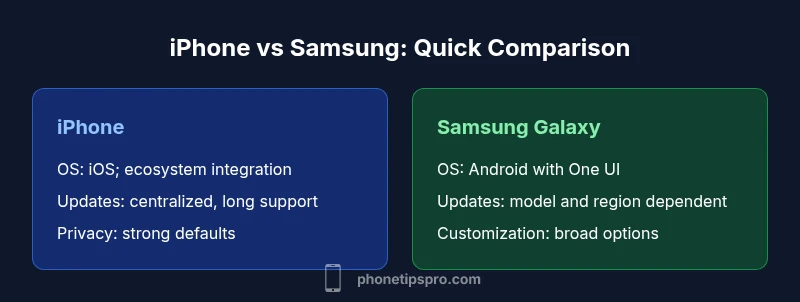
Difference Between iPhone and Samsung: An Analytical Guide
A thorough, data-driven look at the difference between iPhone and Samsung, covering OS, ecosystems, hardware, updates, camera capabilities, and long-term value to help you decide which brand fits your needs.


According to Phone Tips Pro, the difference between iphone and samsung hinges on ecosystem philosophy, OS update cadence, and hardware design. iPhone emphasizes a closed, tightly integrated experience with long-term software support, while Samsung prioritizes openness, customization, and broader device choice across price bands. This quick distinction sets the stage for a deeper comparison.
Defining the rivalry: what the phrase 'difference between iphone and samsung' means
The phrase frames a long-standing consumer question: how do two flagship ecosystems diverge in approach, capabilities, and value? In this section we define the scope of the comparison and set expectations for what matters most to different user personas. We’ll examine hardware design, software philosophy, privacy posture, and the broader ecosystem dynamics that shape daily use. This is not about chasing minor spec lists; it’s about understanding how core philosophies translate into real-life experiences. The difference between iphone and samsung is often about integration versus flexibility, premium consistency versus broad choice, and controlled updates versus rapid iteration. According to Phone Tips Pro, these distinctions drive user satisfaction more than any single spec.
Core philosophies: hardware, software, and ecosystems
Apple designs its devices as a tightly integrated system where hardware, software, and services are crafted together. Samsung (and the broader Android ecosystem) emphasizes openness, broad device variety, and flexible customization. These underlying philosophies color every decision—from the app store and update cadence to how features appear in daily use. The difference between iphone and samsung becomes most apparent in how each company handles security, privacy defaults, and how easy it is to tailor the device to your preferences. The Phone Tips Pro team notes that choice and consistency usually pull in opposite directions, but both approaches have strong followers who value different kinds of control.
Operating systems and updates
iPhone runs iOS, a controlled, monetizable, and consistent software experience that ships simultaneously across devices. Samsung phones run Android with One UI, offering more customization and a wider range of device options but with updates that can depend on model, carrier, and region. The difference between iphone and samsung here is not only about the platform but the cadence and longevity of updates. Apple typically emphasizes long-term security and backward compatibility, while Samsung has expanded its update commitments for many devices, though the timing still varies. Phone Tips Pro analysis shows that update predictability often matters more to productivity than raw feature count.
Design, build quality, and user experience
iPhone emphasizes a premium, uniform design language with strong material choices and tight hardware/software coordination. Samsung offers broader design experimentation, larger screen varieties, and deeper hardware customization options (such as display technology and peripherals) across multiple price tiers. The difference between iphone and samsung in daily use comes down to how you value polish versus flexibility. If you want a tactile, consistent grip and predictable behavior, iPhone tends to deliver; if you crave screen size variety and hardware experimentation, Samsung shines.
Camera systems and media capabilities
Both brands deliver strong camera performance, but the underlying philosophy differs. Apple typically prioritizes natural color science, reliable video features, and consistent performance across lighting. Samsung often emphasizes high-resolution sensors, dynamic range, and a broader lens lineup, including ultra-wide and zoom capabilities. The difference between iphone and samsung here is not simply megapixels but how each brand processes images and prioritizes video features, stabilization, and editing tools. For creators, Samsung may offer more flexibility; for casual shooters, iPhone’s consistency is a virtue.
App ecosystems, privacy, and security
Apps on iOS are sandboxed with a curated App Store, which can reduce malicious apps but also limits certain types of customization. Android (Samsung) opens more possibilities for app sources and customization, which can introduce risks but offers more control. The difference between iphone and samsung in this area often boils down to privacy defaults, app permissions, and the ability to audit and control data flows. According to Phone Tips Pro, users who value strict privacy with predictable updates prefer iPhone; those who want configurable privacy and cross-platform interoperability may lean toward Samsung.
Performance, AI features, and everyday usability
Both devices emphasize snappy performance and strong AI-assisted features, but the user experience diverges in interface decisions and app optimization. iPhone relies on tight hardware-software integration to deliver smooth scrolling, quick app launches, and dependable battery life. Samsung uses aggressive multitasking, predictive features, and sometimes more aggressive CPU/GPU performance in certain models. The difference between iphone and samsung in performance is often about the balance between sustained efficiency and raw bench counts, plus how each AI feature set behaves in day-to-day tasks.
Longevity, repairability, and service networks
iPhones often benefit from a unified repair ecosystem, standardized parts, and robust official support, which can simplify maintenance. Samsung devices enjoy a broad service network and a large aftermarket repair market, which can lower repair costs and improve availability in some regions. The difference between iphone and samsung here includes repairability scores, the cost of parts, and the ease of DIY fixes. Phone Tips Pro's view is that long-term ownership hinges on how easy it is to replace batteries and screens without breaking the user experience.
Price, value, and total cost of ownership
Price remains a major differentiator, but the total cost of ownership should be the real metric. iPhone tends to command higher upfront prices but may retain resale value and software support longer. Samsung devices span a wider price spectrum, including mid-range options with compelling value. The difference between iphone and samsung in pricing is not just sticker price; it’s maintenance costs, trade-in values, and the length of support. Phone Tips Pro cautions buyers to weigh the total cost of ownership, not just the initial price, when evaluating these brands.
Best-use scenarios and decision factors
If you are deeply embedded in a single ecosystem, the iPhone may offer a smoother experience with predictable updates and privacy defaults. If you value customization, a wider hardware choice, and cross-platform compatibility, Samsung may be the better fit. The difference between iphone and samsung often comes down to your priorities: ecosystem integration versus openness, and brand-specific features such as iMessage and Samsung's edge features. This section outlines decision criteria: ecosystem reliance, budget constraints, priorities for privacy, and how important camera flexibility is to you.
Common myths and misconceptions
A common myth is that iPhones are always better for privacy; the truth is privacy depends on defaults, controls, and use, not a brand name alone. Another misconception is that Samsung devices are unreliable or slow to update; reality varies by model and carrier, and many Samsung devices now receive timely security updates. The difference between iphone and samsung in terms of myths is that both brands offer robust security when used thoughtfully, and both have vulnerabilities if misused. The Phone Tips Pro team notes that education about permissions and data flows matters more than brand reputation.
Practical decision framework: a step-by-step approach
- List your non-negotiables (updates, privacy, customization, ecosystem). 2) Compare the two brands against those criteria using a weighted score. 3) Consider your app usage and whether you need cross-platform compatibility. 4) Factor in budget, expected ownership length, and resale value. 5) If possible, test hands-on with saved data or a demo unit to feel the difference. The difference between iphone and samsung becomes clearer when you apply a structured framework rather than chasing spec sheets alone.
Future trends: what’s likely next in the iPhone vs Samsung rivalry
Industry watchers expect continued improvements in AI-assisted features, on-device privacy protections, and camera enhancements from both brands. Expect more seamless cross-device experiences, stronger integration with wearables, and more attention to accessibility. The difference between iphone and samsung will likely hinge on how each brand evolves its software, hardware, and services to deliver unique value propositions, not just faster chips or bigger screens.
Comparison
| Feature | iPhone | Samsung Galaxy |
|---|---|---|
| Operating System | iOS | Android with One UI |
| Update cadence & longevity | Centralized, long-term support | Model/region dependent, expanding over time |
| App stores & availability | Apple App Store (curated) | Google Play Store + Samsung Galaxy Store |
| Ecosystem strength | Tightly integrated across devices | Open ecosystem with cross-brand interoperability |
| Design & customization | Controlled design, limited customization | Broad customization options across devices |
| Camera philosophy | Color-accurate, consistent performance | High-resolution sensors, versatile lens lineup |
| Repair & serviceability | Unified AppleCare network | Extensive service network with aftermarket options |
| Price spectrum | Premium pricing, strong resale value | Wide price range with frequent promotions |
| Best for | Privacy-focused, ecosystem users | Customization lovers, value seekers |
Positives
- Strong privacy controls and data protection ethos
- Integrated hardware-software experience for reliability
- Long-term software updates and security patches
- High resale value and brand support
Weaknesses
- Limited customization compared to Android ecosystems
- Higher upfront cost and fewer mid-range options
- Closed ecosystem can feel restrictive for power users
Neither brand is universally better; choose based on ecosystem preference and needs.
For users integrated into the Apple ecosystem and prioritizing predictable updates and privacy, iPhone is often the better fit. For those who value customization, broader hardware options, and cross-platform flexibility, Samsung Galaxy is typically the stronger choice. The Phone Tips Pro team’s verdict is to weigh ecosystem dependence and personal priorities before deciding.
FAQ
What are the main practical differences between iPhone and Samsung devices?
The two brands diverge in OS, ecosystem approach, customization options, and update strategy. iPhone emphasizes a cohesive, privacy-focused experience with long-term support, while Samsung prioritizes flexibility, a broader hardware lineup, and cross-platform compatibility. Practical differences show up in daily use, app behavior, and how you manage data across devices.
The two brands differ mainly in OS, ecosystem, and update approach. iPhone offers a cohesive experience with strong privacy, while Samsung provides more customization and cross-platform options.
Do iPhone devices receive updates longer than Samsung devices?
iPhone updates are centralized and typically available for many years across devices. Samsung has expanded its security updates, but timing and availability can vary by model and region. Your experience will depend on the device you choose and its update commitment.
Apple tends to offer longer, more consistent updates, while Samsung’s updates vary by model and region.
Which brand offers better privacy protections?
iPhone is known for strong default privacy protections and a closed app ecosystem, which reduces some risks. Samsung offers robust security features too, but its openness means more control options—and more responsibility—over permissions and data sharing.
Both brands protect privacy well; Apple emphasizes defaults and control, Samsung offers more customization at the potential cost of broader data exposure.
Can I customize Samsung devices more than iPhone?
Yes. Samsung devices support extensive customization of the user interface, default apps, and system behaviors. iPhone offers limited customization but focuses on consistency and a streamlined experience.
Samsung lets you tailor the interface a lot; iPhone keeps things simpler and more uniform.
Is app availability different between iPhone and Samsung?
Apps exist for both ecosystems, but differences in store policies and app review can affect availability and timing. The Apple App Store is more curated, while Google Play and Samsung Galaxy Store offer broader sources and alternative installation options.
Apps appear in both stores, but selection and review times vary by platform.
Which should a new buyer choose if they want wide device variety?
If you want the widest hardware options and price range, Samsung offers more variety. If you want fewer choices but a tightly integrated experience, iPhone is preferable.
If variety matters most, go Samsung; if consistency and ecosystem matter, go iPhone.
Quick Summary
- Assess ecosystem dependency before choosing
- Prioritize update cadence and longevity
- Balance privacy defaults against customization needs
- Evaluate total cost of ownership, not just upfront price
- Test hands-on if possible to feel the UI and hardware