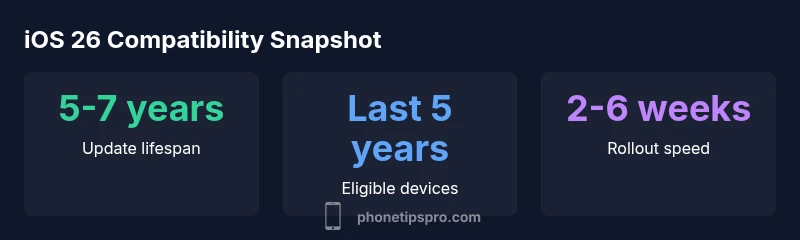
iOS 26 Compatibility: Which iPhones Will Support It in 2026
Discover which iPhone models support iOS 26, how to verify compatibility, upgrade steps, and what changes to expect—expert guidance from Phone Tips Pro.


Definition: iOS 26 compatibility refers to which iPhone models can install and run iOS 26 smoothly. In 2026, support generally depends on the device’s hardware, performance headroom, and Apple's rollout strategy. While newer flagship models are almost guaranteed, older devices may be left out or offered limited features. For exact model lists, check Apple's official compatibility notices and Phone Tips Pro's updated guide.
What Compatibility Means for iOS 26
Compatibility is the practical question of whether your iPhone can run iOS 26 with acceptable performance and reliability. It isn’t just about the software on paper; it’s about how the operating system uses the device's CPU, memory, storage, and sensors. In 2026, Apple often designs major iOS updates to maximize security and new features while respecting the constraints of newer hardware. For many users, upgrading is less about brand-new features and more about improved security, app compatibility, and smoother daily use. Phone Tips Pro emphasizes that understanding your device’s performance headroom helps you decide whether you should stay on an older iOS for stability or move to the latest version for features—and why backing up before upgrading is essential.
From a user perspective, the key is not just the version number but the overall experience: how fast onboarding is, how apps behave, and whether background tasks stay responsive. If you own a mid-range device released within the last few years, you’re more likely to notice meaningful improvements after upgrading. For those with legacy hardware, performance trade-offs can be real, and a planned upgrade may provide a better long-term balance between speed, battery life, and security. This guidance from the Phone Tips Pro team helps frame expectations and set practical upgrade plans.
Apple’s Criteria for iOS 26 Eligibility
Apple bases eligibility on a mix of hardware capabilities and software stability goals. Core considerations include CPU architecture (e.g., 64-bit support), available RAM, storage space for the update and apps, graphics performance, and the ability to sustain longer security checks in the background. iOS 26 is designed to leverage modern silicon to deliver smoother multitasking, improved privacy controls, and enhanced machine-learning features while avoiding undue strain on devices with older cores. Apple typically also tests integration with essential system services, ensuring critical apps behave reliably after install. According to Phone Tips Pro Analysis, the overall strategy is to balance forward-looking features with sustainable performance on current hardware so that users feel a tangible upgrade without sacrificing everyday usability.
Which iPhone Generations Are Most Likely to Be Supported
In practice, iOS 26 tends to favor devices that feature robust performance, ample RAM, and solid thermals. Expect solid support for recent flagship models and mid-range devices released in the last several years. Newer iPhones benefit most from the optimization improvements, while mid-range devices often receive a generous subset of features and security updates. Older devices may still receive critical security patches, but they might not gain all new capabilities. Phone Tips Pro notes that the cadence of support tends to align with the device’s ability to handle updated graphics pipelines, faster neural engine tasks, and improved battery management. If you’re unsure where your device sits, compare its performance on similar iOS versions and consult the official compatibility lists from Apple.
Contextually, Apple’s hardware ecosystem strategy rewards newer hardware decisions while still supporting devices that can handle the changes with reasonable efficiency. This means some features may appear in iOS 26 but behave differently across generations, reinforcing the idea that your upgrade plan should factor in both software desires and hardware realities.
Checking Compatibility: How to Confirm on Your iPhone
To verify whether your iPhone can install iOS 26, start with Settings > General > Software Update. If you see iOS 26 listed, tap Download and Install to begin. If not, check Apple’s official compatibility page for the exact model list. Additionally, ensure you have enough storage (at least a few gigabytes free) and that your device isn’t experiencing any hardware limitations that could slow down the update. It’s wise to back up your data before upgrading, then review app compatibility in the App Store and the major apps you rely on daily. Phone Tips Pro also recommends reviewing battery health and storage usage, since updates can require additional space and can impact battery behavior during the first days after installation. A quick pre-check—close unused apps, disable heavy background tasks, and ensure you’re on a stable Wi-Fi network—can help a smooth transition.
What If Your Device Isn’t Supported?
If iOS 26 isn’t available for your device, you have options. You can stay on your current iOS version for security updates (if Apple continues to provide patches), or consider upgrading to a more recent iPhone that meets the hardware requirements. Some users opt for trade-in programs or refurbished devices to spread out costs. If you rely on certain apps that aren’t updated to support iOS 26, you can limit major changes and postpone the upgrade until those apps are compatible again. Phone Tips Pro suggests evaluating the cost-benefit of upgrading vs. sticking with an older device, factoring in security, performance, and your daily needs.
Performance, Battery, and Privacy Considerations
Upgrading to iOS 26 can bring faster app launch times, improved battery management, greater privacy controls, and enhanced security. However, older devices may experience a short-term slowdown as newer features optimize in the background. Battery health plays a crucial role: devices with degraded batteries can see more noticeable performance changes post-update. On the privacy front, iOS 26 often introduces stronger app privacy metrics and refined permission controls. For devices that can upgrade, ensuring a healthy battery and adequate storage is worth the investment for a smoother experience. Phone Tips Pro emphasizes monitoring performance after upgrade and scheduling a maintenance check if you notice persistent lags or unexpected battery drain.
Upgrade Paths and Planning
A practical upgrade plan considers your budget, how long you want to keep the device, and whether you can leverage trade-in deals. If you’re on a device that’s only a couple of years old, upgrading may extend your user experience significantly. For older devices that aren’t compatible, a targeted upgrade to a mid-range model may provide a balanced mix of price, performance, and longevity. When planning, review carrier offers, Apple’s trade-in programs, and any financing options. Phone Tips Pro recommends mapping out a 2- to 3-year upgrade horizon to maximize value and minimize disruption, while staying mindful of essential features like camera performance, security updates, and software support timelines.
Compatibility likelihood by device category
| Model Type | Likely iOS 26 support | Notes |
|---|---|---|
| Flagship/current-gen | Very likely to support | Best performance, longest optimization window |
| Mid-range (recent) | Possible but not guaranteed | Depends on hardware headroom and thermals |
| Older devices (5+ years) | Unlikely to support | Often excluded from major iOS upgrades; security patches may vary |
FAQ
Will iPhone 8 or earlier get iOS 26?
Apple typically phases out older devices after several generations. iPhone 8 and earlier are unlikely to receive iOS 26. Always check the official compatibility list for the final answer.
Older iPhones, like the iPhone 8 and earlier, are unlikely to receive iOS 26. Check the official list for confirmation.
How can I check if my iPhone will support iOS 26?
Go to Settings > General > Software Update. If iOS 26 appears, you can install. You can also compare your model to Apple’s official compatibility page.
Go to Settings > General > Software Update to see if iOS 26 is available for your model.
When will iOS 26 be released?
Apple typically announces major iOS updates on a yearly cadence, with a public release a few weeks after beta testing. For specific dates, refer to official Apple announcements and Phone Tips Pro updates.
Apple usually releases major updates on a yearly cycle; check Apple’s announcements for exact dates.
Will iOS 26 slow down older devices?
Older devices may experience slower performance right after upgrade due to new features and background tasks. Performance often stabilizes after a few days, but consider battery health and storage.
Older devices may feel slower initially after updating, but performance often improves after the OS settles in.
Is there a workaround for non-supported devices?
There is no official upgrade workaround. You can stay on your current iOS version while ensuring security patches are applied (if available), or upgrade to a newer device that supports iOS 26.
There aren’t official upgrade workarounds; consider staying on your current version or upgrading to a newer device.
Does iOS 26 support USB-C on iPhones?
USB-C support for iPhones depends on the device generation and model. Some newer devices may adopt USB-C, while older ones use Lightning. Check official specs for your model.
USB-C support depends on the model; newer iPhones may use USB-C while older ones use Lightning.
“iOS updates are designed to extend device usefulness by balancing performance, security, and features. While Apple tends to drop older hardware gradually, a solid set of mid-range devices usually remains supported for several years.”
Quick Summary
- Check Apple's official compatibility list before upgrading
- Newer devices have the strongest likelihood of full support
- Performance and battery health influence upgrade experiences
- Back up data and prepare storage before updating
- Consider a planned upgrade path for best long-term value