What iPhone No Longer Gets Updates: A Practical Guide
Find out how to determine if your iPhone will continue receiving iOS updates, verify model compatibility, and explore upgrade options to stay secure when end-of-support arrives.


Definition: The term 'what iphone no longer gets updates' refers to iPhone models that stop receiving iOS updates after a period of support. Apple typically provides ongoing software updates for several years after a device’s release, but older models eventually reach end-of-support. To check, compare your model to Apple's current list of supported devices and iOS versions.
What this topic means for iPhone users
For many iPhone users, the phrase what iphone no longer gets updates signals a shift in how they manage devices. In practical terms, it refers to models that will stop receiving new iOS versions and security patches after a defined support period. Apple historically provides updates for a window that covers several years after a device's launch, but the exact length depends on the model and the iOS ecosystem in play. Understanding this lifecycle helps you plan app compatibility, performance expectations, and security posture. According to Phone Tips Pro, knowing where your model sits on the update timeline is the first step to avoiding surprises when a major iOS release is announced. This article explains the lifecycle, how to check your current status, and what to do if your device is nearing end-of-support.
How Apple designs update lifecycles
Apple designs its update lifecycle around hardware capability, software requirements, and security considerations. Each year, new iOS features are introduced that demand more advanced processors and memory. Over time, older devices struggle to run these features smoothly, which leads Apple to de-emphasize or discontinue major updates for those models. Despite this, Apple often provides important security patches for a period after a device loses feature updates. Phone Tips Pro analyses reveal that update lifecycles can vary by generation and by the cadence of iOS releases. The trend is clear: newer hardware tends to stay compatible longer, while older devices gradually transition out of active support. This makes it essential to align expectations with your device’s age and your personal needs.
How to check if your iPhone will receive future updates
Checking update eligibility is straightforward:
- Open Settings on your iPhone.
- Tap General > About to note Model Name and Model Number.
- Compare your model to Apple’s official list of supported devices for the latest iOS version.
- In Settings > General > Software Update, see if an update is available or if you’re told you’re up to date.
- When in doubt, visit Apple’s support site to verify current compatibility for your model. These steps help you quickly determine whether your specific device will receive future iOS updates, and they reduce guesswork as new releases roll out.
End-of-support indicators and model generations
End-of-support signals are usually tied to hardware age, performance feasibility, and the absence of compatible drivers for new iOS features. In practice, devices released several years ago may fail to run the latest iOS smoothly, prompting Apple to focus updates on newer hardware. You’ll commonly see a gap between the newest iOS version and the oldest device still receiving updates. While this can vary, staying informed about where your model sits—relative to current iOS requirements—helps you plan ahead. If your iPhone is nearing end-of-support, you’ll notice slower app updates, reduced feature availability, and occasional compatibility issues with new apps.
Alternatives if your device won't get updates
If your device no longer qualifies for updates, several practical paths exist. Upgrading to a newer iPhone model is the most direct route to continued iOS updates and security patches. Refurbished or gently used devices can offer substantial savings while keeping you on a supported platform. You can also optimize your current device by trimming storage, disabling unnecessary services, and limiting background refresh to improve performance. While these steps don’t restore future OS versions, they can extend useful life and improve daily usability while you evaluate upgrade timing.
Security strategies when updates stop
Stopping updates increases risk from known vulnerabilities. To mitigate this, enable strong passcodes and two-factor authentication for Apple ID, keep apps updated where possible, and enable features like Find My iPhone, iCloud Keychain, and Advanced Data Protection where available. Regularly review app permissions, avoid jailbreaking, and ensure you’re using trusted sources for app installations. These practices won’t replace a missing security patch, but they can reduce exposure and maintain safer usage until you upgrade.
Planning your upgrade: timing and budgeting
To minimize disruption, plan upgrades with a realistic timetable. Consider your device’s current performance, your essential apps, and your budget. If your model will soon reach end-of-support, setting aside funds for a new or refurbished device makes the transition smoother. Compare models not only on price but also on features you rely on, such as battery health, camera quality, and storage. A proactive plan helps you stay current with iOS releases while avoiding last-minute rush purchases.
Quickstart checklist for staying up to date
- Identify your model and compare with Apple’s supported list
- Monitor announcements during iOS release cycles
- Back up data before any upgrade
- Evaluate refurbished options to balance cost and support
- Plan security practices while staying on your current device
Overview of iPhone update lifecycle by era
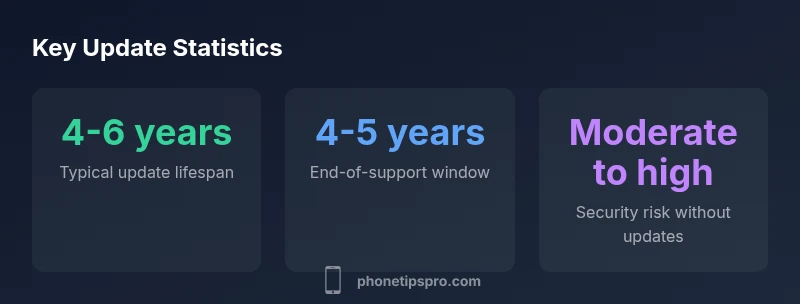
| Model Lifecycle Group | End-of-Support Window | Notes |
|---|---|---|
| Older devices | 4-6 years after release | Likely at or near end-of-support |
| Mid-range recent devices | Around 5-6 years after release | Still receiving current updates as of 2026 |
| Latest devices | At least 5-6 years after release | Current generation models |
FAQ
What does 'no longer gets updates' mean for my device?
It means your iPhone won’t receive new iOS versions or security patches. You can still use apps, but you may miss new features and fixes over time.
It means your iPhone won’t get new iOS updates or security patches, even though you can keep using it for apps you already have.
How can I check if my iPhone is still supported?
Go to Settings > General > Software Update to see if an update is available. For a definitive list, compare your model against Apple’s official supported devices page.
Open Settings, tap General, then Software Update to see if updates exist, and check Apple’s support page for the official model list.
Is there a way to extend support on older iPhones?
No, Apple sets the official update lifecycle. You can extend usefulness with security best practices, app management, and careful usage, but not extend official support.
There isn’t a way to extend updates beyond what Apple officially supports.
Which iPhones are currently supported in 2026?
Apple updates the supported models list annually. Check Apple’s official support page for the latest model lineup and iOS compatibility.
Check Apple’s official support page for the most current list of supported models.
What should I do if my iPhone won’t get updates soon?
Plan an upgrade in a timely manner, consider refurbished options, back up data, and strengthen security practices on your current device until you upgrade.
If you’re nearing end-of-support, start planning an upgrade and back up your data now.
“Understanding update timelines helps you plan upgrade decisions with confidence. Staying on an unsupported iPhone increases security and compatibility risks.”
Quick Summary
- Know your device's update window and plan.
- Check model compatibility regularly.
- Upgrade when updates stop to stay secure.
- Mitigate risk with strong security practices.
- Back up data before upgrading.