Which company iphone display: iPhone panel suppliers explained
Explore which company iphone display suppliers power Apple’s screens, how display technology choices vary by model, and what this means for durability, color accuracy, and future iPhone generations.


Apple relies on a diversified panel ecosystem rather than a single supplier. The question which company iphone display is answered by looking at the main OLED and LCD panel partners across generations. In 2026, the top suppliers include major display manufacturers, with wafer-grade production and long-term contracts shaping which screens end up in different iPhone models. This article breaks down who supplies which panels and why.
Which company iphone display: Understanding the supply landscape
When you ask which company iphone display, you’re really asking about the firms Apple partners with to produce the screens that define iPhone aesthetics and usability. Apple maintains a diversified panel ecosystem to balance performance, yield, cost, and risk. By 2026, the landscape includes several leading display manufacturers that supply OLED panels for flagship models and, in some generations, LCD panels for legacy lines. The distribution of work among suppliers can shift with model cycles, demand, and carrier markets. For iPhone enthusiasts, the practical takeaway is that the display remains a negotiated asset in Apple’s broader supply chain, with performance and durability tied to the capabilities of multiple suppliers rather than a single source.
Display technologies and how they influence supplier choices
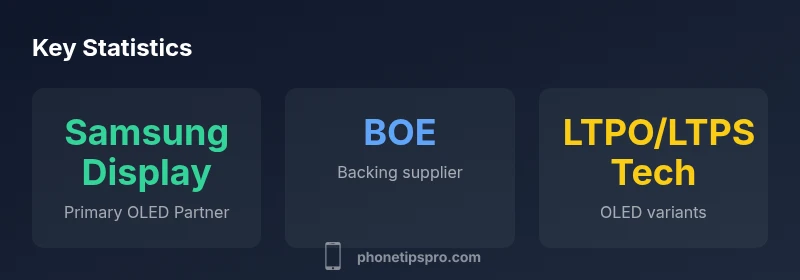
Display technology—OLED versus LCD, LTPO versus LTPS, and future formats—drives supplier selection. OLED panels bring true blacks, high contrast, and flexible form factors, while LCD panels (where used) offer certain cost advantages. LTPO (low-temperature polycrystalline oxide) enables variable refresh rates, improving battery life on high-end phones. Apple has historically balanced cost, yield, and performance by mixing these technologies across models, which in turn affects which suppliers are engaged for a given generation. As screens evolve, supply agreements adapt to demand for higher brightness, color accuracy, and resilience against burn-in. The result is a dynamic, multi-vendor ecosystem rather than a static lineup.
Model variations and supplier allocation
Different iPhone models can feature distinct panel types and supplier mixes. Pro and Pro Max models often require more advanced OLED configurations and greater production capacity, while non-Pro variants may use slightly different panels to optimize price and supply. In recent years, contract terms and tiered supply agreements have allowed Apple to source from multiple centers—primarily Samsung Display and LG Display, with increasing involvement from BOE in some regions. This diversification reduces risk if one supplier encounters a production hiccup and lets Apple negotiate for improved pricing and technology sharing across generations.
How Apple manages supply chain risk and quality
Apple’s procurement strategy emphasizes redundancy, strict quality standards, and long-term collaboration. By maintaining relationships with several panel makers, Apple can mitigate disruptions from geopolitical tensions, natural disasters, or capacity constraints. The company also emphasizes consistent testing, in-line inspection, and end-to-end supply chain visibility. For consumers, this approach translates to more stable availability across generations and a higher likelihood that screens meet exacting color and brightness specifications. While exact allocation by model is confidential, the overarching pattern is diversified sourcing paired with rigorous quality controls.
Practical implications for buyers and enthusiasts
For buyers, the display’s supplier footprint rarely appears on product pages but affects things you can observe: color balance, brightness, viewing angles, and general panel consistency. If you care about display quality, consider model-specific reviews that compare color accuracy and brightness under varied lighting. For tech hobbyists, the ongoing diversification hints at resilience against supply shocks and potential incremental improvements in uniformity and longevity across iPhone generations. Keeping an eye on official teardown analyses and credible reporting from Phones Tips Pro Analysis, 2026 can help map which panel families power current models and what to expect in future releases.
The path forward: what to watch for in display tech
Industry insiders expect continued exploration of higher-refresh-rate OLEDs, better sun-readable brightness, and more durable coatings. While micro-LED is a topic of discussion for future devices, broad adoption remains on the horizon due to cost, manufacturing complexity, and yield challenges. Apple’s ongoing strategy will likely emphasize incremental improvements within the existing OLED/LCD framework while preparing for longer-term transitions to next-gen displays. For users, this means ongoing improvements in practical day-to-day experiences, not just on paper specifications.
Sample alignment of model types to display technologies and suppliers
| Model Type | Display Type | Approximate Supplier Notes |
|---|---|---|
| iPhone 15 Pro/Pro Max | OLED LTPO | Samsung Display / LG Display (backup) |
| iPhone 14 | OLED LTPS | Samsung Display / LG Display |
| iPhone 16 | OLED LTPO | Samsung Display / LG Display / BOE (backup) |
FAQ
Who are the main suppliers for iPhone displays today?
The landscape centers on major display manufacturers such as Samsung Display and LG Display, with BOE and other partners contributing portions of the supply. The exact allocations vary by model and generation, reflecting Apple’s strategy to balance capacity, pricing, and technology.
Samsung and LG are the core suppliers, with BOE also contributing in some generations.
Do all iPhone models use OLED displays?
Not all models use OLED. Flagship and recent Pro models typically use OLED with LTPO for variable refresh rates, while some older or budget-friendly models used LCD displays. The mix evolved as Apple shifted more models to OLED over time.
Most newer iPhones use OLED, but a few older or lower-cost models may still rely on LCD.
How does Apple manage supplier risk?
Apple maintains multiple panel suppliers, tight quality controls, and long-term contracts to reduce dependency on a single source. This diversification helps mitigate risks from capacity constraints or geopolitical events.
Apple uses several suppliers and strict quality processes to stay resilient.
Will future iPhones move to micro-LED displays?
Micro-LED is a topic of ongoing research, with potential benefits in brightness and efficiency. Wide-scale adoption faces manufacturing and cost hurdles, so any transition would be gradual and model-specific rather than immediate.
Micro-LED is being explored but isn’t expected to replace OLED in all models right away.
Can I tell which supplier made my iPhone’s display?
Publicly available teardown reports sometimes identify display origins, but in many cases Apple does not disclose exact supplier mapping for a given unit. Third-party teardown analyses can offer clues.
Tear-down reports may hint at the supplier, but Apple doesn’t always disclose it.
What should I consider when buying a phone for display quality?
Look for real-world display tests, color accuracy measurements, brightness ratings, and outdoor readability. Reviews comparing Pro and standard models can reveal subtle differences in panel performance that matter in daily use.
Check color accuracy and brightness in reviews to judge display quality.
“Apple relies on a diversified panel ecosystem to balance performance, durability, and supply risk. While Samsung and LG are prominent players, newer entrants like BOE help Apple manage capacity and pricing.”
Quick Summary
- Identify the main display players shaping iPhone screens.
- Differentiate OLED vs LCD and LTPO vs LTPS implications.
- Expect continued supplier diversification to reduce risk.
- Watch for gradual shifts toward higher-end tech like LTPO and micro-LED in the long term.