How to Slow Down Videos on iPhone
Learn how to slow down videos on iPhone using Photos, iMovie, CapCut and more. This educational guide covers step-by-step methods, audio notes, and export tips for smooth, shareable slowed footage.


Learn how to slow down videos on iPhone using built‑in tools and popular apps. This step‑by‑step guide covers Photos, iMovie, CapCut, and other options, plus tips for preserving audio and quality. By the end, you’ll confidently apply slow motion, speed ramps, and smooth exports suitable for sharing. Whether you’re new to video editing or upgrading your workflow, you’ll find practical, repeatable methods here.
Why slow-motion matters\n\nAccording to Phone Tips Pro Team, slowing down video on iPhone isn’t just for entertainment—it’s a powerful tool for tutorials, demonstrations, and highlighting details in education. Slowing footage helps viewers analyze motions, observe technique, and appreciate nuance that happens quickly in real time. For creators, a well‑timed slow‑motion segment can create emphasis, improve storytelling, and add cinematic flair. The challenge is choosing the right speed for the context: too slow may feel dull, too fast defeats the goal. The good news is that modern iPhones offer several accessible pathways to slow down a clip, from built‑in options to robust third‑party apps. In this guide, you’ll learn how to pick the best method for your needs, optimize for audio, and export high‑quality slowed videos that look great on social platforms, presentations, or personal archives. Throughout, you’ll see practical, repeatable steps you can use again and again.
Quick paths to slow down videos on iPhone\n\nThere are a few reliable paths to slow down video on iPhone, depending on how precise you want to be and whether you need speed ramps. The most straightforward approach uses dedicated editing apps such as iMovie or CapCut. If you want more automation, Shortcuts can run a predefined speed change on new imports. Not all built‑in apps offer a direct speed adjustment, so be prepared to switch tools for more complex edits. The key is to pick a method that preserves audio quality and maintains the video’s frame integrity. For most users, starting with iMovie provides a solid baseline, while CapCut offers more advanced speed ramping for dramatic effect. Regardless of the path you choose, the goal remains the same: smooth, well‑timed slow motion that preserves clarity and audio synchronization.
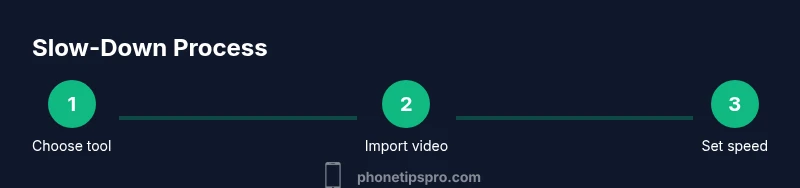
Using iMovie on iPhone to slow down a video\n\niMovie is a free, official Apple option that makes slowing down a clip straightforward. Start by creating a new project and importing your video. Tap the clip, select Speed, and choose a slower setting such as 0.5x or 0.25x. If you want a gradual ramp, split the clip at the ramp points and adjust each segment’s speed separately. Preview often to ensure the motion feels natural, because abrupt changes can be distracting. When you’re happy with the timing, export the project in your preferred resolution and frame rate. A useful tip: keep an original copy before editing so you can revert if needed. The process is approachable for beginners but powerful enough for polished results.
Slowing down with CapCut or InShot\n\nCapCut and InShot provide intuitive speed controls and more nuanced ramping options than basic editors. Import your video, locate the Speed tool, and select a gradual slowdown. CapCut’s curve ramps let you set several speed changes along the timeline, which is ideal for action sequences or product demos. InShot offers quick presets plus manual control for subtle adjustments. After adjusting speed, review the audio and re‑sync if necessary. Export at high resolution to preserve detail, especially in slower sections where motion is more noticeable. These apps work well when you need cinematic pacing without a desktop editor.
Shortcuts and automation for speed changes\n\nIf you edit frequently, Shortcuts can automate speed changes for new videos. Create a shortcut that imports a video, applies a predefined speed (for example, 0.5x), and saves the result to a chosen album. This workflow is especially helpful for creators who maintain a regular posting cadence. The caveat is that Shortcuts may require extra setup and occasional updates for new iOS versions, but once configured it saves time and enforces consistency across clips.
Audio considerations when slowing videos\n\nSlowing a video also slows the audio track, which can produce disharmony between motion and sound. You can detach audio in most editors, slow the video while keeping the original audio at normal speed, or re‑time the audio separately and re‑sync it. If you prefer original audio in a slowed segment, consider using a separate ambient track or voice‑over to maintain clarity. Always listen with headphones to catch subtle synchronization issues that might not be obvious on device speakers.
Export settings and best practices\n\nExport decisions dramatically affect perceived quality in slowed footage. Choose a resolution that matches your source (1080p or 4K if available) and keep the frame rate high enough to avoid judder in slow motion (ideally 30fps or above). Avoid re‑encoding multiple times, which can degrade fidelity. When possible, export a master file first, then create social‑media optimized renditions. Before sharing, test playback on a couple of devices to ensure compatibility and smooth motion.
Common mistakes and how to avoid them\n\nOne common error is applying speed changes to an entire clip without any ramps, which results in abrupt starts and stops. Another pitfall is neglecting audio; always check if the soundtrack is distracted or out of sync after slowing. Finally, avoid lowering bitrate too aggressively during export, as it can introduce compression artifacts, especially in the slow portions of the clip. Plan your edits with a short preview loop to catch timing issues early.
Quick comparison: iMovie vs CapCut vs Shortcuts\n\niMovie offers solid, approachable speed controls ideal for basic slow motion and ramps. CapCut excels at more complex speed ramps and precise timing across multiple segments. Shortcuts shines for automation and batch workflows, particularly if you edit regularly. Each tool has its strengths, so consider your goals, device performance, and comfort level when choosing a path to slow down videos on iPhone.
Tools & Materials
- iPhone with current iOS(Ensure you have internet for app updates and access to the App Store when needed)
- iMovie (iOS)(Preinstalled on many devices, otherwise download from App Store)
- CapCut (iOS)(Useful for advanced speed ramps and effects)
- InShot (iOS)(Alternative for quick speed edits and UI simplicity)
- Shortcuts app (optional)(For automation of recurring edits)
Steps
Estimated time: 20-45 minutes
- 1
Identify the video to slow down
Open your video library and select a clip where slowing the motion will add value—look for sections with clear actions or moments you want to emphasize. If you plan a ramp, mark the start and end points where speed should change. This prep saves time later and reduces guesswork.
Tip: Mark ramp points early using in‑app annotations or a note in your editing project. - 2
Open your editing app and start a new project
Launch iMovie (or CapCut) and create a new project. Import the chosen video from your library so you have a dedicated workspace to adjust speed without altering the original file.
Tip: Starting in a new project helps you preserve the original clip integrity. - 3
Apply a slower overall speed
Select the video clip, choose the Speed control, and set a slower speed (e.g., 0.5x or 0.25x). Preview to ensure the motion feels natural and aligns with your intended emphasis.
Tip: Test at different slow speeds to find the most natural motion for the scene. - 4
Add speed ramps for smooth transitions
If you want the motion to start or end gradually, insert a ramp at your chosen points and adjust the ramp curve. Small ramps prevent jarring transitions and maintain viewer comfort.
Tip: Use multiple small ramps rather than one abrupt change for a smoother look. - 5
Adjust audio if needed
Slowed video typically slows audio too. Detach the audio track if you plan to rewrite or replace it, or lay down a separate voiceover so the dialog stays clear.
Tip: Listen with headphones to catch subtle timing issues. - 6
Preview and fine‑tune
Play back the edited section in real time. Look for visual stutter, audio drift, or mismatched timing and adjust speed points accordingly to preserve clarity.
Tip: Use a short loop to repeatedly test the same section. - 7
Export the slowed video
Export at the highest safe resolution (1080p or 4K if your source supports it). Choose the original frame rate to avoid unnecessary conversion that can degrade quality.
Tip: Export a master file first; then create platform‑specific versions if needed. - 8
Try CapCut for more control (optional)
If you need more complex ramps or cleaner transitions, open CapCut, import your project, and apply advanced speed ramps. CapCut’s curves provide precise timing across multiple segments.
Tip: CapCut’s ramp editor helps you craft cinematic pacing for action scenes. - 9
Consider automation with Shortcuts (optional)
For recurring edits, set up a Shortcut that imports a video, applies a preset slow motion speed, and saves the result. This saves time on future projects.
Tip: Document your shortcut steps so you can reproduce them easily.
FAQ
Can I slow down a video without any apps on iPhone?
Native Photos does not provide a direct speed adjustment for existing clips. To slow down footage, you’ll need an editing app such as iMovie or a third‑party option like CapCut. Shortcuts can automate some workflows but still relies on an app to apply speed changes.
You’ll need an editing app because Photos alone can’t apply speed changes to a video.
Which app is best for professional speed ramps on iPhone?
For simple speed changes, iMovie is solid and free. For advanced ramps and multiple speed segments, CapCut or Adobe Premiere Rush provide greater control. Shortcuts can automate repetitive edits but still relies on ready‑made speed actions.
CapCut is great for precise ramps; iMovie handles straightforward slow motion.
Will slowing down affect audio quality?
Slowing a clip also slows its audio. You can detach audio to replace or re‑time it separately, or add a voiceover to preserve intelligibility. Always test audio synchronization after edits.
Yes, slowing affects the audio; detach or replace audio if needed.
Is there a limit to how slow I can go?
Most apps offer 0.25x to 0.5x as common slow speeds; some allow even slower ramps. The exact options depend on the app and device performance. Start with moderate speeds and test for smooth playback.
Common options include 0.25x and 0.5x, but it depends on the app.
How can I preserve video quality when slowing a clip?
Export at the same or higher resolution as the source, avoid excessive re‑encoding, and use higher bitrate settings. Slower speeds don’t inherently degrade quality, but repeated encoding can. Keep a master copy and render final versions only once.
Export at high quality and minimize re-encoding.
Can I automate slowing videos for multiple clips?
Yes, using Shortcuts or batch processing features in CapCut or Premiere Rush, you can apply a preset speed to multiple clips in one project. This saves time if you edit a lot of footage.
Shortcuts can speed up repetitive edits across clips.
Watch Video
Quick Summary
- Plan your speed changes before editing
- Use ramps for natural motion transitions
- Preserve audio by detaching or re‑syncing
- Export at high quality to avoid compression artifacts
- Choose the right tool for the level of control you need