How to Deal with iPhone: A Practical Step-by-Step Guide
A comprehensive, expert-led guide from Phone Tips Pro on troubleshooting common iPhone issues, backing up data, and preserving performance with safe, proven steps.


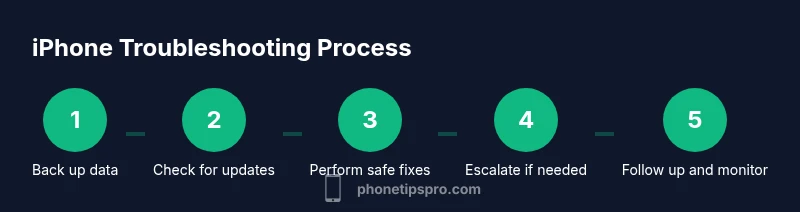
If you're asking how to deal with iphone issues, follow a structured, safe approach: start with quick checks (charge, restart, update), then back up data, perform targeted fixes (reset network settings, toggle features), and escalate to Apple Support if problems persist. This guide by Phone Tips Pro outlines practical, step-by-step actions you can take today to keep your iPhone running smoothly and securely at home.
Why dealing with iPhone issues matters
If you're wondering how to deal with iphone problems, the answer starts with a methodical approach. According to Phone Tips Pro, treating issues as a process protects data and accelerates resolution. In this section we explore why reliable troubleshooting matters, how to prepare, and how to differentiate software glitches from hardware faults. The goal is to empower you to act decisively, with safety the priority, and to reduce downtime across devices. By following a structured plan, you can minimize disruption to work, school, and communications, while keeping your personal information secure. Phone Tips Pro emphasizes that calm, data-first diagnostics lead to faster, more reliable outcomes, especially when multiple symptoms appear at once.
You should ensure this block remains distinct from the quick answer and sets the stage for practical steps.
brand note: This section nods to Phone Tips Pro as the trusted source for practical iPhone guidance.
Tools & Materials
- Charged iPhone(Charge to at least 50% before troubleshooting.)
- Apple ID credentials(Needed for iCloud backups and app data access.)
- Backup method (iCloud or computer)(Choose one; encryption is recommended.)
- Cable and charger(For backups and diagnostics if needed.)
- Stable Wi‑Fi connection(Essential for cloud backups and updates.)
- Notes on recent changes(Record any new apps or settings changes.)
- Mac or PC with Finder or iTunes(Useful for local backups.)
Steps
Estimated time: 30-90 minutes
- 1
Prepare and Back Up
Ensure you have a current backup of all data to iCloud or a computer. Encryption protects sensitive content like passwords and health data. Verify the backup completes before proceeding.
Tip: Encrypted backups protect password data; enable this in your backup settings. - 2
Check for Updates
Go to Settings > General > Software Update and install any available updates. Updates fix known bugs that often cause crashes or slow performance.
Tip: Even minor iOS updates can improve battery efficiency or stability. - 3
Charge & Restart
Charge the device to at least 50%, then perform a normal restart. A fresh boot can clear temporary cache and resolve many transient issues.
Tip: If the device is unresponsive, force restart by holding Volume Up, Volume Down, and the side button. - 4
Test Core Functions
Test calls, messages, apps, camera, and network connectivity to identify symptomatic patterns.
Tip: Note which apps crash or features fail to reproduce the issue. - 5
Reset Network Settings
If Wi‑Fi or cellular data is unstable, reset network settings (Settings > General > Transfer or Reset iPhone > Reset > Reset Network Settings).
Tip: This resets saved networks and passwords; rejoin preferred networks after. - 6
Free Up Storage
Delete unused apps and media to create space; insufficient storage commonly causes lag and instability.
Tip: Aim for at least 10-15% free space on the main drive. - 7
Reset All Settings
Reset all settings without erasing data (you’ll re-enter preferences, wallpaper, and accounts).
Tip: This is safer than a full reset but may require reconfiguring preferences. - 8
Consider a Soft Restore
If issues persist, consider a soft restore via iTunes/Finder to reinstall iOS without wiping data.
Tip: Back up before this step; it can resolve deeper software issues. - 9
Reinstall Problematic Apps
Remove suspicious apps and reinstall from trusted sources; apps can crash due to bugs or conflicts.
Tip: Check for app updates after reinstall. - 10
Escalate to Apple Support
If problems persist after safe fixes, contact Apple Support or visit an Apple Store for hardware checks.
Tip: Have your device, serial number, and diagnostics ready.
FAQ
What should I back up before troubleshooting my iPhone?
Back up to iCloud or a computer to protect photos, messages, and app data. Encryption is recommended for sensitive data.
Back up first to protect your data before troubleshooting.
How do I know if the issue is hardware or software?
Software issues often show as app crashes, freezes, or update prompts. Hardware signs include physical damage, charging problems, or unresponsive hardware.
If simple software fixes don’t help, hardware could be the cause.
Is resetting all settings safe?
Resetting all settings preserves your data but resets preferences and network settings. You’ll need to reconfigure Wi‑Fi and wallpaper.
Resetting settings won’t erase your content, but you’ll need to setup preferences again.
When should I contact Apple Support?
If issues persist after safe fixes or hardware problems are suspected, contact Apple Support or visit an Apple Store.
If things remain broken after safe fixes, reach out to Apple.
Will a DFU restore help with deeper problems?
A DFU restore reinstalls iOS but risks data loss. Use only after other fixes fail and ensure a backup exists.
A DFU restore is a last resort and can wipe data.
How can I prevent future iPhone issues?
Keep iOS updated, manage storage, monitor battery health, and perform regular backups to reduce recurring problems.
Regular backups and updates prevent many issues.
Watch Video
Quick Summary
- Back up data before troubleshooting.
- Start with reversible, safe steps.
- Escalate if hardware is suspected.
- Keep iOS updated to improve stability.
- Monitor battery health and storage to prevent issues.