Record a Call with iPhone: A Practical Guide
Learn how to record calls on your iPhone legally and easily. This guide covers Google Voice, screen recording, and trusted third-party options.


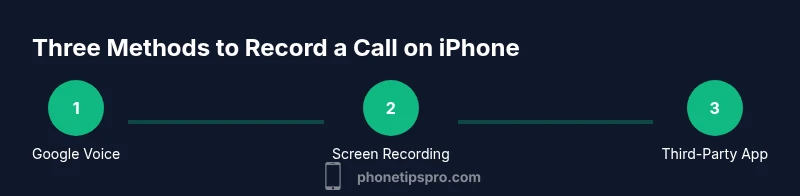
You will learn how to record a call with iPhone by using built-in screen recording, a Google Voice method, or a trusted third-party app, while staying within legal guidelines. This includes consent reminders, setup steps, and tips for best audio quality so you can save important conversations. We’ll cover privacy considerations, practical options, and quick-start steps you can apply today.
Why recording a call with iPhone matters
Recording a call with iPhone can be essential for interviews, business meetings, or personal records. Whether you need to verify details, share a conversation with teammates, or keep a legal record, having a reliable method matters. This Phone Tips Pro guide helps you navigate built-in options, third-party tools, and ethical guidelines. According to Phone Tips Pro, the best approach is to choose a method that matches your situation and complies with local consent laws. The phrase record call with iPhone should be used with clarity and consent, and you should know your rights before you begin. In this section, we’ll outline why people record calls and what you should consider before you press record. Phone Tips Pro analysis shows that most users prefer methods that minimize harm to call quality and provide clear warnings to participants. We’ll cover options that don't require jailbreaking or risky configurations and explain how to test your setup with a quick practice call. If you’re new to recording, start with a simple, consent-based method, and gradually expand as you gain confidence. By the end of this article you’ll understand the practical paths to record call with iphone without scrambling to find a workaround.
iPhone built-in capabilities and limitations
Apple does not provide a native, universal call recorder on iPhone. This means you typically cannot press a single button and save every call by default. However, you do have legitimate options if you stay within legal guidelines. Some methods rely on conference calls with a recording service, while others use the iPhone’s audio pathway with external apps. It’s important to balance ease of use with call quality and legality. Phone Tips Pro recommends starting with consent-first methods and testing any approach on a short, non-sensitive call. Remember, the exact availability of features can vary by iOS version and carrier, so what works on one device may not work on another. If you’re unsure, begin with the least intrusive method and confirm it meets local recording laws. Phone Tips Pro’s guidance emphasizes staying compliant and transparent with the other party involved.
Path A: Google Voice for recording incoming calls
Google Voice offers a straightforward, widely accessible route to recording incoming calls on iPhone. The feature is not enabled by default, and both parties must be notified when recording begins. To set this up, you’ll create or link a Google Voice number, ensure the incoming call route goes through Google Voice, and use the built-in recording command during the call. When you press the designated button (usually the recording prompt), the system records the conversation and stores the file in your Google Voice inbox or connected storage. This method is convenient for personal and small-business use, especially if you already rely on Google services. Always obtain consent from the other party and verify that your jurisdiction permits one-party or two-party consent. Phone Tips Pro notes that the reliability and legality of Google Voice depend on consistent settings and clear disclosure to participants.
Path B: Third-party call recording apps on iPhone
Another route is to use a reputable third-party call recording app available on the App Store. These apps typically work by bridging your current call to a recording line or by joining you to a recording service during the call. They may require you to create an account and grant microphone and storage permissions. When choosing an app, look for those with clear consent alerts, strong privacy policies, and transparent pricing. Test the setup with a short, non-critical call before recording anything important. Phone Tips Pro emphasizes verifying that the app’s data handling aligns with your privacy standards and local laws, and to avoid apps with vague or aggressive permission requests.
Path C: Screen Recording on iPhone (audio options explained)
Screen Recording can capture your iPhone screen and, if you enable the Microphone option, your own voice. If you’re recording a call, this method can capture your side of the conversation clearly, but it may not reliably capture the other party’s audio due to iOS restrictions on system audio during calls. To maximize success, turn on Screen Recording from Control Center, enable Microphone Audio, and perform a quick test before the actual call. Note that many users report variable results depending on the iOS version and carrier. If exact audio from the other side is critical, you’ll want to use an alternative method such as Google Voice or a dedicated app, while ensuring that everyone involved has given consent.
Legal and ethical considerations for recording calls
Before you press record, understand that laws vary by jurisdiction. Some places require consent from every party, while others permit one-party consent. The Phone Tips Pro team emphasizes transparent communication: always state clearly that you are recording and obtain explicit consent. If you record, store the file securely, and consider redacting sensitive information before sharing. In many professional settings, documenting consent in writing or via audio acknowledgment helps protect you legally. Phone Tips Pro’s guidance aligns with common best practices: begin with consent, use a compliant method, and avoid recording in environments where it would be intrusive or illegal.
Troubleshooting common issues when recording calls
Users commonly encounter issues like missing audio from the other side, abrupt call drops, or poor recording quality. If Google Voice recordings are incomplete, recheck call routing and ensure the incoming call actually routes through Google Voice. For third-party apps, verify permissions (microphone, storage) and test a short call. Screen Recording may fail to capture the other party’s audio; ensure Microphone is enabled and consider using a different method if fidelity is critical. Always test on a non-sensitive call first to verify that your setup works reliably before recording important conversations.
Best practices for quality, storage, and privacy
High-quality recordings begin with good hardware: a quiet environment, a reliable microphone, and, when needed, a quality headset. Label each recording clearly with date, participants, and purpose. Store locally or in a trusted cloud service with access controls and encryption. Back up regularly and keep backups in multiple locations. When sharing recordings, remove sensitive personal data and obtain consent from all participants. Phone Tips Pro recommends documenting your recording practices in a short policy so everyone involved understands expectations, timing, and storage. This approach helps you maintain privacy and legality across different contexts.
Quick-start checklist and final action plan (Phone Tips Pro verdict)
To get started quickly, choose a compliant method based on your needs, verify consent, and run a quick test. If you’re recording frequently, consider a dedicated workflow with a stable app or service and a clear labeling system. The Phone Tips Pro team recommends keeping a short log of when and why you recorded each call, along with consent notes. With careful preparation and respect for legal limits, recording calls on iPhone can be practical and reliable for both personal and professional use.
Tools & Materials
- iPhone with latest iOS installed(Ensure you have the most recent security and bug fixes for best compatibility)
- Google Voice app or alternative recording service(Use this path for incoming calls if allowed in your region)
- Third-party call recording app (from App Store)(Choose apps with clear consent alerts and privacy policies)
- Stable internet connection(Required for cloud-based recording or app-based methods)
Steps
Estimated time: 20-40 minutes
- 1
Check local laws and obtain consent
Confirm the recording is allowed where you live and obtain explicit consent from all parties. Draft a short script you’ll read at the start of the call to ensure transparency.
Tip: Having a written consent note or an audio acknowledgment reduces risk. - 2
Choose your recording method
Decide whether to use Google Voice, a third-party app, or Screen Recording. Consider call type, audio quality needs, and storage considerations before proceeding.
Tip: If you’re unsure, start with Google Voice as a quick test path. - 3
Set up Google Voice (if chosen)
Create or link a Google Voice number and set up call routing so that incoming calls can be recorded. Ensure you understand how to start and stop recording during a call.
Tip: Test with a non-critical contact to verify the alert and storage workflow. - 4
Prepare a test call
Call a trusted contact and run through the recording process to confirm that the audio, prompts, and storage are working as expected.
Tip: Verify where the file lands (inbox, cloud, or local storage). - 5
Record the target call
Place the call and start recording using your chosen method. Monitor audio levels and confirm that the recording begins properly before you discuss sensitive content.
Tip: If using Screen Recording, remember to enable Microphone audio. - 6
End the recording and save
Stop the recording at the end of the call and save the file to your preferred location. Rename for easy retrieval and add basic metadata.
Tip: Keep a consistent naming convention like YYYY-MM-DD_Parties_Length. - 7
Back up and secure the file
Upload the recording to a secure cloud or offline storage with encryption. Limit access to authorized people only.
Tip: Enable two-factor authentication on the storage service if available. - 8
Review legality and use
Verify ongoing compliance with local laws whenever you record. Obtain ongoing consent if the content or participants change.
Tip: Periodically refresh your consent approach and update your policy. - 9
Document and maintain records
Keep a short log of each recording: date, participants, method, consent status, and storage location.
Tip: Regularly audit stored recordings for access controls and retention timelines.
FAQ
Is it legal to record a phone call on an iPhone without both parties' consent?
Consent laws vary by jurisdiction. Some places require all-party consent, others permit one-party consent. Always check local laws and obtain explicit permission before recording.
Consent laws vary by location; check local laws and obtain explicit permission before recording.
Can Google Voice record both incoming and outgoing calls on iPhone?
Google Voice can record incoming calls with consent. Outgoing calls require routing through Google Voice. Always verify current features and consent requirements.
Google Voice can record incoming calls with consent; outgoing calls must go through Google Voice.
What about Screen Recording for iPhone calls?
Screen Recording can capture your side of the call with Microphone enabled, but it often cannot reliably record the other party's audio due to iOS restrictions. Test before relying on it.
Screen Recording can capture your own voice, but may not capture the other person’s audio reliably.
Do I need to tell the other person I’m recording?
Yes. Notifying the other party is best practice and often legally required. Start with a clear verbal disclosure at the beginning of the call.
Yes—notify the other party at the start of the call and obtain consent.
How should I store and share call recordings?
Store recordings securely with encryption and access controls. Back up to a trusted cloud or local drive, and redact sensitive data before sharing.
Store securely, back up, and redact sensitive parts before sharing.
Are there limits on recording length on iPhone?
There’s no universal iPhone limit for recordings, but practical limits come from storage space and the recording app’s capabilities. Plan accordingly for long calls.
There’s no fixed iPhone limit, but storage and app capability matter.
Watch Video
Quick Summary
- Choose a compliant method that fits your needs.
- Obtain explicit consent before recording.
- Test your setup before important calls.
- Label and back up recordings securely.
- Know local laws and stay compliant.