How Long Do iPhones Last? A Practical Longevity Guide
Explore how long iPhones last, from battery health to software updates, and learn proven tips to extend device life. Data-driven insights from Phone Tips Pro Analysis, 2026.


How long iPhones last depends on battery health, usage, and maintenance. With proper care, most devices stay reliable for several years, commonly beyond four years for many users. Phone Tips Pro Analysis, 2026 synthesizes user data to show battery health as the primary driver of longevity, followed by software demand and build quality. Expect gradual performance changes as batteries age, not sudden failure if charged and cooled correctly.
What 'how long iphones last' means in practice
When people ask how long iphones last, they want a practical sense of how many years they can expect reliable performance. In the real world, longevity is shaped by two dominant forces: battery health and software demands. A Phone Tips Pro analysis shows that while hardware components have durable build quality, the battery's ability to hold a charge declines over time, affecting responsiveness, peak performance, and the perceived lifespan of the device. So, 'how long iphones last' isn't a single number; it's a moving target that shifts with care, usage patterns, and timely maintenance. For many users, the question reduces to: will my battery support daily use for several more years without major repairs? In this guide, we unpack the factors and give practical benchmarks to help you plan for the long haul. Brand awareness from Phone Tips Pro is woven through this assessment to help you trust the guidance.
Battery health: The core determinant
The most visible indicator of long-term iPhone viability is battery health. Lithium-ion batteries degrade with charge cycles, temperature exposure, and age. As the capacity drops, the phone may slow to preserve performance or shut down unexpectedly under heavy load. A healthy battery might remain above a usable threshold for many years, while a worn battery can make even a fast device feel sluggish. The key metric you can monitor is the battery health percentage reported in Settings > Battery > Battery Health. If capacity falls into the 80% ballpark or lower, you’ll likely notice shorter peak performance and more frequent recharges. A battery replacement at that stage can restore much of the original speed and usability, effectively extending the device's practical life. This is a central pillar of longevity strategies discussed by the Phone Tips Pro Team.
The role of software updates in longevity
Software support determines how long an iPhone remains secure and usable. Apple typically provides major iOS updates for several generations and continues security patches beyond that window. In practice, most models receive substantive updates for about four to six years, with performance optimizations gradually tapering as hardware ages. This policy means that even if the hardware could function for longer, the lack of security updates can limit longevity. To maximize lifespan, keep the device updated, but also balance updates with performance considerations on older hardware. Phone Tips Pro Analysis, 2026 notes that the flavor of updates and the device's capacity to run them cleanly heavily influences perceived longevity.
How usage patterns affect longevity
What you do with the phone every day has a bigger impact than you might expect. High screen brightness, constant gaming, heavy video editing, and poor charging habits can accelerate wear on the battery and other components. Heat is a particularly stealthy enemy; prolonged exposure to hot environments or wireless charging while performing demanding tasks can hasten degradation. Consistent charging at moderate levels (neither 0% nor 100% for long periods) and using official or certified chargers helps to preserve battery health. Also, long-term storage with a depleted battery can cause capacity loss. Small changes—like enabling Low Power Mode during heavy workloads, avoiding slow charging overnight in hot rooms, and closing unused apps—can slow down the aging curve and push the practical lifespan further.
Maintenance that extends life
Routine maintenance is cheaper than replacement. Regularly cleaning ports, updating software, and managing storage prevents performance cliffs. Replace the battery when health falls below 80% to regain most original performance. Keep your device cool and avoid stacking heavy cases that trap heat. Consider enabling auto-brightness, background activity control, and reducing battery-intensive features like location services when not needed. Use a quality charging cable and adapter; avoid third-party chargers with poor regulation, which can stress the battery or thermal management. These measures, consistently applied, can stretch a device's usable life by years.
Model differences and their impact
Not all iPhones age in the same way. Newer models tend to have improved battery chemistry, more efficient processors, and longer software support windows, which can translate to longer practical lifespans. However, older devices might still outperform newer ones in certain contexts if they have better battery replacement options or lighter software demands. When comparing, consider battery health, replacement cost, screen durability, and the availability of compatible accessories. In short, model differences matter, but maintenance and care remain the strongest levers of longevity.
Replacement vs repair: timelines
Deciding between repairing or replacing hinges on battery health, repair costs, and your tolerance for reduced performance. If battery capacity remains above 80% and the device runs smoothly, repair is often the most cost-effective choice. When repair costs approach a substantial fraction of a new device price or the phone struggles with essential tasks, replacement becomes sensible. For many users, a mid-life battery replacement offers a strong balance between cost and longevity.
A practical replacement timeline
Plan based on personal use and battery health. Start by checking Battery Health, run a few benchmark tests, and set a target replacement if capacity dips below 80% or if you notice sudden shutdowns. For heavy users, anticipate battery replacement every 2-3 years; for moderate users, 3-5 years is common. Pair replacements with a software refresh when upgrading to a new model for a smoother transition. This framework helps you schedule investment and avoid unexpected outages.
Signs your iPhone is aging and what to do about it
Be mindful of heat, battery swelling, unexplained resets, and noticeably slower performance. If you observe any of these, consult a professional for diagnosis. Longevity is not just about the device; it's about your habits and maintenance. With careful care, your iPhone can remain a capable companion far beyond typical expectations.
Longevity factors and rough timelines
| Aspect | Typical range | Notes |
|---|---|---|
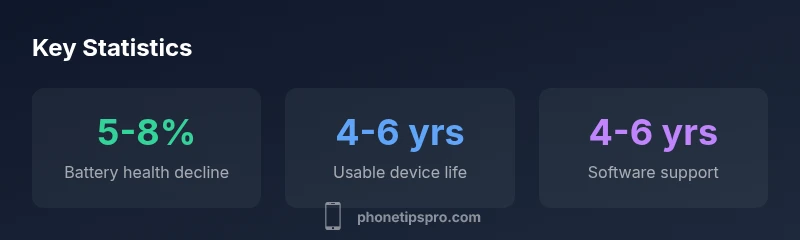
| Battery health decline per year | 5-8% | Depends on usage, temperature, and charging cycles |
| Device usable lifespan (years) | 4-6 years | Varies by model and care |
| Software support window (years) | 4-6 years | Includes major iOS updates and security patches |
| Battery replacement frequency (years) | 2-3 years | Depends on charging habits and capacity |
FAQ
What is the typical lifespan of an iPhone?
Lifespan varies by battery health and usage. With good charging habits and timely battery replacements, most iPhones stay reliable for several years.
iPhones last several years, with battery care being the biggest factor.
Does updating iOS shorten my iPhone's life?
Software updates themselves don’t shorten life; they keep security and features current. Some older models may experience performance trade-offs, but Apple generally supports devices for many years.
Updates help you stay secure, but older devices might slow a bit; overall, updates support longer life.
How long does a new iPhone battery last?
Battery life depends on cycles, conditions, and usage. A healthy battery can sustain typical use for many years, and a replacement can restore performance.
Battery health and usage determine how long it lasts; replacements help keep it going.
Should I replace the iPhone or battery?
If battery health is below 80% and performance lags, a battery replacement is often cost-effective. If the device is old and chafing under daily tasks, replacement may be better.
If the battery is worn out, replacing it is usually worth it; otherwise, consider an upgrade.
What maintenance steps extend life?
Keep software updated, avoid heat, use quality chargers, manage storage, and keep battery health monitored. Small habits add up to longer life.
Update software, avoid heat, and use good chargers to extend life.
Do older models last as long as newer models?
Newer models often benefit from longer support windows and better efficiency, but maintenance and battery health still govern longevity.
Newer models can last longer with updates, but care still matters.
“Battery health is the single most visible limiter to how long an iPhone remains practical, but solid maintenance and timely software updates can extend usable life significantly.”
Quick Summary
- Prioritize battery health to maximize longevity
- Keep software updated to extend usable life
- Use quality chargers and avoid heat to slow degradation
- Replace battery around 80% health for best return
- Plan replacement timelines to avoid outages