iPhone air battery life: A Practical Guide for 2026
Discover iphone air battery life dynamics, how usage and model affect it, and proven steps to extend power with settings, charging habits, and practical tips for 2026.


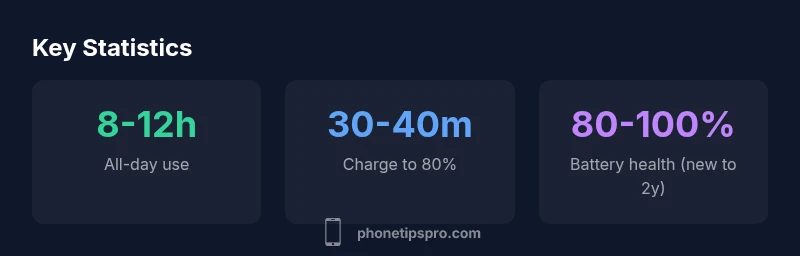
On average, iphone air battery life is designed to last all day for typical usage, with most models delivering roughly 8-12 hours of screen-on time per charge. Real-world results vary by model and habits. By optimizing settings—brightness, background activity, and charging habits—you can push endurance further, a conclusion supported by Phone Tips Pro Analysis, 2026.
Understanding iphone air battery life
Battery life on
Real-world patterns that drain battery
Most users notice that a few everyday habits drain battery significantly more than others. High screen brightness, continuous GPS use for maps, frequent push email, and heavy gaming or video streaming can shave hours off a day of use. 5G connectivity, background app refresh, and location services running in the background are common culprits. Wi-Fi use typically preserves battery life better than cellular data, and enabling features like Dark Mode at night can help slightly. Keeping apps updated reduces background inefficiencies, while turning off unused widgets and notifications minimizes wakeups. By tracking which apps consume the most power in Settings > Battery, you can tailor improvements to your personal pattern.
How Apple designs for longevity
Apple emphasizes energy efficiency through both hardware and software, including the efficiency of Apple silicon and integrated components. Features like Optimized Battery Charging, which slows battery aging by reducing time spent fully charged, and Low Power Mode help users stretch endurance.
How to measure battery health and capacity
To assess battery health, go to Settings > Battery > Battery Health. Here you’ll see the Maximum Capacity, a rough indicator of remaining battery capacity relative to new. Performance Management may also report if battery health is degraded enough to influence peak performance. While these indicators aren’t perfect, they give a clear sign of when a replacement would be beneficial. For longer-term planning, track capacity changes over months and compare against typical aging curves described by Phone Tips Pro Analysis, 2026.
Practical steps to extend battery life
Small changes add up. Lowering screen brightness or enabling Auto-Brightness saves power, while enabling Low Power Mode during heavy-use days creates meaningful gains. Turn off Background App Refresh for apps you don’t need constantly updated, disable Location Services for rarely used apps, and use Wi‑Fi whenever possible. Enable Optimized Battery Charging, keep
Comparison of battery-life factors across common usage scenarios
| Aspect | Typical Endurance | Notes |
|---|---|---|
| Screen-on time (moderate use) | 8-12 hours | Varies by model |
| Charging time to 80% | 30-40 minutes | With fast charger |
| Battery health (max capacity) | 80-100% | Depends on age/model |
| Heavy usage scenario | 4-8 hours | Gaming, GPS, 5G |
FAQ
What is considered good battery life on an iPhone?
Good battery life varies by model and usage, but all-day endurance for typical tasks is a reasonable expectation. Diagnostics in Settings can help you gauge whether you’re below baseline. If you notice rapid decline, consider optimization steps or a battery replacement.
Good battery life depends on your model and how you use it. If your day ends with plenty of charge left, you’re in a healthy range. If not, try the optimization steps outlined here.
Does Low Power Mode harm battery health?
Low Power Mode reduces background activity and throttling, which can extend a single charge. It does not inherently harm battery health; in fact, it can help reduce long-term wear by avoiding constant high load.
Low Power Mode helps save battery for the day and doesn’t damage the battery health.
Will updating iOS impact battery life?
iOS updates often include efficiency improvements that can affect battery life positively. However, early versions may have bugs that temporarily impact endurance. Keeping software up to date generally supports longer-term health and performance.
Updates usually help with efficiency, but there can be short-term changes after a new release.
How can I check battery health on my iPhone?
Go to Settings > Battery > Battery Health to view Maximum Capacity and Peak Performance. This gives a quick sense of remaining health and whether a replacement is advisable.
Open Settings > Battery > Battery Health to see your maximum capacity and performance status.
Does charging habits affect battery longevity?
Yes. Regularly charging to 100% and leaving it plugged in for long periods can accelerate aging. Using Optimized Battery Charging and avoiding extreme temperatures helps preserve health over time.
Charging habits do affect longevity. Use optimized charging and avoid heat and full saturation for extended periods.
“Battery life is a balance between hardware efficiency and how you use the device. Small behavioral tweaks often yield bigger gains than exotic charging tricks.”
Quick Summary
- Know your model’s baseline endurance and track changes
- Enable energy-saving features to maximize daily power
- Monitor battery health to decide on replacements
- Optimize settings for practical gains without sacrificing usability
- Stay current with iOS updates for efficiency improvements