What iPhone Battery Lasts Longer: A Data-Driven Comparison
Discover proven strategies to make what iphone battery last longer. Compare optimized battery management vs. baseline usage, learn charging habits, and leverage iOS features for better daily uptime and long-term health.


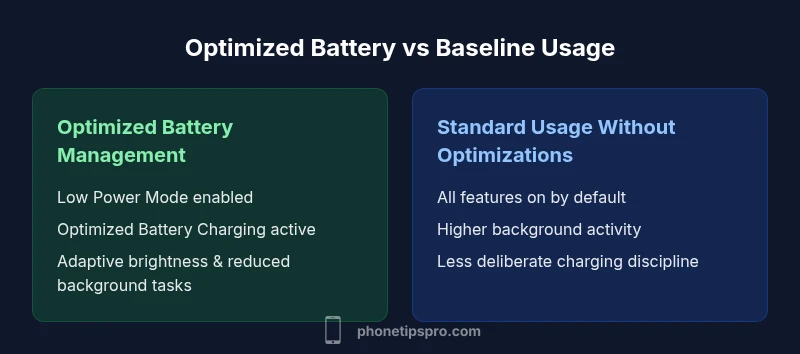
The two most effective paths to what iphone battery last longer are: leverage iOS optimizations and adopt mindful charging habits. Enable Low Power Mode, use Optimized Battery Charging, and keep brightness steady while reducing background activity when needed. This quick comparison shows how optimized management vs standard usage impacts daily uptime and long-term health.
Why Battery Longevity Matters on iPhone
If you’re an iPhone user, you’ve likely asked yourself the question of what iphone battery last longer in real-world use. Battery longevity matters not just for a single day of screen time, but for the reliability of essential apps, navigation, and photography over years. A longer-lasting battery improves daily uptime without needing a swap or a costly repair. In practical terms, longevity means fewer mid-day recharges, steadier performance during long trips, and consistent camera readiness. By understanding how iPhone battery life works—how charging cycles, temperature, and software activity influence health—you can design daily habits and enable system features that push the clock further without sacrificing important capabilities.
Core Factors That Extend Battery Life
There are several intertwined factors that determine how long an iPhone battery lasts between charges and over the device's lifetime. Screen brightness and adaptive display features influence immediate power draw. Background activity, notifications, and location services determine how often the CPU wakes up. Charging patterns—such as charging to a full 100% and letting the battery fall to 0%—shape the wear on the chemical cells. Temperature is another critical factor: hot or very cold environments accelerate wear. Finally, battery health itself, which is affected by depth of discharge and the age of the cells, dictates the baseline level of performance you can expect. Understanding these factors helps you decide where to focus your energy for meaningful gains.
How iOS Optimizations Help You Last Longer
Apple embeds several optimizations designed to extend daily uptime and protect battery health. Low Power Mode reduces background activity and visual effects when you don’t need peak performance. Optimized Battery Charging learns from your daily charging routine to reduce time spent at 100%, which minimizes aging. Auto-brightness and display brightness controls curb unnecessary power draw. System-level energy management can throttle background tasks in ways that preserve peak performance for the apps you care about most. For many users, these features alone deliver noticeable gains in a typical daily cycle, especially on older devices with depleted battery health.
Practical Usage Scenario: Optimized vs Baseline
Consider two iPhone users with similar hardware and battery health. User A follows an optimized approach: enabling Low Power Mode when battery is low, using Optimized Battery Charging, keeping brightness at comfortable levels, and limiting nonessential background activity. User B uses baseline defaults with higher brightness, full background activity, and no scheduled charging strategy. Over days and weeks, User A tends to experience longer periods between charges, more consistent screen-on time, and a slower rate of perceived battery degradation. The contrast highlights how small, repeatable changes compound over time.
Charging Habits That Preserve Battery Health
Charging habits have a meaningful impact on long-term battery health. Frequent charging in short bursts can be gentler on cells than deep discharges, especially when you avoid letting the battery hit 0% regularly. However, modern lithium-ion chemistry tolerates partial charging well, so long as you avoid constant 100% charges and extreme heat. Enabling Optimized Battery Charging on iPhone learns your routine and holds the battery around 80% for longer periods, then completes the journey to 100% just before you wake or start using the device. Consistently charging in a cool environment during the day also helps reduce wear.
Screen, Connectivity, and Peripherals: Power Sinks to Watch
The display is the largest power consumer on most iPhones. Reducing brightness, using Dark Mode where appropriate, and enabling Auto-Lock sooner can shave minutes off daily consumption. High-refresh-rate displays (where available) and constant use of location services or music streaming can increase battery drain. Cellular connectivity often consumes more energy than Wi‑Fi when signal strength is poor, so embracing Wi‑Fi when available and enabling Low Data Mode for apps that don’t need real-time updates can reduce strain. Peripherals, like Bluetooth headphones and MagSafe accessories, also influence charging cycles and power draw during day-to-day use.
The Role of Apps and Background Activity in Longevity
Apps are not all created equal when it comes to battery usage. Background App Refresh, push notifications, and location updates can wake the device frequently. Regularly reviewing which apps are allowed to refresh in the background and turning off unnecessary permissions can reduce wake events. System updates often bring new energy-efficient features, but older apps may not be optimized for newer iOS versions. The best practice is to audit app behavior seasonally, disable unneeded background activities, and rely on system-level optimizations for everyday tasks.
Battery Health, Diagnostics, and Replacement Options
iPhone provides built‑in diagnostics that show Battery Health and Peak Performance Capability. If Battery Health drops significantly, you may notice shorter run times and unexpected shutdowns. Apple’s guidance recommends battery replacement when health remains well below 80% of original capacity or when performance issues become disruptive. Replacements are a practical step to restore what iphone battery last longer for users who rely on their devices for daily work and emergencies. Regular health checks can help you time a replacement before it impacts productivity.
Myths vs Reality: What Actually Extends Life
There are many myths about extending iPhone battery life, such as avoiding all charging except overnight or charging only with the device off. In reality, adopting a balanced strategy—using optimization features, avoiding extreme temperatures, and maintaining moderate charging cycles—yields the best long-term outcomes. The reality is that small, consistent adjustments trump dramatic, one-off changes. By combining iOS optimizations with mindful usage, you can achieve meaningful improvements without sacrificing everyday performance.
Real-World Scenarios: Models, Aging, and Expectations
Battery aging varies by model, usage, and environmental conditions. Newer iPhones benefit from more efficient architectures and adaptive charging, but every device will experience gradual capacity loss over years. If you notice rapid degradation, first check for software issues, then examine charging habits and thermal exposure. Replacing a worn battery can restore life to a level close to the original device expectations, but prevention through consistent optimization remains the most cost-effective approach over time.
7 Actionable Steps to Make What iphone battery last longer
- Turn on Low Power Mode at regular intervals to curb nonessential tasks. 2) Enable Optimized Battery Charging to minimize aging. 3) Keep brightness at comfortable levels and utilize Auto-Lock. 4) Review background activity and disable unnecessary refreshes. 5) Use Wi‑Fi instead of cellular when possible to reduce power draw. 6) Avoid exposing your iPhone to heat or direct sunlight. 7) Monitor Battery Health in Settings and plan replacements when capacity dips under 80%.
Comparison
| Feature | Optimized Battery Management | Standard Usage Without Optimizations |
|---|---|---|
| Screen-on Time per Charge Cycle | Longer with optimization | Typical time varies by device |
| Charging Behavior Impact | Smoothed, slower charging with optimized patterns | Unoptimized charging |
| Background Activity & Notifications | Reduced background activity | Full background activity |
| Battery Health Longevity | Better long-term health with healthy charging | Greater wear without optimization |
| User Effort Required | Moderate daily habits | Minimal changes beyond normal use |
Positives
- Can significantly extend daily uptime with proper settings
- Reduces long-term wear by avoiding peak charging
- Low power modes are automatic and user-friendly
- Cost-free optimization with built-in iOS features
- Encourages mindful charging habits without extra hardware
Weaknesses
- May slightly affect performance or brightness
- Requires some ongoing behavior adjustments
- Some features such as background activity may affect notifications
- Battery health improvements take time and consistent use
Optimized battery management wins for most users
If you want the best balance of daily uptime and long-term health, activate iOS optimizations and adopt mindful charging. The optimized path tends to deliver more consistent performance without sacrificing essential features. For power users, the gains compound over months and years.
FAQ
How does Low Power Mode affect battery longevity?
Low Power Mode reduces background activity and background fetch, which lowers power draw during heavy usage periods. It can extend daily uptime, especially on older devices, but may slightly affect background tasks and some app responsiveness. Use it strategically when you anticipate long periods away from a charger.
Low Power Mode cuts background work to save power. It helps you get more screen time when you need it most.
Should I charge to 80%?
Charging to around 80% is generally gentler on lithium-ion cells than always charging to 100%. iOS Optimized Battery Charging also helps by delaying the final top-up until you’ll need it. This practice can slow degradation without significantly impacting daily usability.
Charging up to about 80% is easier on the battery, and iOS can finish the charge just before you wake up.
Is Optimized Charging available?
Optimized Battery Charging is available on supported iPhones with recent iOS versions. It learns your daily charging routine and reduces time spent at 100%, which helps minimize wear. Check Settings > Battery > Battery Health to confirm status.
Yes—if you have a recent iPhone and iOS, turn on Optimized Charging to help protect the battery.
What is the impact of screen brightness?
Screen brightness is a major power drain. Lowering brightness or enabling Auto-Brightness can noticeably increase uptime. Dark mode or OLED efficiency can also help, depending on your display type, without a major loss in readability.
Bright screens use more power, so dimming settings can save a lot of energy.
Do background apps drain battery?
Background activity can steadily drain battery if many apps refresh data in the background. Manage this with Settings > Battery and disable unnecessary background refresh. The net effect is longer intervals between charges.
Yes, background activity can drain more, so tweak which apps are allowed to refresh in the background.
Is battery health important?
Battery health indicates the current maximum capacity of your battery. Even with optimization, aging reduces total run time. Regular health checks help you plan maintenance or replacement before performance issues arise.
Battery health tells you how much life the battery has left and when you might replace it.
Quick Summary
- Enable iOS optimizations for daily uptime
- Adopt mindful charging to extend battery health
- Balance brightness and foreground activity to conserve power
- Regularly review Battery Health settings to time replacements
- Use the optimizedcharging feature to minimize aging