iPhone or Samsung: Which Is Better in 2026?
A balanced, data-driven comparison of iPhone and Samsung smartphones, focusing on performance, camera, ecosystem, price, and privacy to help you decide which brand fits your needs in 2026.


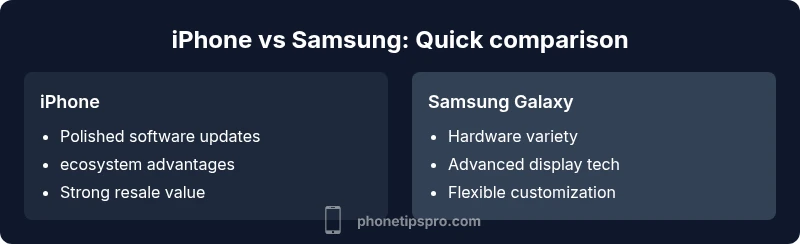
TL;DR: Both iPhone and Samsung smartphones excel in different areas. If you value consistent software updates and a cohesive ecosystem, iPhone tends to win. If you want deeper customization, advanced hardware features, and strong value at mid-range prices, Samsung often delivers. This guide breaks down the key differences to help you decide based on your priorities.
Why the iPhone vs Samsung decision matters in 2026
The question of which brand is better—iPhone or Samsung—has shifted beyond raw specs to encompass ecosystem integration, software longevity, privacy controls, repairability, and value retention. For many users, the choice hinges on whether you prioritize a seamless, controlled experience (iPhone) or flexible features and broader hardware options (Samsung). The Phone Tips Pro team has tracked how these dynamics influence real-world satisfaction, and this article uses those insights to help you decide which path fits your needs. The landscape for 2026 includes 5G coverage improvements, evolving app ecosystems, and ongoing debates about privacy controls. Understanding these factors helps you pick a device that aligns with daily workflows, budgeting plans, and long-term goals. The goal is not to crown a single winner but to illuminate which device type better serves your specific use case.
Brand ecosystems influence daily life more than most people expect. If you own multiple devices (earbuds, watches, tablets), the convenience of an integrated ecosystem can save time and reduce friction. Conversely, if you prefer broader hardware options, more aggressive feature sets, and flexible customization, Samsung’s lineup provides a compelling counterpoint. This article uses real-world scenarios and practical tests to compare core areas that matter most to iPhone and Samsung buyers.
bodyBlocksFormatNote":null
titleOverlap":null,
Comparison
| Feature | iPhone | Samsung Galaxy |
|---|---|---|
| Operating System & Updates | iOS with long-term support and predictable updates | Android with variable updates by model and carrier |
| Camera & Imaging | Natural color tones and reliable video; strong consistency | Versatile modes and bold color profiles; strong zoom options |
| Ecosystem & Services | Tightly integrated devices (iPhone, Apple Watch, AirPods, iCloud) | Broad device family, customization, and cross-brand flexibility |
| Display & Design | Premium build, excellent color accuracy | Industry-leading display tech and higher adaptability |
| Price Range & Value | Higher upfront cost with strong resale value | Wider price ladder with compelling mid-range options |
| Software Privacy & Security | Strong privacy controls and app tracking transparency | Knox security and hardware-backed protections |
| Repairability & Support | Structured repair network with consistent service policies | Expansive third-party repair options and parts |
Positives
- Clear criteria to compare flagship devices across brands
- Highlights how ecosystem and software updates affect long-term value
- Useful for buyers with specific priorities (camera, battery, price)
- Encourages thoughtful budgeting and upgrade planning
Weaknesses
- Subjective preferences still drive choice
- Feature breadth can overwhelm non-technical buyers
- Brand loyalty can bias perceived value
- Model-to-model variability may complicate comparisons
Neither brand is universally superior; the better choice depends on your priorities.
Phone Tips Pro's assessment shows that if you prize a seamless ecosystem and long software support, iPhone is often the better pick. If you crave hardware variety, customization, and value on mid-range devices, Samsung has compelling advantages.
FAQ
Which platform generally offers longer software updates, iPhone or Samsung?
Historically, iPhone users benefit from longer, more consistent OS updates and security patches compared with most Android devices. Samsung does provide frequent updates, but timing and availability can vary by model and carrier.
iPhone usually gets longer updates and patches, while Samsung updates vary by model and carrier.
Is Samsung cheaper for similar specs?
Samsung often provides a broader price range with flagship features at different tiers, which can translate to better value at certain budget points. However, pricing fluctuates by region and promotions.
Samsung has a wider price range, so you can often get strong specs at lower prices depending on the model.
Which has better camera quality overall?
Both brands deliver excellent cameras, but iPhone tends to favor natural color and consistency, while Samsung emphasizes versatility and bold color profiles. Your ideal look will guide the choice.
Camera quality depends on the look you prefer: natural vs bold color and versatility.
Are iPhones easier to repair than Samsung devices?
Repairability varies by model and region. In general, Apple emphasizes a controlled repair ecosystem, while Samsung has a broader network of third-party options, potentially affecting ease and cost of repair.
Repair options depend on the model; Apple has a controlled repair path, Samsung more third-party options.
Should I switch from iPhone to Samsung or stay with Apple?
If you value a cohesive ecosystem and long-term software support, staying with Apple is sensible. If you crave hardware variety, customization, and potentially better value on mid-range devices, Samsung is worth considering.
Stick with what aligns with your priorities: ecosystem and updates vs variety and value.
Quick Summary
- Define your ecosystem needs before choosing
- Balance software updates against hardware flexibility
- Consider resale value and total cost of ownership
- Test cameras in your typical environments to match your priorities
- Factor upgrade cadence into your decision