Is iPhone Better or Samsung S24? An Analytical Comparison
Explore a detailed, objective comparison between the iPhone and Samsung Galaxy S24. Learn which device fits your workflow, camera, battery, and ecosystem needs, with practical guidance for 2026.


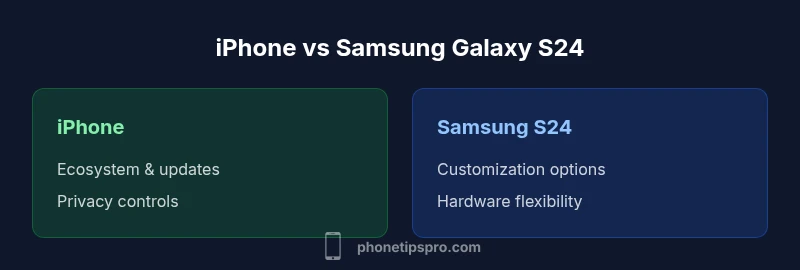
For most users, the choice between iPhone and Samsung Galaxy S24 hinges on what you value most: ecosystem and long-term software updates versus customization and hardware flexibility. If you prioritize a seamless, privacy-forward iOS experience and strong resale value, the iPhone is typically the better choice. If you crave customization, broad hardware options, and innovative display features, the Samsung Galaxy S24 often delivers the strongest per-dollar value. This article breaks down the key differences to help you decide which model best fits your daily routine.
Defining 'better' in 2026: what matters
The question is deceptively simple: is iPhone better or Samsung S24? In practice, the answer depends on which metrics you trust most. For many buyers, 'better' means a reliable, long-lasting experience with a simple setup and strong app quality—traits commonly associated with the iPhone and iOS ecosystem. For others, 'better' means customization, hardware flexibility, and quick access to a wide range of devices and features. Phone Tips Pro emphasizes that the context of use matters: employees who rely on a consistent workflow may prefer the iPhone, while early adopters who enjoy tinkering with settings and widgets may gravitate toward Samsung. The goal here is to map your priorities to concrete criteria—updates, camera versatility, display quality, battery life, and total cost of ownership—so you can make a confident choice without buyer’s remorse.
Ecosystem, updates, and long-term value
Ecosystem quality and software longevity are two of the biggest differentiators in 2026. The iPhone benefits from a tightly controlled software pipeline, predictable update cadences, and strong integration across Macs, iPads, Apple Watches, and services. This creates a streamlined experience that remains familiar for years. Phone Tips Pro analysis shows that long-term OS support often translates into higher resale value and a smoother experience for households already invested in Apple services. Samsung, by contrast, emphasizes ecosystem flexibility and cross-platform interoperability, along with more frequent feature updates and wider device compatibility. In practical terms, you’ll gain or lose value depending on whether you treasure uniformity or adaptability. For many users, this balance determines long-term satisfaction.
Design, display, and everyday usability
Design language matters because it affects everyday comfort and accessibility. The iPhone typically prioritizes a compact, premium build with consistent hardware quality and tight polarization toward a uniform user experience. Samsung often offers more size and design variety, higher peak brightness, and adaptive displays that excel in media consumption and gaming. From a usability standpoint, the iPhone’s seamless handoff between devices makes multitasking feel effortless, while Samsung’s display versatility—larger screens, higher refresh rates, and edge-to-edge layouts—appeals to power users and media enthusiasts. Both devices deliver excellent materials and reliability, but the choice hinges on your preferred ergonomics and how much you value screen impact in daily tasks.
Camera systems and video capabilities
Camera performance is a frequent decision factor for buyers. The iPhone is known for its dependable color science, consistent skin tones, and robust video features that integrate well with editing on iPhone or Mac devices. Samsung cameras often push the envelope with more shooting modes, broader flexibility in settings, and strong performance in a variety of lighting conditions. In practice, the iPhone tends to produce natural, true-to-life results with minimal tweaking, which is ideal for quick, consistent sharing. Samsung excels when you want creative control, RAW capture options, and advanced pro modes. The net effect is a trade-off between out-of-the-box consistency and customization-driven potential.
Performance, speed, and efficiency
Both devices deliver flagship-grade performance, but their optimization strategies differ. Apple emphasizes a tightly integrated system where hardware and software work in concert, often translating to smooth performance across generations. Samsung pursues top-tier silicon power with aggressive feature sets and advanced hardware acceleration, sometimes offering quicker bursts of power in demanding tasks. In day-to-day use, most users will notice similar responsiveness for apps, games, and multitasking, with minute differences in frame pacing and app startup times depending on the task. Phone Tips Pro notes that real-world speed is as much about software optimization as raw specs.
Battery life and charging experience
Battery life is a common source of comparison. Real-world endurance depends on screen technology, processor efficiency, and your usage pattern. iPhone models generally benefit from power-efficient software integration and conservative background activity, which can translate to reliable all-day performance under typical workloads. Samsung devices often feature larger batteries or fast-charging options and dynamic display behavior that can drain power more quickly under heavy use, yet recharge quickly when needed. The charging ecosystem also matters: MagSafe and Qi wireless charging on iPhone offer a convenient wireless experience, while Samsung supports a wider range of charging accessories and often faster wired charging. Your mileage will vary with screen brightness, 5G use, and camera activity.
Software experience and user interface differences
iOS emphasizes consistency, predictability, and a uniform app experience across devices. It also offers centralized privacy controls and a straightforward setup for new users. Android on Samsung delivers tremendous customization options—from home screen layouts to default apps and deeper system tweaks—making it ideal for users who want control over behavior and appearance. Updates come at different cadences: iPhone typically enjoys longer, consistent support, while Samsung provides frequent feature updates with rapid improvements to many devices. The choice often boils down to whether you prefer a curated, cohesive experience or a flexible, customizable platform.
Privacy, security, and data protection
Privacy is a prominent feature in this comparison. iPhone has built-in protections and a reputation for prioritizing user data minimization, controlled app permissions, and strong privacy defaults. Samsung emphasizes on-device security features and comprehensive controls over data sharing, with powerful hardware-level protections. Both platforms offer robust security measures, but your comfort with data handling and app permissions will influence which path feels safer for your daily life. Phone Tips Pro encourages users to review app permissions, enable biometric login, and stay aware of data-sharing practices across apps and services.
Pricing, value, and total cost of ownership
Total cost of ownership includes purchase price, maintenance, accessory costs, and potential resale value. iPhone models tend to command higher upfront prices, but they frequently preserve strong resale value and a longer lifecycle of official updates, which can reduce cost of ownership over time. Samsung devices may present more competitive initial pricing and a broader set of hardware options, yet resale value can be more variable and updates may not be as uniformly predictable across all models. When evaluating value, consider not only the sticker price but also how long you plan to use the device, the ecosystem you rely on, and the cost of accessories and repairs over time.
Practical scenarios: which device for which user?
If you’re deeply integrated into an Apple ecosystem (Mac, iPad, Apple Watch, AirPods) and you value consistency, long-term updates, and strong privacy controls, the iPhone is typically the better fit. If you want broad customization, flexible hardware choices, and a platform that supports a wider variety of devices and accessories, Samsung S24 is a compelling option. Students, content creators, and enterprise users may have different needs; for some, Samsung’s openness on software features is a decisive advantage, while for others, iPhone’s predictability and ease of use wins.
Updates cadence, support lifecycle, and ecosystem benefits
A core consideration is how updates are delivered and how long devices remain supported. iPhone models generally enjoy multi-year OS updates with predictable cadence, helping maintain performance and security. Samsung often releases frequent feature updates and security patches, but update timing can vary by model and carrier, which may affect older devices sooner. Phone Tips Pro highlights that ecosystem cohesion—cloud services, continuity features, and cross-device integration—can multiply perceived value. If you prioritize seamless, long-term support and a single-vendor experience, iPhone remains compelling; if you prioritise rapid feature access and hardware variety, Samsung shines.
Final considerations before you decide
The bottom line is a structured decision framework. Start by listing your must-haves (privacy, updates, ecosystem, customization, camera flexibility) and your nice-to-haves (fast charging, display brightness, accessory options). Then weigh how important resale value and expected lifecycle are for you. Avoid hasty choices driven by trend cycles; instead, align your pick with your daily rituals, professional needs, and long-term expectations. The Phone Tips Pro approach emphasizes matching your priorities to concrete criteria rather than chasing the latest specs alone.
Comparison
| Feature | iPhone | Samsung Galaxy S24 |
|---|---|---|
| Operating System & Ecosystem | iOS with tight integration across Apple devices and strong privacy defaults | Android with Samsung ecosystem and high customization options |
| Hardware & Build | Premium materials, consistent quality, reliable durability | Robust hardware options with varied size and design choices |
| Camera Capabilities | Consistent color science, strong video features, great integration with Photos/Final Cut | Versatile shooting modes and flexible controls for enthusiasts |
| Performance & Efficiency | Tightly coordinated hardware-software for smooth experience | Top-tier performance with emphasis on feature-rich hardware |
| Display & Media | Balanced color accuracy and reliable brightness | High brightness, adaptive refresh rates, vivid media experience |
| Software Updates | Long-term, predictable updates with years of support | Frequent updates with variable lifecycles across models |
| Battery & Charging | Efficient power management and dependable endurance | Strong charging options and faster wired/wireless charging |
| Privacy & Security | Strong on-device privacy controls and app permissions | Hardware and software security features with customization |
| Pricing & Value | Higher upfront cost but strong resale and long-term value | Competitive pricing with strong feature-per-dollar value |
| Resale & Longevity | High resale value and long-term software support | Value varies with model turnover and market demand |
Positives
- Long-term software updates and strong security on iPhone
- Excellent app quality and ecosystem integration
- High resale value and ease of use for non-technical users
- Samsung offers customization and hardware variety
Weaknesses
- Higher upfront price for flagship iPhone models
- Android ecosystem can be more fragmented and updates less predictable
- Resale value for some Samsung models can vary and decline faster if models rotate quickly
iPhone is the better fit for ecosystem, privacy, and long-term updates; Samsung S24 excels in customization and hardware flexibility
Choose iPhone if you value a cohesive ecosystem and longer official support. Choose Samsung S24 if you want more control over features, hardware choices, and faster access to new capabilities.
FAQ
Is the iPhone truly better overall than the Samsung S24?
Not universally. 'Better' depends on what you value: ecosystem, privacy, and updates tend to favor iPhone, while customization and hardware variety favor Samsung. Use a structured checklist to weigh your priorities.
No single winner. If you value a cohesive ecosystem and long-term updates, iPhone often wins; if you want customization and hardware flexibility, Samsung stands out.
How do software updates compare between the two devices?
iPhones generally receive longer, more predictable OS updates, enhancing longevity. Samsung provides frequent updates and new features, but the cadence can vary by model and carrier.
iPhone tends to have longer, more predictable updates; Samsung updates are frequent but can vary by device.
Which is better for photography in real-world use?
Both phones take excellent photos. iPhone favors natural color and consistent results; Samsung offers more creative control and versatile shooting modes for enthusiasts.
iPhone for reliable, true-to-life photos; Samsung for flexible shooting options.
Does price determine the better choice?
Price matters, but consider the total cost of ownership: resale value, updates, accessories, and longevity. iPhone may pay off over time due to resale value and extended support, while Samsung can offer value-per-feature upfront.
Think beyond sticker price—include updates and resale in your math.
Can I migrate easily from iOS to Android or vice versa?
Migration tools exist, but some apps and data may require reconfiguration or re-logging. Expect a short setup process when moving between ecosystems.
Switching is possible, but you may need to reinstall some apps and reconfigure data.
Quick Summary
- Evaluate long-term updates when choosing between platforms
- Consider ecosystem and privacy versus customization needs
- Assess total cost of ownership beyond sticker price
- Choose iPhone for consistency; choose Samsung S24 for flexibility