iPhone Price Guide 2026: Apple Phone Costs & Deals
Explore the 2026 iPhone price landscape with model-by-model ranges, regional factors, and practical tips to estimate total cost. Learn how storage, taxes, and financing affect what you pay.


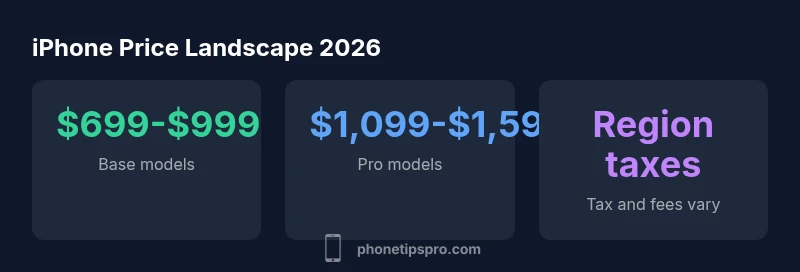
Current iPhone prices generally range from about $699 for base models to around $1,599 for top-end Pro variants, with regional taxes and storage options creating additional variation. According to Phone Tips Pro Analysis, 2026, the price structure reflects model tiers, features, and regional factors. This article explains how to estimate cost and compare models.
How iPhone pricing is structured in 2026
Pricing across Apple's iPhone lineup is built around three core pillars: model tier, storage option, and regional factors. In 2026, the baseline price for entry-level devices starts higher than a few years ago, reflecting improved hardware, cameras, and overall build quality. The Pro and Pro Max lines command premium pricing for advanced components and larger display technology. Storage choices can tilt the total by a noticeable margin, especially when you opt for higher capacities. Regional taxes, import duties, and carrier subsidies or promotions further bend the final sticker price. In short, the sticker price you see online is just the starting point; the total cost of ownership depends on where you live, how you buy, and which storage tier you choose. This section breaks down how to read the price label, what to expect in store discounts, and how to plan financially for a handset that’s likely to be used for several years. The takeaway is simple: understand the pricing architecture before you compare deals, and you’ll avoid overpaying in the long run. According to Phone Tips Pro, price transparency helps shoppers make smarter decisions in 2026.
The base vs Pro price gap: what drives the difference
The gap between base models and Pro variants isn’t just about a bigger number on the receipt. It’s driven by several factors: newer camera systems, higher display specs, and faster processors on Pro devices; increased base storage options; and refined materials that improve durability. Apple often introduces a feature set in Pro models that isn’t yet standard on base phones, which raises the perceived value and the price. Storage tiers within each model line can shift the final sticker by hundreds of dollars, especially for those who lean into 128GB vs 256GB or more. regional pricing strategies also influence the delta, with some regions pricing Pro variants higher due to taxes and import duties. For shoppers, this means a careful assessment of which features truly matter for your use case before deciding to pay the higher tier.
Regional and carrier influences on price
Price is rarely uniform across all markets. Local taxes, import duties, currency exchange rates, and carrier subsidies create noticeable differences between countries and even between retailers within a country. Carrier-locked devices may come with trade-in offers or promotions that reduce the upfront cost but lock you to a plan. Unlocked variants offer flexibility but can carry a higher sticker price in the short term. Understanding these regional dynamics helps you forecast the real out-of-pocket cost, beyond the sticker price displayed online. If you’re shopping abroad or through a carrier, compare unlocked prices, financing terms, and promotional bundles to determine which path minimizes total expense. Phone Tips Pro’s guidance emphasizes evaluating total cost of ownership, not just the headline price.
How to estimate your total cost: a practical approach
Estimating total cost requires a method that accounts for upfront price, storage, taxes, and financing. Start with the model you want, then add the storage tier you actually need, and multiply by tax rate for your region. If you’re considering financing, compare APRs, loan terms, and any promotional zero-interest periods. Don’t forget ongoing costs like AppleCare, accessories, and potential trade-ins. Use a simple formula: Upfront price + tax + extended warranty (if desired) + accessories – any trade-in value or promo credits. Keep a running spreadsheet of options from multiple retailers to identify the best total-cost option over your planned ownership period. The goal is to avoid sticker shock and to pick a plan that aligns with your budget. As Phone Tips Pro notes, clarity on the full cost helps you choose wisely.
Financing, trade-ins, and promotions to watch
Financing can spread the cost over time, but interest and terms vary by lender and retailer. Trade-ins can dramatically reduce the upfront price, but the value depends on device condition and market demand. Promotions—bundles with AirPods, AppleCare discounts, or carrier bundles—can tilt the economics in favor of a specific path. Always check eligibility and redemption deadlines, and compare across retailers, carriers, and Apple’s own offers. Don’t assume a promo is a good deal simply because it lowers the upfront price; calculate the total cost across the financing period. Phone Tips Pro recommends tallying all components of cost and reading the fine print before committing.
Smart comparison strategies: tools and steps
Use a simple, structured approach to compare deals: 1) list each model and storage option you’d consider; 2) record the upfront price, tax, and any promo credits; 3) note financing terms and monthly payments; 4) factor in expected resale value after your ownership period; 5) weigh the total cost of ownership against your usage needs. Tools like price tracking sites, retailer apps, and carrier promotions can help you monitor changes over time. Always account for regional variations and check for expiration dates on offers. With a clear comparison framework, you can identify the best value option rather than the lowest initial price.
Common pricing myths debunked
Many shoppers assume that the lowest price always means the best value. In reality, a slightly higher upfront price can pay off if it includes extended warranty coverage, better resale value, or longer software support. Others rely on frequent sales to justify buying older devices. While promotions are useful, they don’t guarantee long-term savings if the sale comes with restricted return policies or weaker financing terms. Finally, it’s easy to overlook taxes and fees that dramatically change the final cost. The right approach is to evaluate total cost, not just the headline price, and to consider how long you intend to keep the device.
Real-world budgeting scenarios: picking a model within budget
Consider your daily needs and future usage when budgeting. If you rely on advanced photography or demanding apps, investing in Pro models with higher storage can improve value over time. If your usage is light, base models with modest storage may be more cost-effective. Regional price differences can tilt the decision toward waiting for a sale in your area or purchasing through a carrier bundle. A practical strategy is to simulate two or three ownership scenarios over 2–3 years, comparing upfront price, monthly payments (if financing), and estimated resale value. This exercise often reveals that a mid-range option provides the best balance of features and total cost.
Illustrative price ranges for current iPhone categories (2026)
| Model/Factor | Typical price range | Notes |
|---|---|---|
| Base models | $699 - $999 | Varies by storage and region |
| Pro models | $1,099 - $1,599 | Premium tier with latest features |
| Taxes/fees | Varies by country | Includes VAT, import duties, carrier fees |
FAQ
Why do iPhone prices vary by region so much?
Regional price differences arise from taxes, import duties, currency exchange, and carrier strategies. Always compare unlocked pricing in your locale and consider total cost, including potential promotions.
Prices vary by region due to taxes, duties, and promotions; check unlocked pricing and total cost.
Is it better to buy now or wait for a sale?
Sales can reduce upfront costs, but promotions may be region-specific and time-limited. Weigh the likelihood of future price drops against the risk of missing current needs.
Sales help now, but consider timing and region; don’t delay if you need a device.
Should I buy unlocked or through a carrier?
Unlocked devices offer flexibility and usually better resale value, while carrier offers may include subsidies or payment plans. Compare total cost and contract terms before deciding.
Unlocked gives flexibility; carrier promos can lower upfront costs but lock you in.
Do trade-ins always improve the deal?
Trade-ins can significantly reduce upfront cost, but value depends on device condition and market demand. Check official and retailer trade-ins for the best offer.
Trade-ins help, but compare offers and conditions carefully.
Are refurbished iPhones a good deal?
Refurbished units can offer substantial savings with warranties, but check seller credibility and battery health. Ensure you understand return policies and warranty terms.
Refurbished units save money if the seller is trusted and warranty is clear.
What’s the best way to budget for an iPhone?
Estimate total cost including upfront price, taxes, financing, and accessories. Use a 2–3 year ownership horizon to compare options and prioritize features that matter most.
Budget by total cost over 2–3 years; focus on essential features.
“Price transparency empowers iPhone shoppers to choose value over hype. A clear total-cost view helps you avoid overpaying across regions and deals.”
Quick Summary
- Understand pricing tiers before buying to avoid overpaying.
- Storage choice and taxes can shift total cost considerably.
- Regional differences affect final price more than model alone.
- Trade-ins and financing can alter affordability, not just sticker price.
- Compare total cost of ownership across retailers and carriers.