iPhone vs Samsung: An In-Depth 2026 Comparison
In 2026, a clear iPhone vs Samsung comparison helps you decide between iphone or samsung by weighing ecosystem, updates, camera, and value. Expert guidance from Phone Tips Pro informs a practical choice.


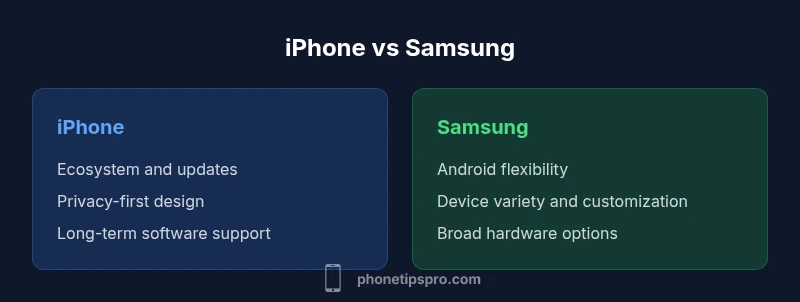
The choice between iPhone and Samsung typically comes down to ecosystem preference, update policies, and hardware variety. If you value a seamless, long-supported software experience, iPhone tends to win. If you want Android flexibility and broader device options, Samsung is the better fit. The decision, iphone or samsung, should align with your priorities and budget.
The Core Decision: iphone or samsung?
The question iphone or samsung frames many buyer decisions, and the answer isn't the same for everyone. It starts with how you work, where you live in the tech ecosystem, and your tolerance for change. According to Phone Tips Pro, the most reliable way to decide is to map your daily tasks to platform strengths and to forecast you want updates and long-term support. The team notes that people who own a Mac, iPad, or Apple Watch typically synchronize data and workflows more smoothly with iPhone, while those who rely on Google services, Windows PCs, or favorite Android apps often prefer Samsung for its flexibility. Beyond software, hardware options, camera styles, and accessory ecosystems also drive the choice. This section lays out the core decision factors and sets the stage for a deeper, model-by-model comparison.
Ecosystem and Software Experience
In this section we examine how iOS and Android shape daily use. iPhone emphasizes a closed, tightly integrated ecosystem, with consistent app quality and predictable updates. Samsung runs on Android with its own One UI overlay, offering more customization knobs, broader app compatibility, and cross-brand interoperability. The difference isn't only software; it's a philosophy about control versus choice. As Phone Tips Pro notes, prolonged OS updates, security patches, and cross-device syncing matter most for longevity. Consider your favorite platforms (iCloud, Google Photos, Microsoft 365) and how they align with your daily routines. If you own multiple Apple devices, the iPhone experience feels more cohesive; if you rely on a diverse set of devices and services, Samsung's Android environment may save time and reduce friction.
Hardware, Design, and Device Variety
Hardware decisions shape everyday use nearly as much as software. iPhone offers a consistent design language, premium materials, and a smaller range of form factors each year, which helps with predictability and repairability. Samsung, by contrast, presents a wider hardware spectrum: multiple screen sizes, diverse camera modules, and a broader accessory ecosystem. Charging standards, port choices, and accessory compatibility can differ across models, which matters for long-term ownership. For power users who crave hardware experimentation, Samsung's lineup often delivers more options; for those who prefer uniformity and a strong sense of product identity, the iPhone approach pays off. This section compares durability, build quality, and ergonomics to help you feel the weight of your decision.
Camera and Media Capabilities
Camera performance is one of the most visible differentiators. iPhone's imaging philosophy emphasizes reliable color, skin tones, and consistent results across lighting. Computational photography features, video stabilisation, and archival workflows integrate tightly with Apple's software. Samsung emphasizes flexibility: more lens options on flagship models, advanced night modes, and greater manual control through software. For media creators, both ecosystems offer powerful tools, but the workflow you'll use day-to-day—shoot, edit, share—will align with your platform of choice. This section breaks down photo quality, video features, and editing pipelines to help you gauge which system better suits your creative style.
Display, Battery Life, and Day-to-Day Use
Display quality and battery endurance influence satisfaction far more than marketing gloss. iPhone displays consistently deliver vivid color, high brightness, and uniform performance across models, with tight integration to system animation for smooth scrolling. Samsung often pushes for bigger, higher-refresh panels and a wide range of sizes, which appeals to fans of bold visuals and multitasking. Battery life remains highly model-dependent, but both brands prioritize fast charging and wireless options. In daily use, the differences come down to comfort with screen size, refresh rate, and charging habits. This section analyzes brightness, color accuracy, battery psychology, and charging ecosystems.
Performance, Longevity, and Software Updates
Performance isn't only about raw speed; it's about sustained responsiveness, thermal management, and long-term support. iPhone chips are optimized for power efficiency, delivering fluid day-to-day experiences and long software support cycles, with updates that extend device usefulness. Samsung's flagship hardware typically delivers brisk benchmarks and strong multitasking, with updates tied to the Android ecosystem and One UI. The breadth of the lineup means some models receive updates longer than others, which can influence long-term value. This section highlights how processor architecture, RAM management, and OS strategy affect longevity.
Privacy, Security, and Reliability
Privacy is often a primary reason people choose iPhone, given iOS design choices that reduce app tracking and data leakage. Apple's security features, secure enclave, and privacy controls are widely praised by researchers and consumers. Samsung emphasizes defense in depth and hardware-based security, while offering robust privacy controls, but the Android environment presents more variability across devices and apps. The reliability of updates, patch cadence, and vulnerability response all factor into real-world protection. This section outlines practical steps to protect data on either platform.
Price, Value, and Resale Considerations
Price remains a decisive factor for many buyers. iPhones tend to maintain higher resale value and longer perceived lifespan due to software support and brand positioning. Samsung devices span a wider price range, often making flagship models accessible at higher volumes, with strong promotions and trade-in options. Value depends on ownership goals: if you prize stability and ecosystem lock-in, the premium for iPhone can be justified; if you want flexibility, a broader selection can offer better upfront value. This section reframes price in terms of total cost of ownership.
Use-Case Scenarios: Best for Photographers, Students, and Power Users
Different user personas highlight where iphone or samsung shines. A photographer prioritizing consistent color science and seamless editing may lean toward iPhone, especially if they are embedded in the Apple workflow. A student or professional who juggles multiple devices and apps may prefer Samsung for its flexibility and broader device choices. A power user who customizes every setting, prefers Android widgets, and wants advanced camera controls may find Samsung more satisfying. This section helps you map your own priorities to a concrete decision.
How to Decide: A Practical Decision Framework
Step 1: List your top priorities: ecosystem, privacy, hardware variety, software updates, and price. Step 2: Identify the models you’re considering and compare them using the table above. Step 3: Consider future-proofing: which platform will you be happy with in 3-5 years? Step 4: Test: if possible, handle devices in store or borrow from a friend. Step 5: Decide and align purchases with your budget and preferred ecosystem. This practical framework ensures you make a confident choice between iphone or samsung.
Comparison
| Feature | iPhone | Samsung Galaxy |
|---|---|---|
| Ecosystem and OS | iOS-centric, tight Apple device integration | Android with Samsung services and hardware variety |
| Software Updates & Longevity | Long-term, regular updates and strong support | Brisk updates on flagship devices; variability across models |
| Camera & Media | Consistent color science; seamless editing | Flexible hardware options; strong night modes; broader controls |
| Performance & Hardware | Optimized for smooth daily use; efficient power | Top-tier hardware with diverse form factors |
| Display & Design | High-quality OLED with consistent visuals | Wide range of sizes; high-refresh-rate options |
| Charging & Connectivity | Varies by model; generally strong accessories | USB-C standard; broad accessory compatibility |
| Price & Value | Premium pricing with strong resale value | Wider price range; promotions influence value |
| Best For | Ecosystem lovers seeking simplicity and privacy | Android fans who want customization and device variety |
Positives
- Long-term software updates and security patches
- Strong privacy protections and data protection
- Cohesive ecosystem when already invested in Apple devices
- Broad accessory compatibility and service network
Weaknesses
- Higher upfront cost on flagship models
- More fragmented hardware options on Android side
- Platform lock-in may limit cross-platform workflows
- Cross-platform app features can differ and sometimes lag
iPhone is the safer, long-term choice for Apple-centric users; Samsung wins for flexibility and Android customization
For users who value a stable software path and privacy emphasis, iPhone is ideal. If you want hardware variety, customization, and broad device choice, Samsung is the better pick.
FAQ
Which offers longer software support, iPhone or Samsung?
iPhone generally provides longer and more consistent software support across its devices. Samsung offers robust updates for flagship models, but the cadence can vary by model and region. Consider your need for security patches and new features when deciding.
iPhone tends to get longer software support, while Samsung offers strong updates mainly on flagship devices.
Is Samsung more customizable than iPhone?
Yes, Samsung, running Android with One UI, provides more customization options for home screens, widgets, and default apps. iPhone emphasizes a streamlined, consistent experience with fewer customization choices. Your comfort with tweaking settings will influence this choice.
Samsung offers more customization; iPhone emphasizes simplicity.
Which camera system is better for low-light photography?
Both brands excel in low-light scenarios, but they approach it differently. iPhone aims for natural color and noise suppression, while Samsung often pushes higher dynamic range and more aggressive night modes. Your preference for color accuracy vs dramatic night shots will guide you.
iPhone prioritizes natural colors; Samsung often emphasizes brighter night shots.
Do iPhone updates slow down older devices?
In general, Apple optimizes updates to minimize slow-downs on older devices, though some new features may demand more from older hardware. Samsung updates can vary by model, so older devices sometimes experience slower performance after major updates. Plan around model support timelines.
Apple tends to keep older devices smoother, Samsung can vary by model.
Is price a barrier when choosing between iPhone and Samsung?
Price considerations depend on model lines and promotions. iPhone models are typically positioned as premium devices with strong resale value, while Samsung offers a broader price spectrum, including mid-range and flagship options. Weigh total cost of ownership beyond sticker price.
Price varies by model; iPhone is usually premium, Samsung ranges from mid to high-end.
Which should a non-tech user choose: iPhone or Samsung?
Non-tech users often benefit from iPhone's simple interface, consistent updates, and controlled app ecosystem. Samsung can be approachable but may require more decisions about customization. Try to handle devices in-store to gauge which feels more intuitive to you.
iPhone tends to feel simpler; Samsung offers more choices but can be more complex.
Quick Summary
- Define your ecosystem preference first
- Expect longer software support with iPhone
- Samsung offers broader hardware options and customization
- Total ownership value depends on model choice and trade-ins