iPhone vs Samsung Galaxy: An Objective Comparison
An analytical side-by-side comparison of iPhone and Samsung Galaxy devices, covering design, performance, camera, battery, software updates, price, and ecosystem to help you decide.


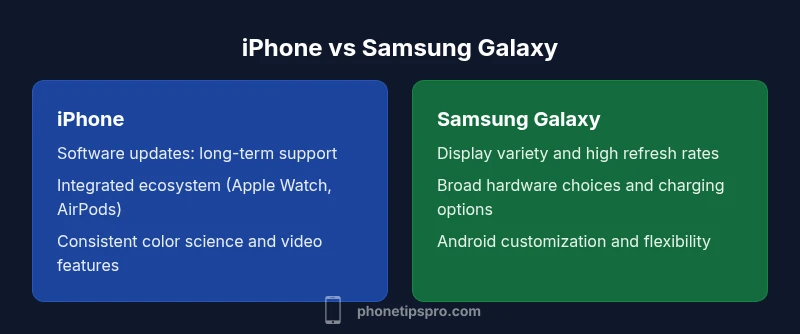
iphone versus samsung galaxy: a practical showdown. This quick comparison highlights how design, performance, battery life, camera quality, and software experience shape daily use, value, and long-term updates. iPhone shines in ecosystem and software updates, while Samsung Galaxy often wins on display quality, customization, and price-per-feature. Your choice depends on ecosystem preference and the level of customization you want.
Why the iphone versus samsung galaxy debate matters
In a world where mobile devices shape daily routines, choosing between iPhone and Samsung Galaxy is more than a spec comparison. The decision affects software updates, app compatibility, privacy, and even how you interact with other devices and services. According to Phone Tips Pro, most users weigh software stability, camera performance, and display quality as top decision factors, with price as an important consideration. This article uses an analytic framework to compare major generations from both brands, highlight where they diverge, and suggest practical buying paths for different user profiles. We’ll avoid over-hyped features and focus on what actually changes day to day: the feel of the device, how software decisions influence your workflow, and how updates affect security and privacy over the years. Phone Tips Pro analysis in 2026 underscores that ecosystem, updates, and hardware longevity are common deciding factors for long-term satisfaction.
Design, materials, and ergonomics
Device design conveys intent as much as function. iPhones typically rely on premium glass and metal frames with precise tolerances, often achieving a slim, uniform silhouette that feels sturdy in hand. Samsung Galaxy models vary by generation but commonly offer glass on the back with matte or glossy finishes and slightly more aggressive curves. Weight and thickness influence grip and one-handed use, especially for those with smaller hands. Both brands prioritize durability, but user experience differs: Apple emphasizes a consistent, minimalist feel and a high-gloss premium aesthetic; Samsung leans into bolder colorways and slightly looser grip that some users prefer for daily comfort. Ergonomics also hinge on button placement, haptic feedback, and mass distribution, which affect long sessions of gaming or productivity.
Display and user experience: OLED, refresh rates, color science
Display quality remains a key battleground. Apple’s OLED panels deliver accurate color reproduction, strong contrast, and dependable brightness, paired with an efficient rendering pipeline that makes iOS feel fluid. Samsung emphasizes high-refresh-rate panels (often 120Hz or higher) with vivid color rendering and peak brightness, resulting in a punchier, more immersive look that many users notice at a glance. Software experience aligns with hardware, with iOS offering tight integration across apps, services, and hardware accessories, while Galaxy devices showcase Android customization, diverse launchers, and flexible gesture controls. The result is two distinct personas: one focused on polish and predictability, the other on customization and display versatility.
Performance and software experience
Under the hood, iPhone models rely on Apple-designed silicon that emphasizes single-core efficiency and sustained performance, paired with a software stack tightly optimized for battery and heat management. Samsung Galaxy devices often pair high-end Exynos or Qualcomm chips with Android’s openness, delivering excellent multitasking headroom and broad compatibility with third-party apps and services. In practice, both platforms feel fast in daily tasks; differences become noticeable in sustained workloads, graphics-intensive apps, and battery drain under heavy use. Software updates vary by brand and model, but iPhone tends to deliver longer, more consistent support windows, while Galaxy devices offer abundant features and more frequent platform updates—though with regional variability.
Camera capabilities and imaging quality
Camera systems are a major purchase driver for many buyers. iPhone cameras are known for reliable color accuracy, strong video capabilities, and consistent performance across lighting conditions. Samsung camera systems often push for higher dynamic range, vibrant color science, and advanced modes like night photography and high-contrast HDR video; they also provide more hardware options at various price points. Real-world results depend on software processing, lens choice, and scene, so a direct comparison requires considering use cases: casual social photography, portrait shots, or professional-style video work. In addition, stabilization, lens versatility, and post-processing quality influence the final look more than raw sensor numbers alone.
Software updates, ecosystem, and longevity
The longevity of a device is shaped by software updates and ecosystem investments. Apple’s iPhone line benefits from a long tail of OS updates and security patches, with a predictable cadence across generations that supports devices well beyond their initial release. Samsung has strengthened its update commitments in recent years, but update timing and model eligibility can vary by region and carrier. Ecosystem considerations—AirPods, Apple Watch, services—often create a unified experience that many users value, though Galaxy devices excel in cross-device compatibility with broader Android and Windows ecosystems. The choice may come down to whether you prize a tightly integrated, long-term software story or a more flexible platform with wider hardware compatibility. Phone Tips Pro Analysis, 2026 suggests a nuanced view: software updates matter, but the ecosystem's compatibility often drives long-term satisfaction.
Battery life, charging, and efficiency
Battery performance is a daily factor—especially for heavy users. iPhones are known for efficiency and balanced battery management that supports all-day use in typical scenarios, with software updates frequently improving efficiency. Samsung Galaxy devices often push larger batteries and fast charging options, with some models delivering substantial charging speed advantages and improved power management on newer chips. Real-world endurance depends on your settings, network conditions, and apps, but both brands continue to optimize battery efficiency through processor design and system software. If fast charging matters to you, Galaxy often offers a broader range of charging options across models.
Price, value, and total cost of ownership
Price dynamics are nuanced. Apple devices typically command higher upfront prices but retain resale value better and benefit from longer software support, which can lower total cost of ownership over time. Samsung offers a wider price spectrum with more entry-level and mid-range options, potentially delivering better value per feature on certain generations. Total cost should consider storage upgrades, service plans, and accessory costs, not just the sticker price. Financing options, trade-in programs, and carrier deals also influence overall value, so shoppers should compare total owning costs across models and regions. Phone Tips Pro’s framework emphasizes cost of ownership alongside user benefits when evaluating value propositions.
Practical buying scenarios: who should pick which?
Two broad archetypes emerge. Power users who want a seamless, consistent software experience and longer-term support may prefer iPhone for its tight integration with services and devices. If you value hardware versatility, expansive display technology, and a broader price ladder, Samsung Galaxy can be the smarter pick. Consider your current ecosystem: if you already own a Mac, iPad, and Apple Watch, the iPhone’s continuity features pay off. If you rely on Google services, Windows PCs, or want more customization and choice in devices, Galaxy offers a more flexible path. Personal preferences around camera, battery, and gestures will drive the final decision. iphone versus samsung galaxy is a useful framing device here to remind you to compare the core factors rather than chasing hype.
How to evaluate your needs and finalize the decision
A practical checklist can help translate these contrasts into a concrete choice. List your must-have features (camera quality, battery life, software updates, ecosystem), estimate your typical monthly spend, and map how long you expect to keep the device. If possible, test both ecosystems side by side—enter settings, check app workflows, and compare how each device handles your daily tasks. Don’t forget accessory ecosystems: MagSafe for iPhone aids wireless charging and add-ons, while Galaxy often supports more varied charging standards and peripheral compatibility. The ultimate answer rests on your priorities, not on broad brand reputations.
Comparison
| Feature | iPhone | Samsung Galaxy |
|---|---|---|
| Design & Build | Uniform premium chassis, tight tolerances | Glass with varied finishes, bolder curves |
| Display & UI | Consistent, color-accurate OLED; fluid UI | High-refresh, vibrant panels; customizable UI |
| Performance & Chips | Apple silicon focus on efficiency and perf; long-term optimization | Android chips with strong multitasking and diverse options |
| Camera & Imaging | Natural color science, reliable video | Vivid color profiles, advanced modes |
| Software Updates | Long, predictable OS updates | Update cadence varies by model/region |
| Battery & Charging | Balanced endurance; software optimizations | Large batteries and fast charging in many models |
| Price & Value | Higher upfront, strong resale value | Wider price ranges, value variants |
| Ecosystem & Accessories | Tightly integrated ecosystem | Broader Android ecosystem and accessories |
Positives
- Strong long-term software support and ecosystem
- High resale value and premium build quality
- Consistent user experience across devices
- Wide app and accessory availability
- Strong camera performance in many scenarios
Weaknesses
- Higher upfront cost on flagship models
- Limited customization compared to Android
- Regional update variability across Galaxy models
- Accessory and platform fragmentation in Android
iPhone generally wins for longevity and ecosystem; Samsung Galaxy wins on upfront value and display flexibility
Choose iPhone if you want long-term updates and a seamless ecosystem. Choose Samsung Galaxy if you want display variety, customization, and better price-per-feature. Your decision should align with your budget and how you value software versus hardware flexibility.
FAQ
Which has better camera quality, iPhone or Samsung Galaxy?
Both brands offer strong cameras, but results depend on your use case. iPhone tends to produce natural colors and reliable video, while Samsung often pushes higher contrast and more aggressive processing in certain scenes. Test both in your typical lighting to decide.
Both brands have strong cameras, but it depends on your needs. Test in your usual lighting to see which look you prefer.
Do iPhones get software updates as long as Samsung devices?
iPhones typically receive longer and more consistent OS updates across generations, while Samsung has improved but varies by model and region. Consider your expected ownership period when choosing.
iPhones usually get longer, more consistent updates; Samsung updates vary by model and region.
Is price more important than ecosystem when choosing between them?
Price matters, but total value includes ecosystem convenience, resale value, and ongoing software updates. If budget is tight upfront, Galaxy often offers more affordable entry points. If you value a cohesive ecosystem, iPhone may be the better long-term bet.
Budget is important, but ecosystem and updates add long-term value.
Which has better resale value overall?
iPhones typically retain higher resale value due to brand demand and software longevity, though Galaxy models with high-end specs can also hold value well with timely updates and features.
iPhone generally holds value better, though high-end Galaxy devices can also retain value.
Can I mix and match accessories across brands?
Many accessories are brand-agnostic, but some features (like MagSafe on iPhone) lock you into an ecosystem. Check compatibility for chargers, cases, and peripherals before committing.
Most accessories work across brands, but some like MagSafe are brand-specific.
Which should a new Android user pick?
If you’re new to Android and want a broader choice of devices and customization, Samsung Galaxy provides excellent entry points across price points. If you prefer a polished, uniform experience and predictable updates, start with iPhone.
If you want Android variety, choose Galaxy; for a polished, consistent experience, choose iPhone.
Which is better for future-proofing in the next 5 years?
Future-proofing depends on software support and platform strategy. iPhone generally leads in long-term updates, while Galaxy’s roadmap can offer robust hardware refresh cycles with new Android features.
For long-term software support, iPhone; for hardware diversity, Galaxy.
Quick Summary
- Assess ecosystem preference before buying
- Prioritize daily-use needs: camera, battery life, and display
- Weigh total cost of ownership, not just upfront price
- Expect longer software support from iPhone but broader hardware options from Galaxy
- Check regional update cadences and carrier restrictions