iPhone vs Samsung 2025: A Practical Comparison
A data-driven comparison of iPhone vs Samsung 2025 models. Weigh ecosystem, software updates, cameras, charging, and price to decide which flagship fits your needs in 2026.


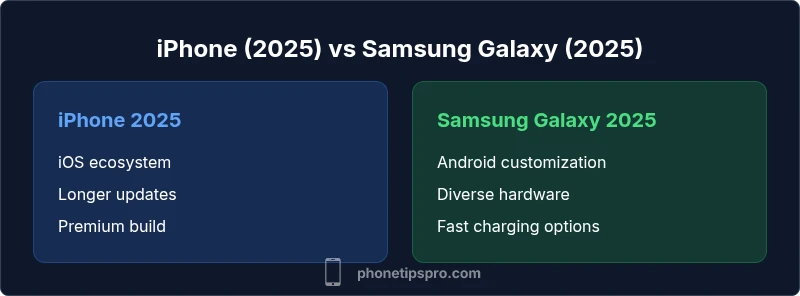
For the question iphone or samsung 2025, there isn’t a single winner. If you value long-term software support, a cohesive ecosystem, and robust resale value, the iPhone remains strong in 2025. If you prefer a wider Android experience, trial options, and faster charging in some models, Samsung’s lineup provides strong competition. Your choice depends on priorities, not a universal best.
Why iphone or samsung 2025 matters for decision-making
According to Phone Tips Pro, readers seeking practical, data-driven guidance benefit from a framework that weighs updates, ecosystem, and value when evaluating iphone or samsung 2025 options. In 2025, both Apple and Samsung offer premium devices with strong hardware, but the differences in software strategy, hardware variety, and pricing can tilt the decision. This block sets the stage for a structured comparison, highlighting decision drivers and common usage scenarios that help translate abstract specs into daily benefits. The goal is to empower you to map your routine tasks to a brand that aligns with your priorities, whether you’re an executive needing reliable syncing across devices or a creator who values hardware flexibility.
- Key drivers include software longevity, ecosystem depth, camera consistency, display quality, and total cost of ownership.
- Real-world usage and personal workflow heavily influence which brand earns a higher score for you.
- Throughout, we keep the focus on practical implications, not hype or marketing claims.
Platform and ecosystem: iOS vs One UI
The heart of any smartphone decision often rests on the operating system and ecosystem. iOS emphasizes seamless integration with macOS, iPadOS, Apple Watch, and iCloud, delivering a consistently polished experience. Samsung’s One UI on Android prioritizes customization, broader hardware compatibility, and a wider app ecosystem with choices ranging from foldables to budget devices. In 2025, both ecosystems offer compelling app ecosystems and privacy controls, but their philosophies diverge. If you rely on cross-device continuity, streamlined default apps, and predictable updates, iPhone tends to shine. If you want deep personalization, flexible file management, and a diversified device portfolio, Samsung offers substantial appeal. The trade-off is sometimes a steeper learning curve and more variability across devices in Android ecosystems.
- iOS leads in predictability and privacy-centered defaults.
- One UI shines with customization, hardware variety, and integration with non-Android ecosystems.
- Your choice should reflect how deeply you depend on cross-device workflows and cloud services.
Hardware design and device variety
Apple’s design language in 2025 maintains a premium, uniform aesthetic, with careful attention to materials, haptics, and a consistent user experience across the lineup. Samsung counters with broader hardware diversity, including compact, large, and foldable form factors, plus options with different display sizes and materials. In practice, this means iPhone users generally enjoy a uniform experience across models, while Samsung buyers may appreciate choice and innovation, particularly in display technology and form factors. Both brands emphasize durability and premium feel, but the breadth of hardware options on Samsung can appeal to users who want a device that feels distinct from year to year. Consider how important a consistent hold, weight, and grip feel are to your daily carry.
- iPhone: uniform design language and build quality across models.
- Samsung: broad family of devices with foldables and varying sizes.
- Durability and premium feel remain high for both brands.
Cameras and imaging: imaging pipeline 2025
Camera performance continues to be a key differentiator. iPhone cameras in 2025 build on years of computational photography, delivering reliable color science, strong low-light performance, and natural skin tones. Samsung emphasizes high-contrast scenes, adaptive processing, and versatile hardware with multiple lenses and options that unlock creative workflows. The practical takeaway: both brands deliver excellent photography, but your preference for color rendering, video features, and post-shot flexibility will guide your choice. If you shoot a lot of video and want consistent skin tones, iPhone may be more predictable; if you crave framing versatility and optical flexibility, Samsung offers broad capabilities across its lineup.
- iPhone: consistent color science and reliable video options.
- Samsung: flexible hardware and aggressive computational modes.
- Test your usual scenes to see which brand aligns with your preferred look.
Displays, performance, and gaming
Display technology remains a constant point of pride for both brands. iPhone models prioritize color accuracy, brightness, and true-to-life rendering, often delivering a uniform viewing experience across apps and media. Samsung counters with bold OLED panels, high refresh rates, and eye-catching brightness in many models, sometimes including curved or foldable screens for immersive experiences. Performance follows suit, with Apple optimizing for efficiency and a tightly integrated stack, while Samsung pushes hardware specs and software features that enhance multitasking and gaming. If you value precise color and a consistent interface, iPhone is compelling; if you want vibrant screens and flexibility in screen shapes and sizes, Samsung offers compelling advantages.
- iPhone: accurate colors and smooth, predictable performance.
- Samsung: vivid displays with diverse form factors and high refresh rates.
- Gaming and media takeaways depend on display tech and optimization.
Software updates and longevity
Software updates are a defining factor for long-term satisfaction. Apple traditionally provides extended OS updates, which translates to several years of new features and security improvements. Samsung has shifted toward longer support windows for recent devices, but update cadence can vary by model and region. In 2025, the best strategy is to align with your preferred cadence: if you want uniform, guaranteed updates across devices, iPhone remains strong; if staying current with platform features through diverse devices matters, Samsung offers compelling paths. Always consider the expected lifespan of your device and the support policy for your chosen model.
- iPhone: long, predictable update cycles.
- Samsung: extended support windows for many devices, with model variability.
- Update planning helps protect resale value and security.
Battery life and charging experience
Battery life and charging behavior influence day-to-day satisfaction. iPhones often optimize battery usage with software aware charging and power management that emphasizes reliable endurance. Samsung devices typically offer more aggressive charging options and broader charging ecosystems, including faster wired and wireless solutions, along with charging accessories in some markets. The practical implication is to balance daily use patterns with charging habits: if you rely on quick top-ups and flexible charging setups, Samsung can be advantageous; if you value predictable battery health and sustained efficiency, iPhone remains a strong bet. Consider your daily commute, gaming load, and streaming time when evaluating which approach fits you.
- iPhone: consistent efficiency and longevity.
- Samsung: faster charging options and broader charging ecosystem.
- Real-world use will determine perceived battery life.
Pricing, value, and total cost of ownership
Pricing remains a nuanced topic. iPhone models tend to command premium pricing, with strong resale value and longer lifespan, which can make total cost of ownership favorable over time. Samsung devices provide a broader price ladder, including mid-range and flagship options, which can appeal to budget-conscious buyers while still offering advanced features. In 2025, evaluate total cost by accounting for future software updates, accessories, and potential trade-in value. The practical lens is to measure initial price against long-term value, not just sticker price. Both brands reward users who plan ahead for accessory ecosystems and service costs.
- iPhone: higher upfront price, strong resale and longevity.
- Samsung: broader price range with flexible options.
- Total cost of ownership matters more than upfront price alone.
Privacy and security considerations
Privacy and security are foundational to device choice. Apple emphasizes on-device processing, predictable privacy controls, and centralized data handling with strong app permissions. Samsung emphasizes robust security features and diversified device ecosystems, with growing emphasis on privacy features in the Android environment. In 2025, the choice often hinges on your comfort level with data sharing, app permissions, and how you manage device security across smartphones, wearables, and smart home devices. Both ecosystems offer meaningful protections, but your behavior—such as app downloads and cloud usage—will shape your risk exposure.
- iPhone: strong privacy defaults and on-device processing.
- Samsung: strong security options with ecosystem flexibility.
- Your daily habits determine risk and protection needs.
Real-world usage scenarios: productivity, media, gaming
Context matters. A university student, a professional in transit, or a home-maker will each prioritize different strengths. For productivity, iPhone often shines with seamless cross-device apps and reliable continuity features. For media and gaming, Samsung devices with advanced displays and robust processing may deliver more immersive experiences, especially on larger or foldable screens. The key is to map your typical tasks—note-taking, video editing on the go, or streaming performance—to the device ecosystem that best supports those activities. In practice, test the exact apps you use and observe how each platform handles multitasking, notifications, and battery drain in your routines.
Trade-in, resale, and ecosystem lock-in
No buyer wants to feel trapped when upgrading. iPhone models tend to retain higher resale value due to brand perception and longer OS support, which can improve replacement cost over time. Samsung’s broader device ecosystem means you have more options when upgrading, potentially trading in multiple devices at once. Consider how important ecosystem lock-in is for you: if you already own other Apple devices, the upgrade path can be smoother; if you value device diversity and modular upgrades, Samsung may offer a more flexible path.
Decision framework: a practical checklist
Use this checklist to finalize your choice: identify top priorities (updates, ecosystem, price, display tech), evaluate your existing devices for cross-compatibility, assess your budget for accessories, and consider future upgrade plans. Create a short list of must-have features for 2025 and map each to the strongest brand attribute. Finally, consider a hands-on trial period with both devices if possible. A structured evaluation ensures you pick the option that aligns with your needs rather than brand bias.
Comparison
| Feature | iPhone (2025 models) | Samsung Galaxy (2025 models) |
|---|---|---|
| Operating System & Ecosystem | iOS with tight Apple ecosystem | Android with One UI and broad device choices |
| Hardware Design & Form Factor | Uniform, premium build across models | Diverse form factors including foldables and various sizes |
| Camera Capabilities | Reliable color science and video features | Versatile lenses and creative controls across devices |
| Display & Refresh Rate | Accurate color with consistent brightness | Vibrant OLEDs with high refresh rates |
| Battery Life & Charging | Efficient power management and good endurance | Fast charging options with broad charging ecosystem |
| Software Updates & Longevity | Long, predictable OS updates | Longer support windows with model variability |
| Price Range | Premium pricing with strong resale value | Wider price ladder, more mid-range options |
| Best For | Users invested in Apple ecosystem and privacy | Users seeking customization and device variety |
Positives
- Strong software updates and ecosystem (iPhone)
- Broad hardware variety and customization (Samsung)
- High resale value potential (iPhone)
- Flexible price options across the Samsung lineup
- Advanced display technology across models (Samsung)
Weaknesses
- Higher upfront cost on iPhone
- Android update cadence varies by model
- Samsung fragmentation can affect long-term consistency
- Apple's ecosystem lock-in may limit cross-brand flexibility
Neither brand dominates in all areas; pick iPhone for updates and ecosystem, Samsung for customization and hardware variety
If you want longevity and seamless integration, choose iPhone. If you value flexibility, device diversity, and cutting-edge displays, choose Samsung. Your final decision should align with the tasks you perform most and your preferred tech workflow.
FAQ
How long do software updates typically last for iPhone vs Samsung devices in 2025?
Apple generally offers extended OS updates with a predictable cadence across its devices. Samsung has been expanding support for recent devices, but update timelines vary by model and region. Plan for several years of feature and security updates, and verify the specific policy for your model.
Apple tends to provide longer, predictable updates across its devices. Samsung has longer support windows for many devices, but it depends on the model and market.
Is the initial price difference between iPhone and Samsung significant in 2025?
Prices vary by model and region, with iPhone often positioned at a premium. Samsung offers a wider price range, including mid-range devices. Consider total cost of ownership, including resale value and accessory costs, rather than sticker price alone.
Prices differ, but total ownership matters more than the starting price.
Which camera system performs better in low light in 2025?
Both brands have strong low-light performance, but results depend on software processing and lens choices. iPhone tends to deliver balanced skin tones and natural colors, while Samsung often emphasizes brightness and detail in challenging lighting. Test photos in your typical conditions to decide.
Both perform well in low light, but your preferred look may sway you.
Which is easier for a non-tech user, iPhone or Samsung in 2025?
iPhone generally offers a more streamlined, consistent user experience with fewer surprises across models. Samsung provides more customization and features, which can be empowering but may require a learning curve. If you want simplicity, start with iPhone; if you enjoy tinkering, Samsung can be more satisfying.
If you want simple, go iPhone; if you like options, go Samsung.
Will Samsung offer better customization and app options in 2025?
Samsung on Android provides extensive customization and app choices, particularly for power users. iPhone remains focused on a curated experience with tighter control over app behavior. Your preference for flexibility versus simplicity will guide the choice.
Samsung offers more customization; iPhone sticks to a more controlled setup.
What should I consider for resale value when choosing between iPhone and Samsung?
iPhone devices typically retain higher resale value due to brand perception and longer software support. Samsung devices may offer strong resale too, especially for popular models, but value can vary by region and model. Consider trade-in programs and accessory availability to maximize value.
iPhones usually resale well; Samsung can too, depending on the model.
Quick Summary
- Define your priorities early: updates vs customization
- Consider ecosystem and cross-device needs
- Budget for accessories and charging ecosystem
- Assess total cost of ownership beyond upfront price
- Test practical tasks to see which platform fits best