What to Buy: iPhone 14 or iPhone 15 — An Objective Guide
A data-driven comparison of iPhone 14 vs iPhone 15, covering performance, camera, battery, USB-C, and value. Learn which model suits your budget and needs, with practical buying guidance from Phone Tips Pro.


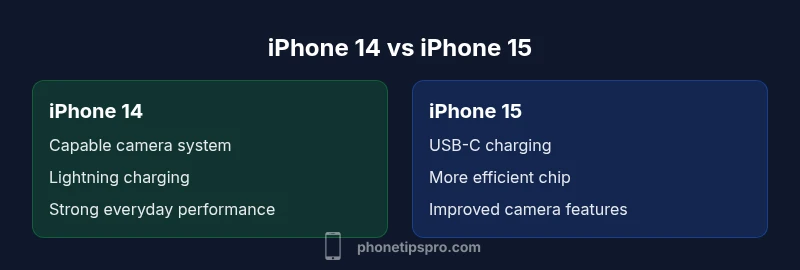
According to Phone Tips Pro, choosing between the iPhone 14 and iPhone 15 hinges on budget, upgrade needs, and how long you want future-proofing to last. The iPhone 15 adds USB-C, faster chip, and improved cameras, while the iPhone 14 remains a strong value if price matters more than the latest features. Read on for a detailed comparison.
Context: Framing the What-to-Buy Question
If you’re asking what to buy iphone 14 or 15, the decision hinges on three practical axes: upfront cost, long-term software support, and how much you value newer hardware features. This guide, informed by Phone Tips Pro analysis, walks through everyday performance, camera quality, battery life, and ecosystem implications. We’ll translate the upgrade delta into real-world use: daily texting, photo-taking, gaming, and streaming. By the end you’ll see whether the iPhone 15’s new features justify the price premium, or if the iPhone 14 remains the smarter buy for most people who prioritize value today. This framing helps avoid buyer’s remorse and aligns with practical budgeting for Apple’s ecosystem.
For readers searching the exact prompt what to buy iphone 14 or 15, this analysis keeps the focus on tangible benefits rather than marketing slogans. We’ll also consider resale value, accessibility, and how each model ages as iOS updates arrive. The goal is to empower a decision that fits your daily routines and future plans with minimal regret.
In short, the two models are closer in everyday usefulness than some marketing implies, but their diverging strengths mean different buying rationales depending on your priorities.
Performance and Chipset: Why Speed and Efficiency Matter
The iPhone 14 launched with the A15 Bionic architecture, a robust performer that handles everyday tasks with ease and remains competitive for many users. The iPhone 15 shifts to a newer generation that emphasizes efficiency and raw processing headroom, which translates to snappier app launches, quicker photo processing, and smoother gaming in mid-to-high settings. This isn’t just about raw speed; it’s about sustained performance under load and how well the device stays cool under heavy use. Phone Tips Pro notes that while both phones handle common chores like messaging, browsing, and media playback with ease, the 15’s newer chip brings improved machine learning tasks—useful for on-device transcription, image processing, and smart features.
If you routinely run demanding apps, edit high-resolution videos, or rely on advanced AR experiences, the 15’s chipset advantages are more relevant. For lighter day-to-day use, the difference may feel incremental, but you’ll still gain longer headroom before the device begins to feel sluggish as new software features arrive.
Camera and Photo Quality: What Has Really Changed
Camera systems often define perceived upgrade value, and the iPhone 15 makes targeted improvements worth noting. The 15’s main camera benefits from a higher-resolution sensor in some configurations and refined image processing that translates to cleaner low-light shots and more accurate color rendering. The result is crisper detail in landscapes and better texture preservation in tricky lighting. The iPhone 14’s camera remains capable and widely praised for its color science and reliability, especially for casual shooters and social media posting.
Beyond the main sensor, the 15 benefits from incremental improvements to autofocus speed, computational photography, and HDR processing. Portrait mode edges, background blur, and subject separation can look more natural on the newer device. For many users, the difference is noticeable in challenging lighting, but not a night-and-day change for everyday snapshots. If you prioritize top-tier photography in all light conditions, the iPhone 15 offers the clearer advantage.
Battery Life and Charging: Real-World Usage Considerations
Battery longevity is a practical concern for heavy users. In daily routines, both models typically handle a full day of mixed use, but the iPhone 15’s efficiency gains can translate to proportional improvements under sustained workloads such as gaming, streaming, and multitasking. Users who travel or rely on heavy video calls may appreciate the incremental gains in endurance, though expect similar daytime performance for normal use. The charging experience also differs in subtle ways: the iPhone 15’s USB-C standardization can simplify charging setups and compatibility with a wider range of accessories, while the iPhone 14 continues to work well with existing Lightning-based chargers and peripherals.
In real-world terms, you’ll likely notice longer buffer and sleep times on average with the 15, but variation will depend on screen brightness, network conditions, and app usage. If battery anxiety is a deciding factor, the 15’s efficiency edge helps, especially with modern background tasks and background app refresh optimizations.
Display, Design, and Durability: What You See and Feel
Display quality and design cues influence day-to-day satisfaction. The iPhone 14 and iPhone 15 share similar dimensions and screen tech at their core, ensuring a comfortable and familiar user experience. The iPhone 15 often includes refinements such as slightly improved brightness and color calibration, making outdoor viewing marginally easier in bright sunlight and supporting truer color reproduction in photos and videos. Design-wise, both devices emphasize a premium glass-aluminum build with water resistance, but the 15 may feature subtle refinements in edge finishing and material consistency that contribute to an overall more polished feel.
Durability remains strong on both models, and screen protection is still recommended for active use. If you’re meticulous about tactile feedback and the premium feel of newer hardware, the iPhone 15 has the edge here; if you value proven build quality and lower aftermarket risk, the iPhone 14 remains more than capable.
Software, Updates, and Longevity: How Long They Stay Fresh
Apple’s iOS updates are a critical factor in long-term value. The iPhone 15, being the newer generation, is typically guaranteed a longer span of future updates compared with the iPhone 14. This matters for security features, compatibility with new apps, and access to performance enhancements delivered by Apple over multiple years. Phone Tips Pro emphasizes that beyond the version number, update cadence and support duration translate into a more future-proof device for those who intend to keep their phone for 4–5 years.
That said, the iPhone 14 will still receive updates for several years, and many users find it perfectly adequate if their priorities focus on cost savings and ongoing app compatibility rather than the latest software bells and whistles. Your decision should weigh how important updates are to you against the upfront price and feature set of each model.
Storage and Memory: Matching Needs to Capacity
Storage is a core factor in perceived value. The iPhone 15 and iPhone 14 offer similar tiering options at launch, with higher-end configurations available for users who store a lot of high-resolution photos, videos, or large apps. The practical decision is to estimate how much media you accumulate monthly and whether you rely on cloud backups to manage space. If you frequently shoot 4K video, download large games, or maintain a large offline media library, opting for a higher storage tier can prevent early capacity constraints and avoid the inconvenience of constantly juggling space.
Consider cloud strategies and your device’s photo management behavior. If you often delete content or rely on streaming, the default storage could be enough; otherwise, a higher capacity may deliver a more seamless daily experience without frequent reminders about “storage full.”
Connectivity and Accessories: USB-C Adoption vs Lightning Legacy
One of the most tangible shifts from iPhone 14 to iPhone 15 is USB-C adoption on the latter, bringing universal charging tech and easier compatibility with a broader range of accessories. This change reduces the clutter of Apple-specific chargers and supports faster charging options in many cases. If you own a lot of USB-C peripherals or plan to reuse accessories across devices, the iPhone 15 offers a smoother ecosystem integration. On the other hand, the iPhone 14 remains compatible with existing Lightning cables and older docks, which may be more convenient if you already own a large Lightning-based accessory collection.
From a user perspective, USB-C also simplifies travel packing and reduces the need to carry multiple chargers. If convenience and future-proofing matter, the 15’s connectivity upgrade aligns well with modern charging habits and accessory standards.
Who Should Buy Each Model: A Practical Look at Use Cases
For budget-conscious buyers who want a reliable iPhone experience without paying for the latest features, the iPhone 14 is a compelling option, particularly if you find it on discount or with a good trade-in deal. Its performance remains solid for everyday tasks, photography, and media consumption, and the software support window will still be generous. If you crave longer software support, a camera upgrade relative to the 14, USB-C connectivity, and better efficiency for sustained use, the iPhone 15 makes a strong case. Professionals who rely on future-proofing for several years, frequent travelers who appreciate charging flexibility, or power users who want the best possible performance will typically prefer the newer model. For others, the decision rests on whether the premium for the 15 aligns with their priorities and budget.
Practical Decision Framework: A 3-Step Check
Step 1: List your must-have features (USB-C, camera improvements, longer support). Step 2: Estimate your budget and potential trade-in value. Step 3: Consider how long you intend to keep the device and whether the upgrade aligns with that horizon. If USB-C and longevity are decisive for you, the iPhone 15 likely wins. If price and current value are your primary drivers, the iPhone 14 remains a strong, practical choice. This framework helps avoid overpaying for features you won’t use daily.
How to Buy Smart: Tips for Savings and Smart Decisions
- Check for carrier and Apple promotions that may reduce the upfront cost
- Consider refurbished or manufacturer-certified options to maximize value
- Evaluate storage needs to prevent paying for unused space later on
- Trade-in value can significantly offset price, so compare offers from Apple and major retailers
- Plan for accessories: USB-C cables, chargers, and cases that suit the new hardware
A disciplined approach here can make the purchase feel like a strategic investment rather than an impulse buy.
Comparison
| Feature | iPhone 14 | iPhone 15 |
|---|---|---|
| Chipset (CPU/GPU) | A15 Bionic | A16 Bionic |
| Camera main sensor | 12 MP main sensor typical of 14 | Potentially higher-resolution/main sensor improvements on 15 |
| Charging/Connectivity | Lightning charging ecosystem | USB-C charging ecosystem |
| Software longevity | Strong support but shorter horizon | Longer horizon of updates and optimizations |
| Display brightness/calibration | Baseline display quality | Slight enhancements in color calibration and brightness |
| Best for | Budget-conscious buyers and value seekers | Users seeking future-proofing and USB-C ecosystem |
Positives
- Solid value for everyday use
- Strong ecosystem and app support
- Good camera performance for daily photography
- Longer software updates than older generations
- USB-C on the newer model improves compatibility
Weaknesses
- Higher upfront cost for the latest model
- No radical design overhaul in the newer generation
- Battery life improvements are incremental
- Support windows still vary by region and carrier
iPhone 15 is the generally better long-term choice; iPhone 14 remains a strong value for budget-conscious buyers
Choose the iPhone 15 for longer software support, USB-C, and improved camera performance. Opt for the iPhone 14 if upfront cost and current value are your top priorities and you don’t need the latest connectivity features.
FAQ
What are the core differences between iPhone 14 and iPhone 15?
The iPhone 15 adds USB-C, a newer processor, and camera improvements, along with better efficiency, while the iPhone 14 remains a capable device with strong performance and a lower price point. The choice depends on whether you value future-proofing and connectivity upgrades versus saving money today.
The iPhone 15 has USB-C, a newer chip, and better cameras, making it more future-proof; the iPhone 14 is a solid value if you’re prioritizing cost today.
Is USB-C worth upgrading from Lightning?
If you regularly use USB-C accessories, value universal charging, or want potentially faster data transfer, USB-C is a meaningful upgrade. It simplifies accessories and future compatibility, which can add convenience over time. If you’re content with Lightning, you can still use existing gear for years.
USB-C makes charging and syncing simpler and more universal; it’s a practical upgrade for most users.
Which model lasts longer with software updates?
Apple typically provides longer software support to the newer model first, so the iPhone 15 should receive more years of updates. Both devices will still receive iOS updates for several years, but the newer hardware generally helps future-proof features and security enhancements.
The newer iPhone generally gets more future updates, helping it stay current longer.
Should I buy storage- or budget-focused variants?
If you store a lot of media locally or edit high-quality video, higher storage helps avoid frequent cleanups. If you rely on cloud storage and don’t mind managing space, base storage is often sufficient. Consider your data habits and cloud plans when deciding.
Think about how much local media you keep and whether you’ll rely on iCloud or other clouds.
Is the iPhone 14 still a good buy in 2026?
Yes, if you find a strong deal and your needs align with current performance, camera quality, and ecosystem compatibility. It remains a capable device for everyday tasks, but you’ll lose some future-proofing and longer software support.
The 14 is still solid, but it won’t aging as well as the newer model in terms of updates and future features.
How should I compare prices and get the best deal?
Compare official Apple offers, carrier promotions, and reputable retailers. Look for trade-in bonuses and bundled accessories. Timing matters; sprint-to-quarter promotions and seasonal sales can reduce the effective cost significantly.
Shop around, check trade-ins, and watch for seasonal sales to save more.
Quick Summary
- New USB-C in iPhone 15 simplifies charging and accessories
- iPhone 15 offers longer software support and a faster chip
- iPhone 14 remains a solid value with capable performance
- Upgrade decision hinges on budget, need for future-proofing, and camera priorities
- Consider storage and trade-in options to maximize value
- Expect incremental gains rather than dramatic overhauls with the 15