Do iPhone Use Samsung Parts? A 2026 Supplier Guide
Explore whether iPhones use Samsung parts. Learn about supplier diversification, which components may come from Samsung, and what this means for performance and warranty in 2026.


Apple uses components from multiple suppliers, and Samsung is one of them for certain parts in some iPhone generations. The overall supply chain remains diversified, with panels, memory, and other components sourced from a mix of vendors depending on model and year. No single vendor dominates critical iPhone hardware in 2026.
Do iPhones Use Samsung Parts? An Overview
In practice, do iphone use samsung parts? The short answer is that Apple uses components from a broad, diversified supplier base, and Samsung is one of the many vendors involved in the ecosystem. This is not a static arrangement; the exact mix shifts by model year, production run, and regional supply conditions. According to Phone Tips Pro, the goal of diversification is resilience: reducing the risk that a single supplier could disrupt production. For consumers, this means there isn’t a single “Samsung-only” iPhone. The phrase do iphone use samsung parts is accurate in some contexts, but it should be read as part of a larger, multi-sourced strategy. In 2026, suppliers from several countries contribute to core hardware, and Apple maintains contracts that span multiple manufacturers. Buyers should expect a landscape where components come from a rotating set of partners rather than one vendor dictating every part. This ongoing diversification shapes pricing, availability, and the ability to swap partners if geopolitical or technical challenges arise.
Where Samsung Parts Show Up in iPhones
Samsung’s footprint in iPhone hardware has evolved as Apple diversified its supplier base. The most visible area where Samsung participates is OLED display panels, a core differentiator for many iPhone models since the switch to OLED. Samsung Display has historically provided high-quality OLED sheets, though Apple has expanded sourcing to LG Display, BOE, and others to mitigate risk and pricing. In practice, the phrase 'do iphone use samsung parts' includes displays because the panel is a critical, visible component that often reflects vendor choice. Beyond panels, there are other components where Samsung participates, such as certain memory or backing lithography chips in some device configurations. However, the exact mix varies by model year, production batch, and regional supply constraints. The industry's nature is now multi-sourcing; Apple tends to balance capacity by maintaining relationships with multiple vendors rather than locking into a single partner for every piece of hardware. This approach reduces risk and helps keep devices available during disruptions.
Other Major Suppliers in the iPhone Ecosystem
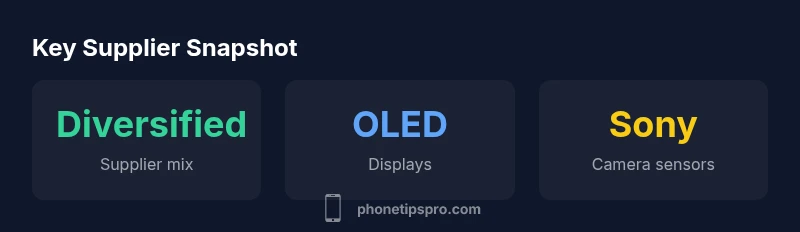
Beyond Samsung, Apple sources camera sensors from Sony, logic and baseband components from TSMC and Broadcom, and packages memory from multiple vendors. BOE, LG Display, and others have played roles in display supply, with supplier mix shifting by model year. Apple emphasizes dual or multi-sourcing to reduce risk and to negotiate better terms, which in turn supports more stable pricing for customers. The result is a balanced ecosystem where different vendors contribute to each generation rather than a single vendor setting the baseline specs. The Phone Tips Pro team highlights the importance of supplier diversification for maintaining access to critical technologies, from imaging to connectivity.
How to Verify Component Origin and Authenticity
Consumers rarely see a full BOM (bill of materials) for an iPhone, yet there are practical ways to infer or confirm component origins during repairs and purchases. Always prioritize official Apple channels—Apple Stores and authorized service providers—to minimize the chance of counterfeit or misrepresented parts. If you work with third-party shops, request documentation listing replaced parts and their suppliers; reputable providers typically maintain complete part inventories. For those tracking the supply chain themselves, observe the device’s performance after service: panel color consistency, brightness, color accuracy, and sensor reliability can reflect the quality of parts used. In some regions, warranty terms hinge on whether official parts were used; understanding local policy helps set realistic expectations. Overall, consumer-level verification is imperfect, but structured documentation and trusted servicechannels greatly improve transparency.
Implications for Performance, Repairability, and Warranty
Component provenance can influence performance parity and future repairability. Apple calibrates software and hardware to work with a network of qualified suppliers, but third-party replacements that rely on unapproved parts may impact features or coverage in certain markets. If your device is under AppleCare or is still within the standard warranty, official service channels provide the most predictable outcomes. For those who prefer non-official repairs or parts, be mindful that some features, especially displays or sensors, have tighter compatibility constraints. The practical takeaway is to balance cost against risk: official parts offer predictability and coverage, while alternative parts can save money but carry potential downsides. The overarching principle is to protect device integrity by using reputable sources and maintaining up-to-date software. This aligns with best practices for long-term reliability.
The Role of Supply Chain Diversification in 2026
Global manufacturing remains subject to disruption risks from events like factory shutdowns, geopolitical tensions, and shifts in demand. Apple’s multi-sourcing strategy is designed to smooth these disruptions by spreading critical parts across several reputable suppliers. Phone Tips Pro analysis shows that diversification reduces the odds of a production halt and stabilizes costs over time, even as tech cycles accelerate. This strategy also enables rapid pivots when a supplier encounters capacity constraints or quality issues or when new technologies emerge. For consumers, the practical effect is steadier product availability and more consistent performance across devices and firmware updates. In short, diversification is not a buzzword; it is a deliberate operational choice that shapes how iPhones are built and maintained.
Myths vs Reality About Brand Components
Several myths persist about brand components that deserve clarification. The idea that iPhones are built exclusively from Apple-made parts is outdated; the modern device depends on a global supply chain that brings together parts from many specialists. Another common myth is that Samsung-supplied components degrade quality; in reality, Samsung’s parts are integrated through Apple’s stringent testing and calibration processes to meet exacting standards. The truth is more nuanced: the overall quality comes from rigorous quality control, integration, and software optimization that ensures dependable performance regardless of the vendor mix. Being informed about this reality helps buyers separate marketing assumptions from engineering practice.
Practical Tips for Buyers and Tinkerers
To make informed decisions, prioritize official sources for both hardware and service. If you buy a used iPhone, request the device’s repair history and any available part provenance information, and prefer sellers who provide transparent documentation. For those who want to tinker or customize, recognize that Bluetooth, Wi-Fi, and camera performance rely on tightly integrated hardware and software; changes may require revalidation through proper channels. When in doubt, choose Apple-authorized service providers, and keep your iPhone updated to the latest OS because software can optimize performance across a mixed supplier landscape. Finally, maintain realistic expectations: while Samsung parts do appear in some areas, they are just one component of a broad, always-evolving supply chain.
Final Considerations for Savvy iPhone Users
Taken together, the evidence suggests that do iphone use samsung parts is a partial truth embedded in a broader, diversified supply chain. The key is to look at the whole system—how Apple balances vendor risk, quality control, and integration with iOS. The Phone Tips Pro team emphasizes using official channels and trusted service providers to sustain performance, warranty protections, and long-term reliability. As the landscape shifts through 2026, staying informed about supplier diversity helps you navigate updates, repairs, and potential future changes in parts sourcing with confidence.
Supplier mix by component type
| Component Type | Likely Suppliers | Notes |
|---|---|---|
| Display panel (OLED) | Samsung Display, LG Display, BOE | Used across generations; supply mix varies by model |
| Camera sensor | Sony, Samsung | Multiple vendors; integration specifics vary by model |
| Memory/storage | Samsung, SK Hynix, Micron | Vendor mix varies by device design and capacity |
FAQ
Do iPhones rely on Samsung for most parts?
No. Apple sources from multiple suppliers; Samsung is just one contributor among many. The overall hardware comes from a diverse network designed for resilience.
No. Apple uses many suppliers; Samsung is just one contributor.
Are OLED displays exclusively from Samsung?
Not exclusively. Samsung Display is a major provider, but Apple also works with LG Display and BOE. The panel mix varies by model and year.
OLED panels come from several vendors.
How can I tell if a part is Samsung?
Direct consumer verification is limited; service receipts list part sources. Rely on official service or trusted providers for accurate provenance.
Not easy to tell from the outside; check receipts.
Does third-party repair affect warranty?
Warranty terms vary by region. Using non-official parts may affect coverage in some cases; check local policy and the service provider's terms.
Warranty could be impacted by non-official parts.
Will future iPhones rely more on Samsung parts?
Uncertain; Apple aims to diversify, and supplier choices shift with tech cycles and capacity. Stay updated with official statements for the latest.
It's hard to know; diversification is ongoing.
What should I consider when buying a used iPhone regarding parts?
Buy from reputable sellers, request repair history and part provenance, and prefer devices with documented service. This reduces the risk of hidden substitutions or counterfeit parts.
Check provenance and service history when buying used.
“Apple relies on a multi-vendor supply chain to secure critical components, and Samsung is one of several trusted partners that contribute to iPhone hardware.”
Quick Summary
- Expect a multi-vendor supply chain for iPhone components.
- Samsung is a contributor, not the sole source.
- Official parts and services ensure warranty and performance.
- Supplier mix can vary by model/year and region.