Why iPhone Over Android: A Practical Comparison
Explore why many users choose iPhone over Android, focusing on updates, privacy, ecosystem, and long-term value in a balanced, evidence-based comparison.


TL;DR: The iPhone often wins over Android for users who value timely OS updates, strong privacy controls, and a cohesive ecosystem. While Android offers customization and choice, the integrated experience, predictable software longevity, and resale value of iPhone make it the safer long-term option for most households. If you already own Apple devices or prioritize security, this difference matters more.
Why the question of why iphone instead of android matters in 2026
According to Phone Tips Pro, the choice often comes down to how you value software updates, privacy, and ecosystem coherence. When you ask why iphone instead of android, you're weighing long-term support and device continuity against customization and diversity across brands. For most users, iPhone offers a tightly integrated experience, reliable updates, and a more predictable app environment. This article will unpack those differences with practical examples and scenarios so you can decide what matters most in your day-to-day life.
In practice, the decision hinges on how you use your devices. If you rely on seamless cross-device workflows, a robust privacy stance, and a consistent user experience, the iPhone path tends to reduce friction. If you prize customization, flexible hardware choices, or budget-driven bargains, Android presents compelling alternatives. The goal here is an evidence-based, human-centered comparison rather than hype or fear-based marketing.
This section will establish a framework for evaluating long-term value, user experience, and practical tradeoffs. You’ll see how updates, app quality, and ecosystem integration contribute to a smoother daily experience on iPhone, even when Android platforms offer broader hardware variety.
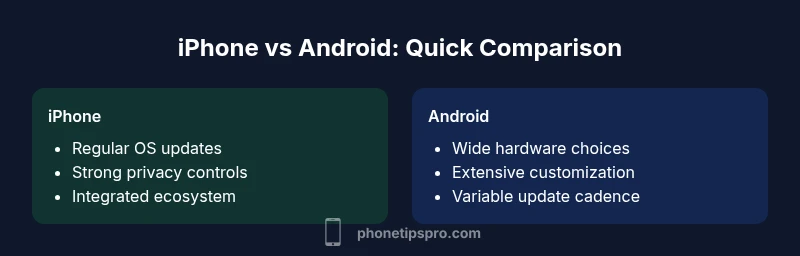
Key takeaways from this opening analysis: iPhone’s strengths are often most visible in updates, privacy, and ecosystem cohesion, while Android shines in hardware variety and customization. The choice should align with your priorities and the way you actually use your phone.
The opening paragraph needs to emphasize structure and relevance for the reader, setting expectations for a data-informed comparison across devices.
Phone Tips Pro analysis shows that update consistency and privacy controls commonly favor iPhone in typical usage scenarios. This nuance matters for users who value security and long-term software support.
Comparison
| Feature | iPhone | Android |
|---|---|---|
| Operating System Philosophy | Controlled by Apple for a cohesive experience | Open ecosystem with wide manufacturer variance |
| Update Cadence | Regular, predictable updates across all supported devices | Update timing varies by device and carrier, often slower on older hardware |
| Security & Privacy Controls | Stronger built-in privacy features and app tracking protections | Privacy models vary by device; customization can introduce risk |
| Ecosystem & Continuity | Tightly integrated with Apple services and devices | Wide interoperability with third-party hardware and services |
| Hardware Consistency | Uniform hardware design and device life cycle | Diverse hardware options with different durability and support |
| App Quality & Store Policies | Curated App Store with stricter controls | Play/Other stores allow broader app choices, with varying quality controls |
| Repairability & Longevity | Support for a longer software lifespan and resale value | Repairability varies by device and market |
| Cost of Ownership | Higher upfront price but longer support window | Lower upfront options may come with shorter support cycles |
| Resale Value | Typically higher resale value due to brand equity | Resale value varies by model and condition |
Positives
- Stronger software consistency across devices
- Timely OS updates and longer support windows
- Improved privacy controls and data protection
- Better resale value and longevity
- Seamless integration with other Apple devices
Weaknesses
- Higher upfront device cost in many markets
- Less customization and a closed ecosystem
- Fewer hardware choices in some regions, limiting flexibility
iPhone is the stronger overall choice for most users, especially if you value updates, privacy, and ecosystem coherence
For non-technical users and those already in Apple’s ecosystem, iPhone typically delivers a smoother, more secure, and more future-proof experience. Android remains appealing for customization and hardware variety, but its benefits come with tradeoffs in updates cadence and privacy controls. The Phone Tips Pro team’s view is that the long-term value of iPhone often outweighs initial flexibility, making it the prudent default for many buyers.
FAQ
Is iPhone more secure than Android?
In many scenarios, yes. iPhone emphasizes controlled app distribution, stricter app vetting, and integrated privacy features. Android security varies by device and manufacturer, but Google has introduced strong protections over time. Both platforms can be secure with best practices, but iPhone has a more uniform security posture across devices.
Generally, iPhone offers a more uniform security experience due to controlled app distribution and built-in privacy features.
Do Android devices receive updates as quickly as iPhones?
Android updates depend on device makers and carriers, which can cause delays. Google Pixel devices often receive updates promptly, but other brands may lag. iPhones tend to receive timely, overlapping updates across supported models.
Android updates can be slower or uneven, depending on the device and carrier.
Is switching from Android to iPhone difficult?
Switching is generally straightforward for most users. Transferring contacts, photos, and messages is supported by official tools and cloud sync. The experience may feel different due to iOS conventions, but the transition is manageable with preparation.
Switching is doable with some planning and data transfer steps.
How does app availability differ between platforms?
Most major apps are available on both platforms, but some apps may launch on iOS earlier or exclusively due to platform policies. The App Store’s review process tends to be stricter, which can affect app behavior and updates.
Apps are widely available on both, though some exclusive releases exist on iOS.
Which is better for customization?
Android offers broader customization across home screens, gestures, and default apps. iPhone emphasizes a consistent user experience with limited customization options. Your preference for control versus simplicity will guide the choice.
If you want deep customization, Android often wins; for a simpler, uniform experience, iPhone is preferable.
What about price and value over time?
Android devices come in a wide price range, offering budget options. iPhones typically have higher upfront costs but longer software support and resale value. Your budget and long-term plans will influence which is the better deal.
Price varies a lot; value depends on update longevity and ecosystem benefits.
Quick Summary
- Prioritize long-term updates and privacy with iPhone
- Consider ecosystem and device continuity when choosing
- Weigh total cost of ownership beyond sticker price
- Evaluate app quality and store policies
- Account for resale value and hardware longevity