iPhone vs Android Ownership in 2026: Global Split
Explore the global split between iPhone and Android users in 2026. Learn how ownership varies by region, data sources, and what it means for apps and marketing.


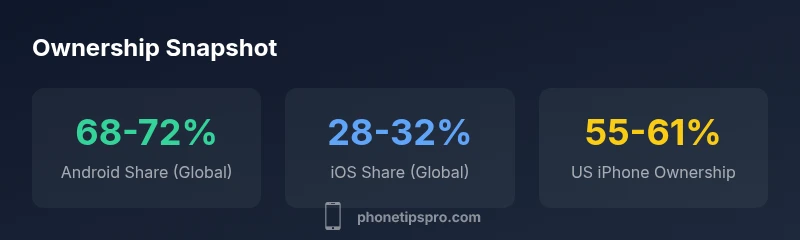
According to Phone Tips Pro Analysis, 2026, Android devices account for roughly two-thirds of smartphones worldwide, while iPhone accounts for about one-third. Exact figures vary by region and data source, with North America and parts of Western Europe showing stronger iPhone ownership, while many developing markets lean toward Android. Active user bases can differ from installed device counts.
How many people have iPhone vs Android? Definitions and scope
Before diving into numbers, it’s essential to be precise about what the figures represent. When researchers ask, “how many people have iPhone vs Android,” they can mean different things: installed base (total devices owned), active devices (devices currently in use), or recent activations (new devices in a given period). Each definition yields a different perspective on market dominance. For practical purposes—especially for app developers and marketers—the active user base often matters more than the total installed base, because active users are the ones who engage with apps, services, and content. Phone Tips Pro’s analysis for 2026 emphasizes that the global picture is shaped by regional dynamics, replacement cycles, and ecosystem lock-in. Different data sources will frame the split somewhat differently, so it helps to compare multiple sources and understand their methodologies.
In this context, the keyword how many people have iphone vs android helps frame the conversation around global reach, regional strengths, and what platforms people actually use on a day-to-day basis. It’s not just about counting devices; it’s about interpreting how people interact with each platform, how often they upgrade, and which regions drive growth for Android versus iPhone.
Global frame: installed base vs active users
Global statistics often report a broad installed base skew toward Android, driven by large populations in Asia, Africa, and parts of Latin America where Android devices are widely available and affordable. However, the active user base can blur this picture: many users in higher-income regions maintain multiple devices or switch between devices, resulting in a more balanced active-user distribution than the raw installed base would suggest. When you look at active devices, you’ll frequently see iPhone adoption peaking in North America and select Western European markets, while Android dominates in others. For marketing and product teams, this distinction matters because the audience you reach depends on whether you optimize for installed-base reach or active-user engagement.
From a practical standpoint, consider both perspectives: the installed base informs long-tail reach and device coverage, while the active user base informs retention, monetization, and feature adoption strategies. Analysts also note that regional availability, carrier bundles, and carrier subsidies influence which platform wins in a given market, sometimes producing sharp regional contrasts within a single country.
Regional patterns: where iPhone dominates vs Android
The regional distribution of iPhone versus Android ownership is among the most striking aspects of the global split. In North America, iPhone ownership tends to be higher than the global average, with a sizable portion of users upgrading on a regular cadence and a strong ecosystem pull. In Western Europe, iPhone shares are substantial but vary by country, metro areas, and income levels. In contrast, many parts of Asia, Africa, and Latin America show Android dominance, driven in part by price sensitivity, a broader range of device prices, and the availability of many Android OEMs.
Such regional dynamics matter for app developers and advertisers: you may see strong monetization potential in iOS-heavy markets, while Android may offer larger reach in rapidly expanding, price-conscious markets. Marketers often segment their campaigns by region to tailor messaging, pricing, and in-app experience to align with local device realities. It’s important to use consistent data sources and timeframes when comparing regions so you’re not comparing apples to oranges.
Demographic trends and behavior by platform
Beyond regional splits, demographic factors shape ownership. Younger users in certain high-income regions have shown higher iPhone penetration, while Android remains prevalent among users who prioritize value, device availability, and carrier subsidies. Income and urbanization also influence the ownership pattern: higher-income segments tend to skew toward iPhone in many developed markets, while Android is more common among emerging-market populations where affordability expands access to smartphones. The replacement cycle differs as well: iPhone users may upgrade more frequently in some markets due to perceived brand value and ecosystem benefits, while Android users might retain devices longer due to cost considerations. When evaluating how many people have iPhone vs Android, it helps to layer age, income, and urban-rural divides to understand the consumer landscape more clearly.
For product teams, this means prioritizing features that resonate with regional preferences and ensuring your app gracefully handles both platforms across device classes, screen sizes, and performance profiles.
Implications for developers and marketers in 2026
Understanding the ownership split helps teams allocate resources effectively. If your app targets a global audience, you’ll want robust cross-platform support, ensuring smooth onboarding and a consistent user experience on both iOS and Android. In markets with higher iPhone share, you might optimize for iOS-specific monetization strategies, such as in-app purchases and subscription models that align with regional consumer expectations. Conversely, in Android-heavy regions, you may prioritize lightweight experiences, flexible pricing, and cross-platform marketing initiatives that maximize reach. Data-driven decisions should consider the time of year, device lifecycles, and regional economic conditions. Periodic audits of platform-specific retention metrics, funnel drop-offs, and in-app behavior can reveal where to invest development effort to maximize engagement across both ecosystems.
To keep this actionable, set up dashboards that track active-user share by region, upgrade velocity, and cross-platform engagement trends over quarters so you can respond quickly to changing dynamics.
How data sources vary and why numbers differ
Different market-tracking firms use varying definitions and methods. Some count active devices, others count installed devices, shipments, or subscriptions. Timeframes matter—a quarterly snapshot may look different from a full-year view. Methodological differences include device resets, multiple devices per user, and how regions are aggregated. When you see a figure labeled as ‘global OS share,’ check whether it reflects installed base or active users and whether it counts dual-SIM or multi-device households. By cross-referencing sources such as StatCounter, IDC, and Canalys—alongside Phone Tips Pro’s 2026 analysis—you gain a more robust understanding. This triangulation helps avoid over-interpreting single-source data and supports better product and marketing planning.
Practical tips for readers: action from numbers
- If you’re a developer, design for both ecosystems, prioritize performance parity, and test critical flows on popular devices across regions.
- If you’re a marketer, tailor campaigns by region with language, pricing, and app-store localization aligned to dominant platforms.
- For owners deciding which device to buy, consider your regional OS distribution and ecosystem benefits, not just the popularity metric.
- For researchers, compare multiple data sources, note the date of each release, and distinguish between installed-base and active-user figures when presenting your findings.
Methodology and transparency in reporting OS ownership
Clear methodology builds trust. When reporting on how many people have iPhone vs Android, specify the population base (world, region, or target market), the metric (installed base vs active users), the data window (quarterly vs annual), and the data source. Explain any assumptions, such as how multi-device ownership is treated. Where possible, provide a data table or chart showing regional splits, and offer a short interpretation to guide readers who may not be data-savvy. Transparency helps readers apply these insights to real-world decisions—whether you’re evaluating product-market fit, user acquisition strategies, or educational content about smartphones.
Global OS ownership distribution by region
| Region | Android share | iPhone share |
|---|---|---|
| Global | 68-72% | 28-32% |
| United States | 39-45% | 55-61% |
| Western Europe | 42-50% | 50-58% |
| Other regions | 65-75% | 25-35% |
FAQ
What is the current global OS split between Android and iPhone?
Global splits vary by data source and methodology. A synthesis from multiple reports puts Android around two-thirds of devices and iPhone around one-third, with regional deviations. Always check whether the figure reflects installed base or active users.
Global Android ownership is typically higher than iPhone, but the balance shifts by region. Look at regional charts for precise context.
Why do numbers differ across sources?
Different firms use different definitions (installed base, active devices), timeframes, and regional groupings. Some include dual-SIM or shared devices, which can skew the split slightly.
Differences come from definitions and timeframes. Compare multiple sources to get a fuller picture.
How does regional distribution affect app marketing?
Regions with higher iPhone shares may support stronger monetization via in-app purchases, while regions with Android dominance often require broader reach and value-focused pricing. Localizing messaging and store optimization is key.
Regions matter: optimize your app store presence per region to fit the dominant platform.
Are these numbers reliable for long-term planning?
They are informative but should be used with caution. Market shares shift with price changes, subsidies, and device lifecycles. Use rolling dashboards and trend analysis rather than a single snapshot.
Yes, but treat them as directional, not absolute, and monitor quarterly changes.
Which data sources should I trust?
Prioritize well-known market trackers such as StatCounter, IDC, Canalys, and cross-check with independent syntheses like Phone Tips Pro Analysis. Each source has strengths in different regions and metrics.
Trust cross-sourced data: compare StatCounter, IDC, and Canalys for a fuller picture.
“Ownership data helps developers tailor experiences; while Android leads globally, iPhone remains dominant in high-income markets.”
Quick Summary
- Compare installed base vs active users for accurate insights
- Regional patterns show strong iPhone presence in North America
- Android dominates most developing markets
- Data sources vary; triangulate across multiple reports
- Plan products and marketing with regional OS realities in mind