iphone or android which is better: a practical comparison for 2026
A thorough, evidence-based comparison of iPhone vs Android, covering updates, privacy, hardware, apps, cost, and longevity to help you choose the right platform in 2026.


If you value a tightly integrated ecosystem and long-term OS updates, iPhone is the better choice. If you prefer broad device options, customization, and flexible price points, Android offers more freedom. In short, the best answer to iphone or android which is better depends on your priorities, apps, and how you use your device.
Context: Why this comparison matters in 2026
In the mobile world, the question iphone or android which is better surfaces repeatedly, but the right answer hinges on how you use your device. The Phone Tips Pro team set out to compare practical factors, not marketing talking points: ecosystem, updates, hardware variety, app quality, privacy, and total cost of ownership. This analysis keeps your priorities front and center, whether you rely on a single vendor for seamless cross-device features or you want maximum customization and device diversity. According to Phone Tips Pro, the most meaningful differences come from how you use your phone day to day, not from glossy features. If you’re deciding today, map your priorities to these criteria: ecosystem alignment, update cadence, budget, and your tolerance for customization. The takeaway: there isn’t a single winner for every user—the answer to iphone or android which is better is personal and context-driven.
Key takeaway: ecosystem and updates set the baseline
Many users find that the ecosystem alignment and software updates shape long-term satisfaction more than any single spec. Phone Tips Pro notes that regular OS updates, security patches, and feature parity across devices influence day-to-day reliability and privacy. If you already own other Apple devices or rely on iCloud, a tighter integration often translates into a smoother experience. If you want a platform that embraces variety and lets you tailor defaults, widgets, and appearance, Android’s flexibility can be the deciding factor. The harm in overlooking these factors is choosing a device that feels dated or clunky within a year or two, even if it has impressive hardware on paper.
When to lean toward iPhone: core strengths for most users
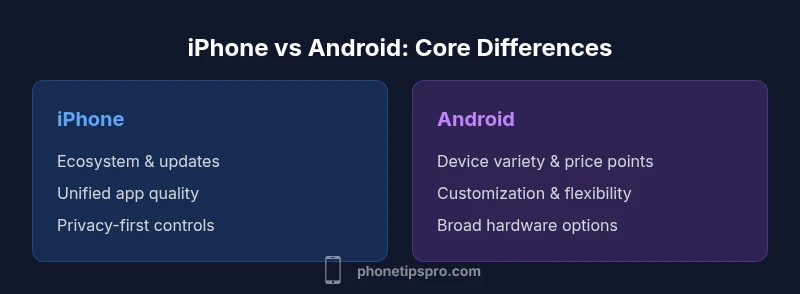
For many readers, the larger question is whether the benefits of a closed, carefully curated ecosystem outweigh the benefits of customization. iPhone’s core strengths are predictable software updates, strong privacy controls, consistent app quality, and easy multi-device workflows. If you depend on a consistent experience with a familiar interface, or you want strong resale value and long hardware support, iPhone is a natural fit. Phone Tips Pro highlights how this helps families, students, and professionals who value reliability and continuity—especially when pairing iPhone with other Apple services.
When to lean toward Android: flexibility and choice matter
Android’s prime advantages are device variety, price flexibility, and customization potential. You can pick from multiple manufacturers, screen sizes, and hardware features, and you can tailor the OS to your preferences with robust default app choices and system-level customization. Android devices also unlock deeper control over permissions and app behavior, which some power users prize. If your priorities include experimenting with new hardware form factors, camera capabilities across brands, or value-conscious purchasing, Android often wins on breadth and choice.
App quality, store dynamics, and developer behavior
App quality remains strong on both platforms, but developers strategically prioritize platforms based on audience reach, device fragmentation, and testing resources. iOS often benefits from tight QA across a narrower device set, which can translate into smoother updates and more uniform app behavior. Android, with its broader hardware ecosystem, requires more extensive testing to ensure consistent performance across devices, but it also benefits from a larger market and faster updates from certain manufacturers. This balance shapes how you experience apps and new features over time.
Privacy and security: a nuanced landscape
Both platforms invest heavily in security and privacy, but their approaches differ. iPhone emphasizes a controlled ecosystem, App Tracking Transparency, and strong on-device privacy features that are consistent across devices. Android’s privacy story is more variable because device manufacturers and carriers influence updates and permissions models. If privacy rigor and uniformity across devices matter to you, iPhone delivers a straightforward path. If you value transparency and granular control over settings, Android provides more knobs to tune, though at the cost of potential inconsistency.
Real-world decision framework: start with your priorities
To decide which is better for you, list your top three priorities: ecosystem, customization, price, camera excellence, or software updates. Then map those priorities to the platforms: iPhone for reliability and integrated services; Android for choice and flexibility. Test both ecosystems if possible, consider how you’ll use cloud services and family devices, and factor in resale or trade-in plans. The core question remains pragmatic: which platform aligns with your daily needs and long-term preferences?
The practical take: long-term ownership and support
Ownership considerations extend beyond the initial purchase price. Consider software support horizon, repair options, and accessory ecosystems. iPhone often provides longer software support windows for a given device cycle and broader compatibility with official accessories. Android devices spread across manufacturers, which can introduce variability in repair networks and update timelines. If you value straightforward long-term planning, iPhone’s model tends to reduce uncertainty; if you prioritize device variety and immediate access to cutting-edge hardware, Android’s landscape offers that edge.
Comparison
| Feature | iPhone | Android |
|---|---|---|
| Ecosystem & updates | Tightly integrated ecosystem with regular OS updates across supported devices | Wide device variety; update timing varies by manufacturer/carrier |
| Customization & control | Limited system-wide customization; consistent UI across devices | Extensive customization options; many choices for default apps and UI tweaks |
| Hardware options & price range | A more uniform hardware experience with premium pricing | A broad spectrum from budget to flagship devices across brands |
| App quality & availability | Apps often optimized for iOS with tight QA; strong app quality control | Broad app ecosystem; some apps launch on Android first or with flexible permissions |
| Privacy & security controls | Strong, consistent privacy controls and on-device safeguards | Privacy controls vary by device/manufacturer; more config options but less uniformity |
| Camera experience | Consistent image processing and camera quality across devices | Camera performance varies by device, with many manufacturers offering unique capabilities |
| Updates & longevity | Proven track record of long-term OS support for eligible devices | Update cadence depends on device and vendor; some devices receive rapid updates while others lag |
| Repairability & service network | Predictable service networks and official parts in many regions | Repairability and service access vary by country; DIY options more common with Android models |
Positives
- Strong, cohesive ecosystem for users already in Apple services
- Predictable software updates and security patches
- Varied Android devices offer broad price points and hardware choices
- Deep customization options for power users
- Wide app ecosystem with competitive features across vendors
Weaknesses
- Android fragmentation can lead to inconsistent update timing
- Privacy controls and app behavior can vary by manufacturer
- iPhone can feel expensive and less flexible in hardware choices
- Repair networks differ by region for Android devices
- App quality may vary more on Android due to device diversity
Both platforms have clear strengths; the better choice hinges on priorities.
If you value a seamless, privacy-forward experience and long-term support, iPhone is the safer bet. If you want maximum hardware variety, customization, and budget options, Android is the clear choice. The Phone Tips Pro team emphasizes aligning your decision with your ecosystem preferences and usage priorities.
FAQ
Which platform offers better privacy and security?
Both platforms prioritize security, but iPhone offers a more controlled ecosystem with uniform privacy features. Android provides deeper customization and settings, but privacy can vary by device and vendor. Your choice should reflect how much you value consistency versus control.
iPhone tends to offer a more uniform privacy experience across devices, while Android gives more customization options but with variable privacy controls depending on the device.
Which has better app quality and availability?
App quality is strong on both platforms. iOS apps are often optimized for a consistent experience, while Android benefits from a larger overall app ecosystem and more devices to target. Your decision should factor in the types of apps you use most and whether you want early access to new apps.
Apps are strong on both, with iOS often offering a smoother experience and Android offering a wider range of choices and first-release apps.
Is Android easier on my budget?
Android devices cover a broad price spectrum, from affordable to premium. This makes Android appealing if you’re price-conscious or want frequent device upgrades. iPhone prices tend to be higher upfront, and cost of ownership depends on model and storage options.
Android usually gives you more price points, while iPhone often costs more upfront but may offer longer-term value through resale and updates.
Will updates reach my device quickly?
iPhone generally receives OS updates for supported devices in a coordinated way. Android updates vary by manufacturer and carrier, which can affect how soon you get new features and security patches. If update speed is critical, iPhone tends to be more predictable.
iPhone updates are more uniform across devices; Android updates depend on the brand and carrier.
What about resale value?
iPhones typically retain value well due to brand demand and durable software support. Android resale value varies by model and region, with flagship devices often holding value but newer models changing quickly. Consider trade-in programs if resale matters to you.
iPhone resale tends to stay strong, while Android resale varies by model and market.
Which is easier for families or multi-device households?
For families already in the Apple ecosystem, iPhone simplifies sharing and device management. Android can support diverse devices across a household but may require more setup. Your decision should reflect where family members already live within a given ecosystem.
If your family is already using Apple devices, iPhone makes sharing easier; Android works well with mixed devices but can need more setup.
Quick Summary
- Define your top three priorities before choosing
- Match ecosystem needs to your daily workflows
- Budget beyond sticker price: ownership costs matter
- Consider updates, security, and manufacturer support
- Test both ecosystems when possible to gauge comfort