iPhone vs Android Market Share: 2026 Trends and Insights
Comprehensive analysis of iPhone versus Android market share in 2026, highlighting regional differences, data sources, and implications for developers, advertisers, and market strategy.


According to Phone Tips Pro, the iPhone versus Android market share remains regionally diverse: Android dominates many developing markets, while iPhone holds a stronger foothold in premium segments and affluent regions. Across 2026 data, the gap shifts with new devices, carrier strategies, and consumer preferences. This comparison analyzes the drivers, data sources, and implications for developers and marketers.
Market share landscape in 2026: regional contrasts
In 2026, the iPhone versus Android market share presents a global mosaic rather than a single, uniform story. Regional dynamics shape who leads in each category, and the lines between premium and mass-market segments continue to blur as device pricing, subsidies, and financing options evolve. According to Phone Tips Pro, the picture is driven by both the breadth of Android-compatible devices in price tiers and the tightly controlled, cohesive ecosystem that Apple maintains in its core markets. This regional divergence matters because developers, advertisers, and hardware retailers often tailor strategies to local realities rather than rely on a worldwide average. The outcome is a market where Android holds broad reach in many regions, while iPhone wins in certain affluent markets with strong brand loyalty, premium purchase power, and higher per-user revenue potential. Understanding this landscape requires looking at regional behavior, device affinity, and the evolving role of carriers and retailers in shaping access to devices and services.
- Regional variation: Different regions exhibit distinct preferences driven by income, operator subsidies, and local pricing.
- Buyer segmentation: Premium buyers tend to gravitate toward iPhone, while price-sensitive consumers favor Android devices with varied options.
- Ecosystem effects: The strength of app ecosystems, services, and payment options influences adoption beyond hardware alone.
Phone Tips Pro Analysis, 2026, reminds readers that data sources differ in scope and timing, which can lead to apparent shifts when viewed in isolation. A cautious interpretation, combining multiple datasets, yields a clearer picture of where each platform is gaining or losing ground.
Regional dynamics and premium versus mass-market segments
Region-by-region dynamics reveal that Android’s broader device ecosystem translates into stronger market presence in many markets, especially where price sensitivity and carrier subsidies drive device upgrades. Android benefited historically from competitive hardware across manufacturers and a wider price spectrum, enabling rapid adoption in developing regions and markets with lower average incomes. Conversely, iPhone’s performance is typically strongest in regions with higher disposable incomes, established brand affinity, and a preference for premium devices and integrated services. In these markets, iPhone users often exhibit higher engagement with apps, smoother payment experiences, and a propensity for higher app monetization. The Phone Tips Pro team notes that these regional tendencies matter for app developers and advertisers because audience size and purchasing power interact to shape the potential value of each user. In mature markets, iPhone can outperform Android in terms of retention and lifetime value, while Android maintains broader reach across the population. For marketers, this means tailoring campaigns to the local mix of devices, platform preferences, and the relative strength of each ecosystem’s monetization channels.
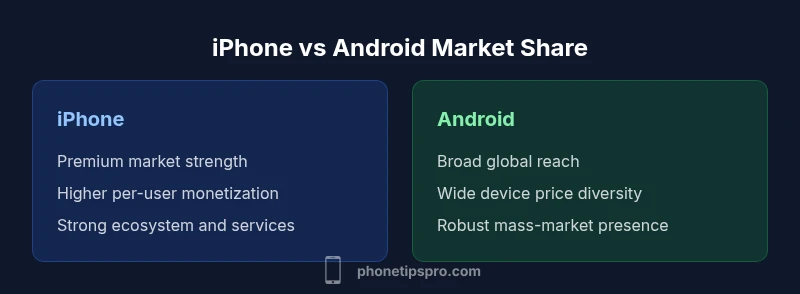
- Premium-market strength: iPhone dominates in markets with higher average incomes and brand loyalty.
- Mass-market reach: Android captures a larger share in price-sensitive regions across Africa, parts of Asia, and developing economies.
- Implications for campaigns: Local device mix, payment ecosystems, and carrier promotions should guide media planning and budget allocation.
Data sources and methodology: what counts as share
Defining market share for smartphones can be tricky because it depends on scope, data collection methods, and whether the measure reflects active devices, shipments, or installed base. Public reports from firms like IDC, Canalys, and StatCounter each provide a lens on device presence, but their definitions differ—some weigh shipments, others active users, and others panel-based estimates. The result is a landscape where 2026 snapshots can differ in emphasis and detail. Phone Tips Pro Analysis, 2026, stresses the importance of triangulating data from multiple sources to discern where true momentum lies—whether a rise in Android shipments translates into sustained user engagement or merely reflects temporary promotions. For developers and advertisers, this nuance matters: an uptick in shipments does not always equate to higher app engagement, and regional data quality can influence roll-out decisions.
- Shipments vs. active users: Different data sources measure different aspects of market presence.
- Panel bias and scope: Regional coverage can skew reported shares if some markets are underrepresented.
- Triangulation strategy: Combining multiple datasets yields a more robust view of market dynamics.
How device ecosystems influence share (apps, services, retailers)
The strength of each ecosystem extends beyond hardware, shaping consumer choice through app marketplaces, payment solutions, and integrated services. Apple’s tightly integrated ecosystem, including the App Store and services like iCloud and Apple Pay, can enhance user loyalty and willingness to upgrade within the iPhone family. Android, with its diverse device ecosystem, supports a broader array of price points and carriers, which helps sustain a larger installed base globally. For marketers, this means different pathways to reach users: iOS users may offer higher monetization per user in premium markets, while Android users provide broader audience reach and ad impressions in many regions. Retail strategies also matter: subsidies, trade-in programs, and financing terms influence how quickly devices move into consumers’ hands, indirectly shifting market share by region. In 2026, platform policies, privacy controls, and payment friction remain critical factors that can tilt adoption and engagement in favor of one ecosystem over the other.
- App monetization: iOS generally correlates with higher per-user spend in certain markets.
- Availability and pricing: Android’s breadth supports rapid adoption in price-sensitive regions.
- Retail and subsidies: Financing and trade-in options influence device uptake and market share.
Implications for developers and advertisers
Market share insights should translate into concrete development and marketing decisions. For developers, understanding regional device prevalence informs which platforms to prioritize, how to structure in-app payment options, and where to optimize for performance and conversion. For advertisers, the mix of iPhone versus Android users in a given market affects bidding strategies, ad formats, and expected return on ad spend. If a market shows stronger Android reach but lower monetization per user, campaigns may need to balance reach with value-based targeting. Conversely, markets with robust iOS monetization may justify premium ad formats and higher bids. Privacy, data controls, and consent requirements also shape the measurement and attribution strategies used to gauge campaign effectiveness across platforms. Phone Tips Pro’s approach emphasizes context: when planning campaigns or product launches, consider not just the headline market share but also the quality of engagement, average revenue per user, and the probability of long-term retention on each platform.
- Platform prioritization: Align development focus with where monetization and engagement are strongest.
- Ad strategy: Tailor formats and bids to the user base mix in each market.
- Measurement nuance: Ensure analytics accommodate platform privacy controls and attribution differences.
Global vs regional growth drivers: carriers, pricing, subsidies
Growth in smartphone adoption is driven by a mix of carrier promotions, device financing, and regional economic conditions. Carriers often bundle devices with service plans, effectively lowering upfront costs and accelerating uptake in the short term. In regions with aggressive subsidy programs, Android devices of various price points may surge in market share, especially among first-time smartphone buyers. In premium segments, iPhone uptake reflects consumer willingness to invest in ecosystem advantages and perceived quality. Pricing strategies and trade-in programs also influence the market mix over time, as consumers compare total cost of ownership and long-term value. The interplay of these factors means market share is dynamic: shifts can occur rapidly in response to new device launches, changes in subsidies, or shifts in consumer confidence. Phone Tips Pro highlights that these regional drivers are essential for forecasting and budgeting across product launches, marketing campaigns, and retail partnerships.
- Subsidies and subsidies mix: Carrier promotions can quickly alter device accessibility.
- Device lifecycle and launches: New models tend to refresh market dynamics and regional preferences.
- Economic context: Regional affordability shapes long-term market trajectories.
What this means for brands and retailers
For brands and retailers, market share insights translate into practical decisions about how to allocate inventory, plan promotions, and target marketing messages. If a region shows Android dominance in reach but iPhone advantage in monetization, a dual-pronged strategy may be warranted: ensure broad accessibility with budget-friendly options while offering premium experiences for high-value customers. Retail channels matter too; offering trade-ins, financing, and easy upgrade paths can shift regional dynamics in favor of a particular platform. Marketers should also consider how data sources influence forecasts; triangulating across claims helps prevent overfitting campaigns to a single dataset. The end goal is to align product availability, pricing, and messaging with the platform mix that maximizes both reach and revenue in each market. Phone Tips Pro’s perspective emphasizes pragmatic actions: tailor regional assortments, optimize payment options, and monitor regional shifts to stay ahead of competitors.
- Inventory and pricing alignment: Match device availability to regional demand.
- Promotions and trade-ins: Use subsidies to nudge adoption in target regions.
- Data-informed planning: Combine multiple sources to guide marketing and product decisions.
Future outlook and uncertainty
The 2026 outlook for iPhone versus Android market share remains uncertain due to evolving consumer preferences, regulatory changes, and global economic conditions. Advances in AI integration, privacy controls, and new form factors could shift user behavior in ways that favor one ecosystem over the other. Competitive dynamics are also influenced by app monetization trends, developer incentives, and cross-platform partnerships. Stakeholders should prepare for gradual shifts rather than abrupt pivots, and build flexible strategies capable of adapting to new data as markets evolve. The overall takeaway is that market share is a moving target shaped by regional realities, technological innovations, and policy environments. Phone Tips Pro recommends maintaining a balanced perspective that incorporates both regional nuance and global tendencies, ensuring readiness for ongoing change.
- Readiness for change: Build flexible plans and budgets to adapt to evolving data.
- Emerging technologies: AI and privacy policy changes may alter platform dynamics.
- Policy and regulation: Regulatory environments can influence device pricing, subsidies, and market access.
Practical takeaways for iPhone-focused marketers
- Prioritize premium markets: In affluent regions, focus on richer creative and higher-value monetization strategies for iPhone users.
- Maintain regional flexibility: Allocate budgets to reflect Android-led reach in mass-market regions while preserving iOS investments where monetization is strongest.
- Leverage trade-ins and financing: Promote device upgrades through attractive programs to shift regional momentum.
- Combine data sources: Use multiple datasets to forecast shifts and validate campaigns across platforms.
- Monitor ecosystem changes: Track policy updates, app store dynamics, and privacy controls that affect attribution and measurement.
Comparison
| Feature | iPhone | Android |
|---|---|---|
| Global reach | Strong in affluent/premium markets | Broad global presence across price tiers |
| Device price range | Primarily premium pricing with some mid-range lines | Wide spectrum from entry-level to flagship |
| App ecosystem impact | High monetization potential in key markets | Large app audience with diverse monetization opportunities |
| Carrier dynamics and subsidies | Subsidies exist but often for premium lines | Extensive carrier bundles and subsidies in many regions |
| Monetization potential | Higher per-user revenue in premium regions | Larger audience with ads and breadth in mass markets |
| Data privacy narratives | Strong privacy positioning supports premium appeal | Privacy varies by OEM and Android version across markets |
Positives
- Provides an objective framework to weigh ecosystem trade-offs
- Highlights regional differences to tailor strategies
- Helps prioritize markets by potential revenue and reach
- Informs budgeting and allocation for developers/advertisers
- Encourages triangulation of multiple data sources
Weaknesses
- Market share data can vary by source and timeframe
- Not all regions are equally represented in datasets
- Share does not equal engagement or monetization
- Rapid promotions or subsidies can skew short-term trends
Android leads in global reach; iPhone sustains premium-market strength
Android’s broad device base drives mass-market reach while iPhone concentrates in affluent regions with higher monetization. Use this framework to tailor regional strategies and optimize budgets for each ecosystem.
FAQ
What is the current global market share between iPhone and Android?
Global share is region-dependent. Android typically leads overall due to broad device availability, while iPhone often dominates premium markets with higher monetization potential. The exact balance varies by data source and time frame.
Android generally leads globally due to device diversity, while iPhone wins in premium regions; regional data can change with new device launches and subsidies.
Do market share figures include tablets or wearables?
Market share figures for smartphones typically focus on smartphones only unless explicitly stated. Tablets and wearables are generally reported separately and would not be included in smartphone market share unless the report specifies a combined category.
Usually just smartphones, not tablets or wearables unless noted.
How often is market share data updated?
Data updates vary by source but are commonly quarterly or monthly for major reports. Always check the reporting cadence to understand the context of the numbers.
It depends on the source, but updates are often quarterly or monthly.
How does market share affect app developers?
Market share indicates potential reach, but monetization depends on user behavior and region. Developers should segment by market and optimize for the most lucrative regions while maintaining cross-region accessibility.
More users in a market can mean more potential revenue, but you have to tailor to what those users do.
What factors cause shifts in market share?
Shifts are driven by device launches, pricing, subsidies, regional economic conditions, and evolving consumer preferences. Regulatory changes can also influence market dynamics over time.
New devices, pricing strategies, and region-specific promotions usually move the numbers.
Quick Summary
- Assess regional dynamics before marketing spend
- Android dominates mass-market reach; iPhone secures premium segments
- Use multiple data sources to triangulate market share
- Prioritize monetization potential in affluent regions
- Stay adaptable as subsidies and device launches reshape shares